
50 t/h Cement Rotary Kiln Production Line in Uzbekistan | Hongke News
Henan Hongke Heavy Machinery Co., Ltd. is a Chinese manufacturer of industrial rotary kilns, rotary dryers, ball mills, crushers and complete cement production lines. Uzbekistan has continued to develop its infrastructure in recent years, cement demand has kept growing, and several new dry-process cement production lines have been built or upgraded. A cement rotary kiln production line with a capacity of 50 t/h (about 1200 t/d) suits medium-scale cement supply for a regional market. This article reviews the process configuration, equipment features and project execution points of a line at this scale, as a reference for cement projects in Central Asia.
1. Uzbekistan Cement Market and Project Background
The Uzbekistan cement industry is mainly based on the dry process. Of the 24 existing cement enterprises, 22 use dry-process production. The government promotes local production of building materials and offers incentives such as tariff preferences for imported advanced equipment. Chinese enterprises have already delivered several large cement projects in Uzbekistan, including a 2.4 million t/y cement complex in Samarkand Region using dry-process rotary kilns and waste heat power generation.
For a 50 t/h production line, the target market is usually regional building material supply, supporting a small or medium cement grinding station, or supplementing an existing production line. This scale offers flexibility in investment threshold, construction period and local operation.
2. Process Configuration of a 50 t/h Cement Rotary Kiln Production Line
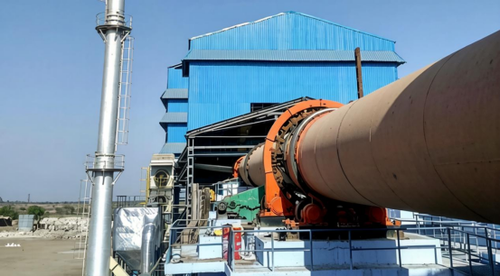
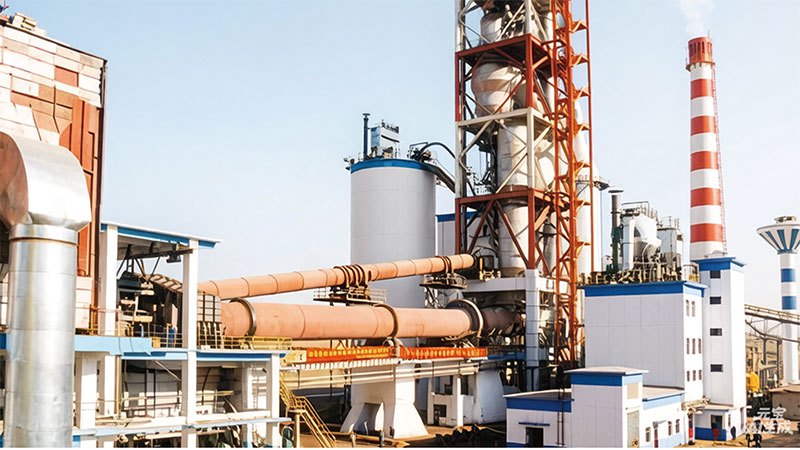
A capacity of 50 t/h corresponds to about 1200 t/d of clinker. Cement rotary kiln size should be decided by raw material properties, fuel conditions and target capacity together. At this capacity level, the industry commonly uses a Φ3.2×50m or similar rotary kiln, with a preheater, precalciner, cooler and dust control system.
The configuration table below is a reference scheme. Items marked “according to project configuration / to be verified before publishing” should follow the contract technical agreement and final design.
Item | Reference Configuration / Notes |
|---|---|
Line capacity | 50 t/h clinker (about 1200 t/d) |
Rotary kiln size | Φ3.2×50m or selected by process (to be verified before publishing) |
Kiln shell diameter | 3.2 m (reference) |
Kiln shell length | 50 m (reference) |
Preheater | Multi-stage cyclone preheater, according to project configuration |
Precalciner | According to process configuration (to be verified before publishing) |
Cooler | Grate cooler, according to project configuration |
Fuel type | Coal, natural gas or mixed fuel, according to local supply conditions in Uzbekistan |
Main motor power | According to final selection (to be verified before publishing) |
Dust control | Bag filter, according to environmental requirements |
Control mode | PLC automatic control, according to project configuration |
Service scope | Process design, equipment manufacturing, installation guidance and commissioning training |
3. Equipment Selection and Operation Points
For a 50 t/h rotary kiln production line, the following points need attention in equipment selection and operation.
Raw material and raw meal preparation. Uzbekistan has relatively rich limestone resources, but composition and grindability differ between deposits. The raw meal grinding system should be configured according to raw material test results to keep the raw meal composition stable before it enters the kiln.
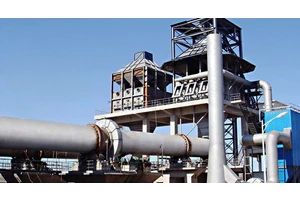
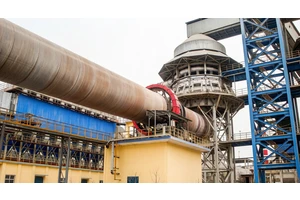
Rotary kiln and preheater matching. The number of preheater stages and the precalciner configuration affect the decomposition rate before the kiln and heat consumption. A line at this scale usually uses a five-stage cyclone preheater with a precalciner to achieve partial decomposition and reduce the thermal load on the rotary kiln.
Fuel adaptability. If local coal is used, the effect of coal heating value, ash and volatile matter on flame shape and kiln temperature should be checked. Burner selection should match the fuel properties.
Waste heat utilization. Some large cement projects in Uzbekistan are equipped with waste heat power generation. Whether a 50 t/h line should include waste heat power generation depends on the investment budget and electricity price policy and requires an economic evaluation.
Environmental emissions. Uzbekistan requires new cement enterprises to use dry-process technology and energy-saving equipment. The dust control system and emission control should meet local environmental standards.
4. Project Execution and Service in Central Asia
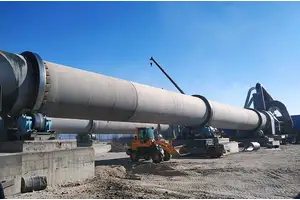
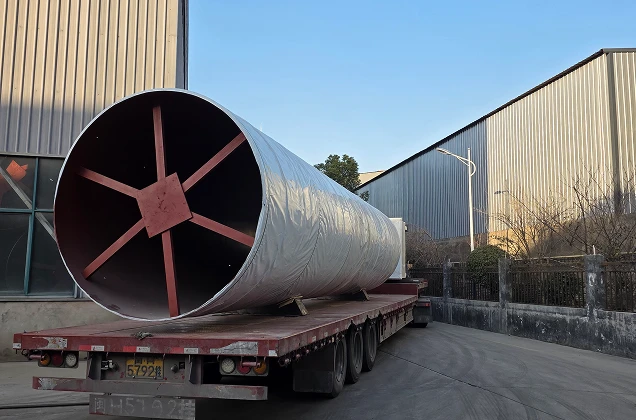
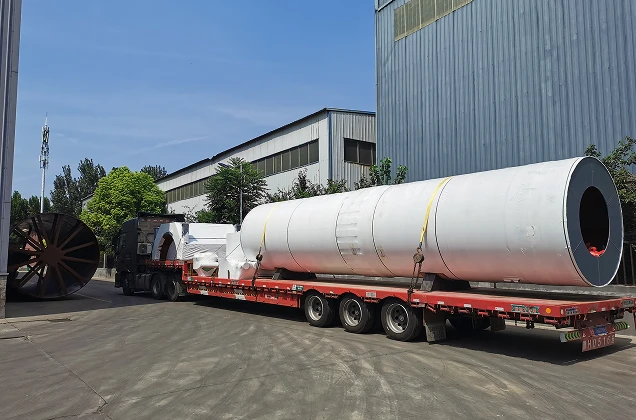
Cement projects in Uzbekistan have their own characteristics in equipment transportation, on-site installation and commissioning training. Equipment is usually shipped from China to Uzbekistan by rail or road, and large kiln shell and mill parts need to consider transport size limits and segmentation plans.
Henan Hongke can provide equipment manufacturing, shipping coordination, installation guidance and commissioning training for overseas cement projects. The following stages need attention during project execution:
Technical agreement stage: define raw material conditions, fuel parameters, target capacity and product indicators as the basis for equipment selection;
Equipment manufacturing stage: follow project milestones for manufacturing and factory inspection, and keep inspection records for key components;
Shipping and site handover: decide the segmentation plan for large parts according to transport conditions, and support on-site unloading and storage;
Installation and commissioning: provide installation guidance, support single-machine trial run and linked commissioning, and train operators;
Spare parts and after-sales: build a wear parts list and supply refractory, transmission parts and seals by schedule.
5. FAQ
Q1: What is the approximate investment for a 50 t/h cement rotary kiln production line?
The investment depends heavily on equipment configuration, automation level, civil works and waste heat utilization scheme, and there is no fixed figure. A targeted calculation should be made based on raw material conditions, fuel scheme and project scope.
Q2: What fuel is suitable for a project in Uzbekistan?
Local cement plants mainly use coal, and some use natural gas or petroleum coke. Fuel selection should consider local supply stability, price and environmental requirements, and the burner and kiln design should match the selected fuel.
Q3: Can Henan Hongke provide equipment and services for a project in Uzbekistan?
Yes. Henan Hongke can provide cement rotary kiln and supporting equipment manufacturing, installation guidance and commissioning training. The specific service scope should be defined in the project contract and technical agreement. For more information, see spare parts and after-sales service.
6. Planning a Cement Project in Central Asia? Contact Henan Hongke
If you are planning a cement rotary kiln production line in Uzbekistan or Central Asia, or if you need selection and process configuration for a 50 t/h line, please send the following information to Henan Hongke:
Target capacity (t/d or t/h) and operating schedule;
Limestone composition, particle size and other raw material conditions;
Fuel type (coal, natural gas or mixed fuel) and local supply conditions;
Project location, power supply conditions and environmental requirements;
Whether waste heat utilization and automation control are required.
Henan Hongke will provide a preliminary cement rotary kiln selection suggestion and process configuration proposal based on the project conditions. Please use contact Hongke to send your requirements, or visit our products page to learn more about rotary kiln products.