
Active Lime Rotary Kiln: Process, Fuel Types and Output Capacity
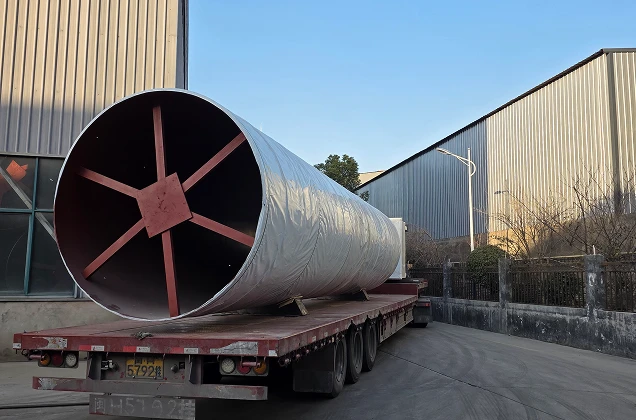
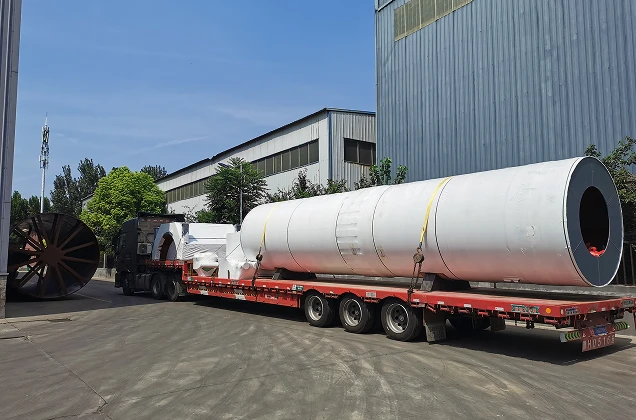
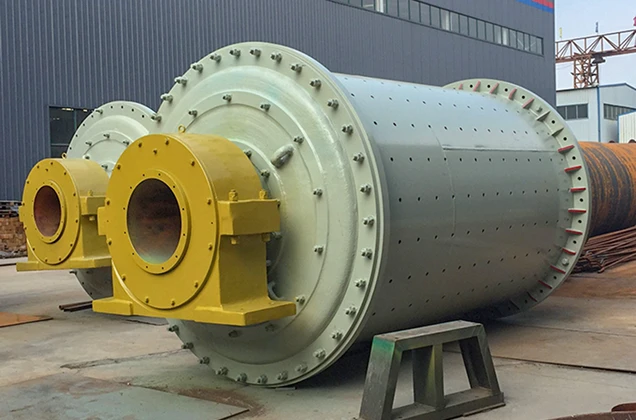
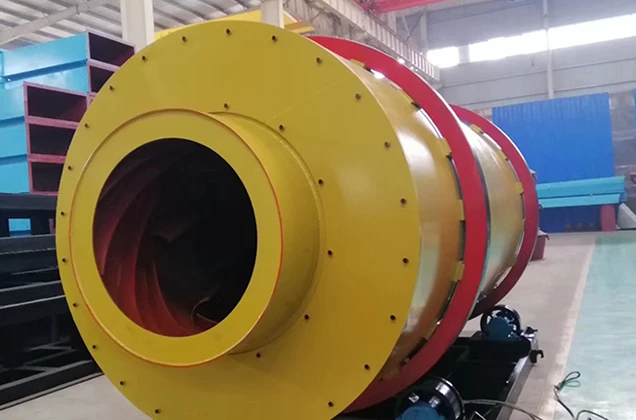
Henan Hongke Heavy Machinery Co., Ltd. is a Chinese manufacturer of industrial rotary kilns, rotary dryers, ball mills, crushers and complete production lines. The active lime rotary kiln is the core calcination equipment for producing active lime. Its operating process, fuel selection and capacity matching directly affect lime reactivity, heat consumption and long-term line stability. This article reviews the operating process, fuel types and output capacity of active lime rotary kilns as a reference for project selection and operation.
1. Operating Process: From Limestone Preheating to Active Lime Cooling
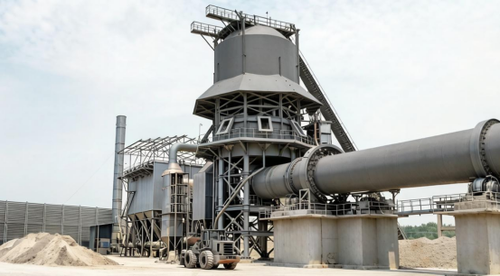
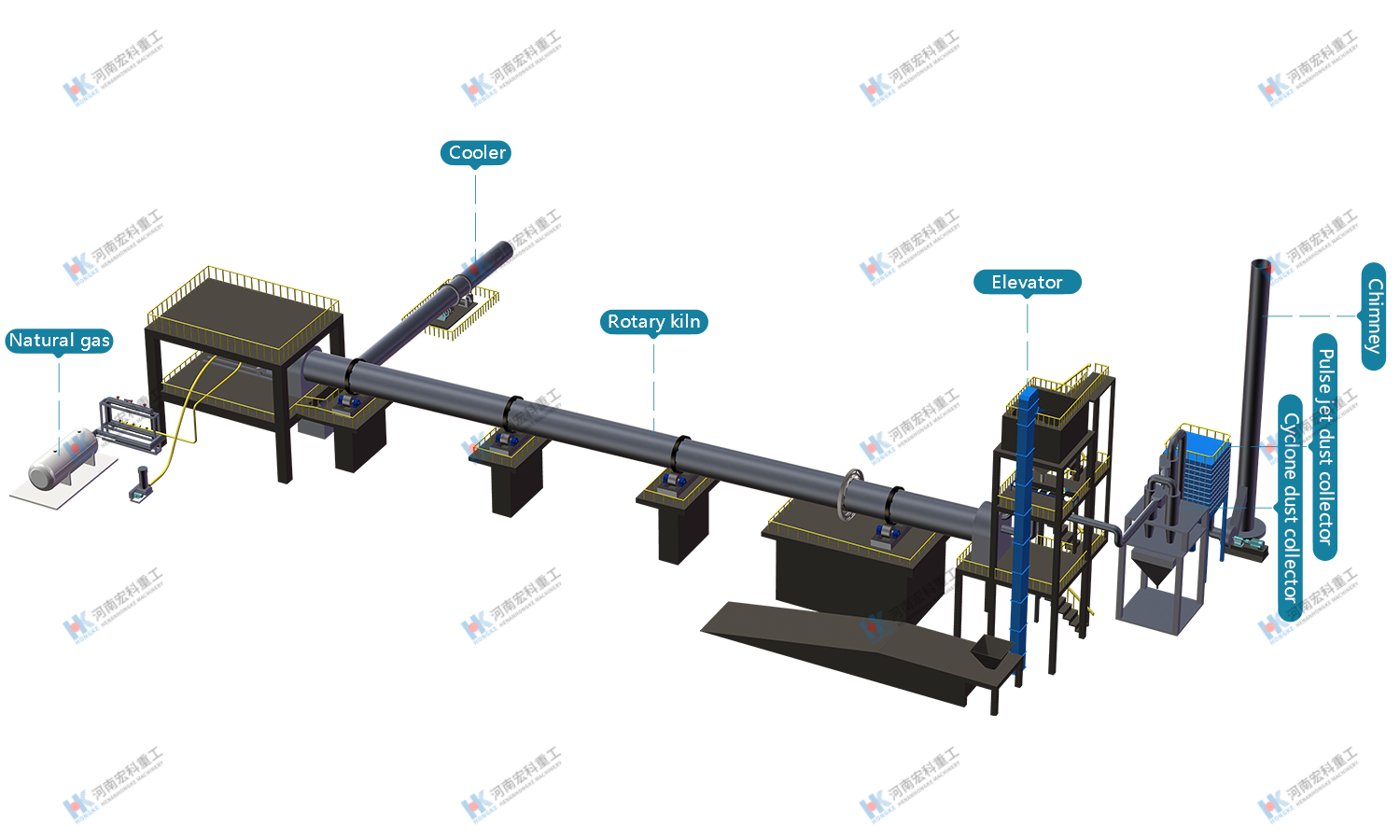
An active lime rotary kiln system usually consists of a vertical preheater, a rotary kiln and a cooler. The operating process can be summarized in three continuous stages.
Stage 1: Preheating and partial decomposition. Limestone of suitable particle size is lifted to the preheater top bin and distributed evenly into the preheater chambers through feed pipes. In the preheater, the limestone is heated to about 900°C by flue gas of about 1150°C from the rotary kiln, and about 20%–30% of the limestone decomposes. The preheated limestone is pushed into the rotary kiln by hydraulic push rods.
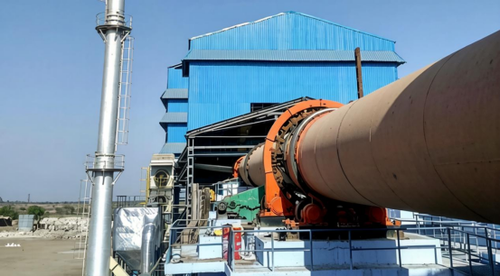
Stage 2: Calcination and decomposition in the rotary kiln. The limestone continues to be heated in the rotary kiln, and calcium carbonate decomposes into calcium oxide and carbon dioxide. The calcination temperature is usually controlled at about 1100±50°C, and in some processes it can reach 1250–1350°C. The kiln shell is installed at an inclination of 3.5%–4%, and the rotation speed is generally in the range of 0.2–2.2 r/min. The material tumbles inside the rotating shell and moves toward the kiln outlet, completing the decomposition process.
Stage 3: Cooling and secondary air recovery. High-temperature active lime leaves the kiln outlet and enters the cooler, where it is rapidly cooled to below 100°C by cold air. After heat exchange, the cooling air is heated to about 600°C and returns to the rotary kiln as secondary air for combustion, recovering heat.
The system is usually equipped with bag filters and an automatic control system to monitor and interlock preheater temperature, kiln temperature, cooler outlet temperature and flue gas emissions. The vertical preheater increases the decomposition rate of limestone before it enters the kiln and reduces the thermal load on the rotary kiln, allowing a more compact kiln size at the same capacity.
2. Fuel Types: Coal, Natural Gas and Industrial By-product Gas
Fuel selection for an active lime rotary kiln depends on local supply conditions, heating value stability, combustion control capability and environmental requirements. Common fuels include the following.
Coal powder. Coal powder is one of the most widely used fuels for active lime rotary kilns. Heating value, ash, volatile matter and coal fineness should be checked. Coal fineness and burner adjustment affect flame shape and temperature distribution in the kiln. Coal preparation systems usually use vertical mills or ball mills.
Natural gas. Natural gas has a stable heating value and is easy to adjust. The combustion system is relatively simple and is suitable for projects with strict emission and temperature control requirements. Cost depends heavily on local gas prices.
Industrial by-product gas such as coke oven gas, converter gas and blast furnace gas. Steel and chemical plants often use by-product gas as fuel for active lime rotary kilns. The heating value of these gases may fluctuate, so heating value monitoring and combustion control are needed to avoid kiln temperature fluctuation affecting lime reactivity. Some projects use a combination of mixed gas and coal powder.
Other fuels. Diesel, heavy oil or biomass pellets can also be used in some cases. Their suitability should be confirmed with burner design and project environmental requirements.
Whatever fuel is selected, fuel parameters should be included in the overall design of the kiln, burner and dust control system, not treated as a separate selection.
3. Output Capacity and Typical Specifications
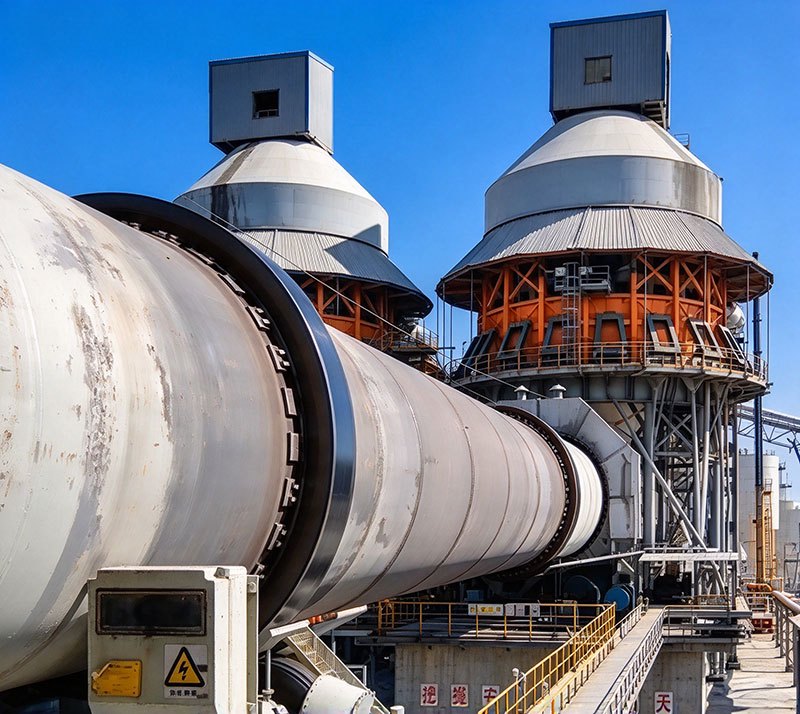
Active lime rotary kilns cover a wide capacity range. Common daily capacities are from 150 t/d to 1200 t/d, and some large projects can reach higher levels. The table below lists some typical specifications and main parameters for preliminary selection. Actual selection should be based on limestone particle size and composition, target reactivity, fuel conditions and operating schedule. Items marked “according to project configuration” should follow the contract technical agreement and final drawings.
Rotary Kiln Size (m) | Design Capacity (t/d) | Effective Volume (m³) | Speed Range (r/min) | Preheater | Cooler |
|---|---|---|---|---|---|
Φ2.8×42 | 200 | 190 | 0.45–2.22 | RS-6.5×3.4 | LS-3×3 |
Φ3.3×50 | 300 | 292 | 0.2–1.9 | RS-7.5×3.4 | LS-3.6×3.6 |
Φ3.6×56 | 400 | 430 | 0.22–1.57 | RS-8.5×3.4 | LS-3.8×3.8 |
Φ4.0×60 | 600 | 575 | 0.48–1.57 | RS-10.4×3.4 | LS-4.1×4.1 |
Φ4.3×66 | 800 | 738 | 0.21–1.57 | RS-10.8×3.4 | LS-4.7×4.7 |
Φ4.8×68 | 1000 | 1005 | 0.19–1.98 | RS-13.5×4 | LS-5.2×5.2 |
Data refers to public industry specification tables. System heat consumption is usually in the range of 5000–5200 kJ/kg, and reactivity can reach above 300 ml/4N-HCl, with some configurations reaching higher levels. Actual parameters should follow the project technical agreement.
The table shows that higher capacity usually means larger kiln diameter and length, and the preheater and cooler sizes should also match. The length-to-diameter ratio of an active lime rotary kiln is generally designed between 11 and 16, which balances material retention time and heat exchange efficiency.
4. Points to Watch in Selection and Operation
The output quality and operating economy of an active lime rotary kiln depend not only on a single equipment specification but also on system matching and operation control. The following points are worth attention during selection.
Limestone particle size and preheater matching: Vertical preheaters have requirements for feed particle size. Too much fine material or powder can affect preheater air flow and material downward movement.
Fuel and burner adaptability: Different fuels vary greatly in heating value and combustion characteristics. The burner should be configured and commissioned for the selected fuel.
Kiln sealing and air leakage control: Kiln inlet and outlet seals directly affect heat consumption and flue gas oxygen content. Combined seals can keep air leakage at a low level.
Balance between reactivity and calcination temperature: Too high a calcination temperature may cause overburning and lower reactivity, while too low a temperature increases underburned lime. Temperature monitoring and kiln speed adjustment are needed.
Cooler efficiency and secondary air temperature: Cooler heat exchange affects secondary air temperature and system heat consumption. This is an easily overlooked but important part.
For new or upgraded active lime projects, the preheater, rotary kiln, cooler and combustion system should be matched as a whole process rather than compared by kiln size alone.
5. FAQ
Q1: What is the calcination temperature of an active lime rotary kiln?
The calcination temperature is usually about 1100±50°C, and in some process conditions it can reach 1250–1350°C. The specific temperature should be decided by limestone properties and target reactivity. Too high or too low a temperature affects lime quality.
Q2: What fuels can an active lime rotary kiln use?
It can use coal powder, natural gas, coke oven gas, converter gas, blast furnace gas and other industrial by-product gases. Diesel, heavy oil or biomass pellets can also be used depending on project conditions. Fuel selection should consider local supply, heating value stability and environmental requirements, and confirm whether the burner and kiln design can adapt.
Q3: What is the output capacity range of an active lime rotary kiln?
Common daily capacities cover 150–1200 t/d, and some large projects can reach higher levels. Capacity depends on kiln size, preheater configuration, cooler capacity and fuel conditions. It cannot be decided by kiln diameter alone.
Q4: Can Henan Hongke provide active lime rotary kiln selection and supporting equipment?
Yes. Henan Hongke can provide active lime rotary kiln selection, preheater and cooler matching, combustion system configuration, installation guidance and commissioning training. For more information, see spare parts and after-sales service.
6. Planning an Active Lime Rotary Kiln Project? Contact Henan Hongke
If you are planning an active lime production line, or if you need active lime rotary kiln selection, fuel matching and capacity evaluation, please send the following information to Henan Hongke:
Limestone particle size, composition and feed moisture;
Target daily capacity (t/d) and product reactivity requirement;
Fuel type, heating value and supply conditions;
Project location and power supply conditions;
Environmental, dust control and automation requirements.
Henan Hongke will provide a preliminary selection suggestion and process proposal for the active lime rotary kiln based on the project conditions. Please use contact Hongke to send your requirements, or visit our products page to learn more about rotary kiln products.