
Material Requirements and Anti-Corrosion Methods for Active Lime Rotary Kiln Shells – Shell Material Selection & Corrosion Protection Guide
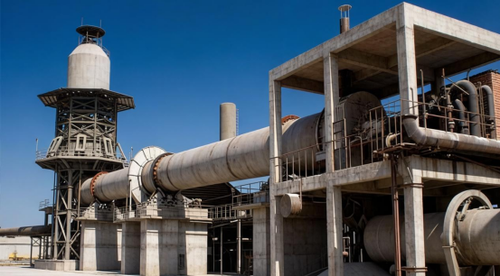
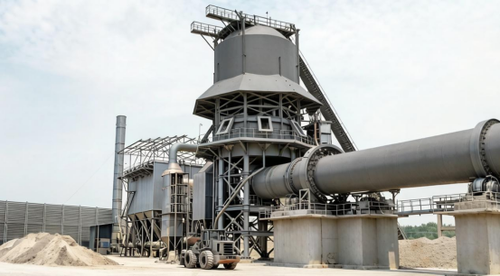
In the design, operation, and maintenance of active lime rotary kilns, shell material selection and equipment anti-corrosion treatment are two fundamental elements that determine kiln service life and operational safety. Shell materials must simultaneously meet requirements for high-temperature strength, thermal deformation resistance, and weldability. Anti-corrosion treatment must address high-temperature oxidation and chemical erosion on the inner wall, as well as alternating hot-cold conditions and moisture-induced rust on the outer wall.
I. Requirements for Active Lime Rotary Kiln Shell Materials
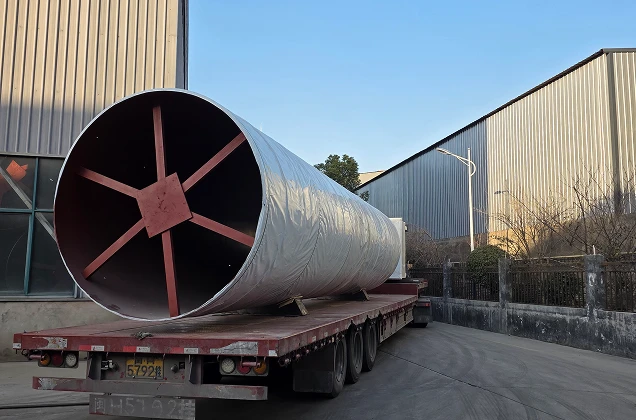
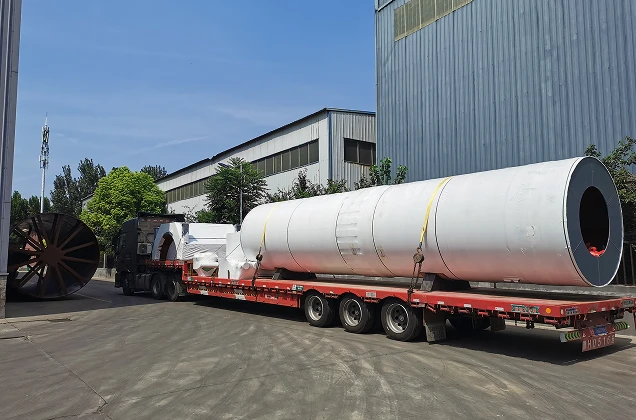
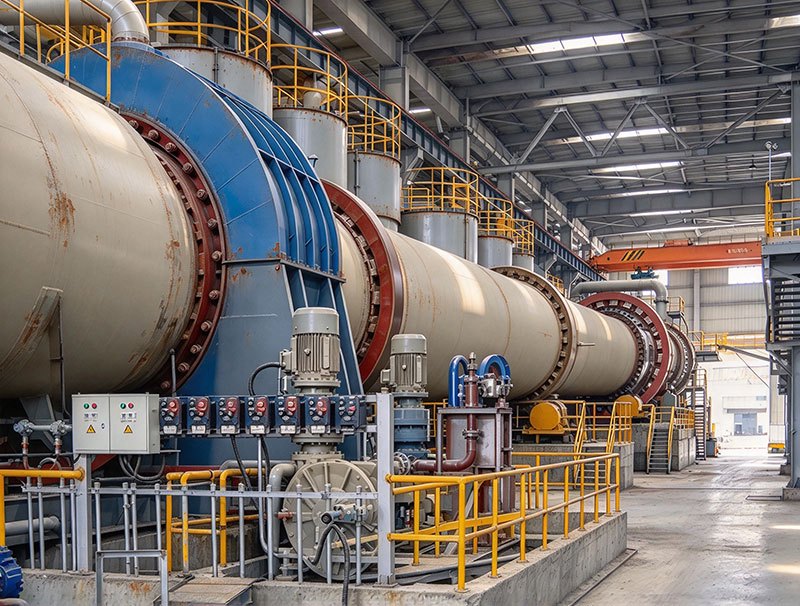
The shell of an active lime rotary kiln is rolled and welded from steel plates. Its material selection must comprehensively consider the following performance requirements:
1. High-Temperature Resistance and Thermal Stability
The shell operates in a high-temperature environment over the long term, with even higher temperatures in the burning zone. The material must withstand high temperatures without significant deformation or strength degradation. At the same time, the material should have good thermal stability, maintaining structural integrity during temperature fluctuations and avoiding excessive stress from thermal expansion and contraction.
2. Sufficient Mechanical Strength
The shell must bear its own weight, the weight of internal refractory materials, the weight of materials, and dynamic loads during operation. The material should have sufficient tensile strength, yield strength, and toughness to ensure structural reliability under long-term rotation conditions.
3. Good Weldability
The shell is rolled and welded from multiple steel plate sections, and the material's weldability directly affects manufacturing quality and weld strength. Q235B carbon structural steel is widely used for rotary kiln shell manufacturing due to its good toughness and weldability. For active lime rotary kilns, 20g boiler steel plate and Q235-B steel plate with guaranteed five mechanical properties are also used for shell rolling.
4. Basic Corrosion Resistance
Corrosive gases and molten slag are generated during limestone calcination, and the shell material itself should have a certain level of corrosion resistance. However, in actual operating conditions, relying solely on the corrosion resistance of the steel itself is often insufficient, and supplementary protection with anti-corrosion coatings is required.
5. Differentiated Thickness Design
The shell is not designed with uniform thickness but is configured differentially according to the stress characteristics of each part. General shell wall thickness is approximately 25 mm, thickened to 32 mm in the burning zone, reaching 65 mm under the tires, with a 38 mm transition section from under the tire to between spans. This ensures cross-sectional rigidity while improving the stress state of the support devices.
II. Anti-Corrosion Treatment Methods for Active Lime Rotary Kiln Equipment
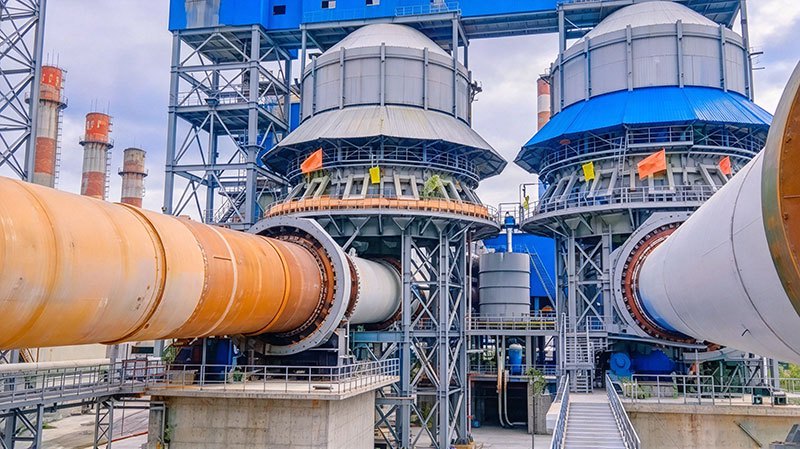
Corrosion issues in active lime rotary kilns involve both the inner and outer walls, and anti-corrosion strategies must be handled separately for each domain.
1. Inner Wall Anti-Corrosion: Protection Against High-Temperature Flue Gas and Chemical Erosion
Inner wall corrosion mainly comes from high-temperature oxidation, sulfur and chlorine erosion, and material scouring. When gaps appear in refractory bricks or localized failure occurs, corrosive flue gas directly contacts the steel shell, and the oxidation corrosion rate accelerates significantly above 400°C.
For inner wall anti-corrosion, high-temperature resistant anti-corrosion coatings can be used. For example, flue gas anti-corrosion coatings can withstand temperatures up to 750°C long-term, using a flake graphite and inorganic-organic resin composite system to form a dense two-dimensional network structure that effectively blocks the penetration of corrosive media such as H₂S, SO₂, HCl, and chloride ions, while also providing anti-powdering and wear resistance, with a recoating cycle of up to 3 years. For higher-temperature areas, 1,200°C high-temperature ceramic wear-resistant anti-corrosion coatings can be selected, using materials such as zirconia and silicon carbide to resist particle scouring and block moisture penetration into refractory brick gaps.
It should be noted that inner wall anti-corrosion coatings are typically used as supplementary protection after refractory brick failure, rather than as a replacement for refractory materials. When the refractory lining is intact, the coating does not directly bear the main operating loads.
2. Outer Wall Anti-Corrosion: Protection Against Alternating Hot-Cold Conditions and Moisture Corrosion
The outer wall of the shell is exposed to the environment over the long term, enduring alternating hot-cold conditions, rain, and moisture erosion. Outer wall anti-corrosion typically uses high-temperature resistant flue gas paint or silicone high-temperature resistant paint.
Silicone high-temperature resistant paint is designed specifically for high-temperature equipment surfaces. After application, the total thickness is approximately 50 μm, and it can withstand 700°C baking, providing 3-5 years of effective protection for the equipment. For rotary kiln outer walls, two-in-one outer wall specialty coatings can also be selected, combining high-temperature oxidation resistance with resistance to acid-alkali flue gas and rain. They are easy to apply, allow local repair, and have relatively low overall maintenance costs.
3. Key Implementation Points for Anti-Corrosion Treatment
The effectiveness of anti-corrosion treatment depends not only on coating selection but also closely on application quality. Before coating, the shell surface must be thoroughly cleaned to remove rust, oil, and old coatings. During application, coating thickness uniformity must be controlled to avoid missed spots or excessive thickness causing cracking. After commissioning, coating condition should be regularly inspected, and recoating should be performed promptly when powdering, peeling, or blistering is found.
Shell material selection and anti-corrosion treatment for active lime rotary kilns are essentially coordinated design of "intrinsic material performance" and "environmental protection measures." The shell material provides structural strength and high-temperature load-bearing capacity, while anti-corrosion coatings fill the performance gaps of the material in extreme chemical environments. Only when the two are properly matched can the safety and stability of the kiln be achieved over long-term operation.
Henan Hongke Heavy Industry's mineral processing equipment enjoys significant competitive advantages in the industry. We provide one-stop full-chain services covering pre-sales consultation, in-process follow-up, and after-sales support, ensuring every customer buys with confidence and uses with peace of mind. Click Customer Service Consultation to leave us a message. You are welcome to visit Henan Hongke for on-site inspection and business negotiation. We will provide you with professional solutions and quotations!