

Industrial Rotary Dryer for Minerals: Sizing, Airflow and Heat Efficiency
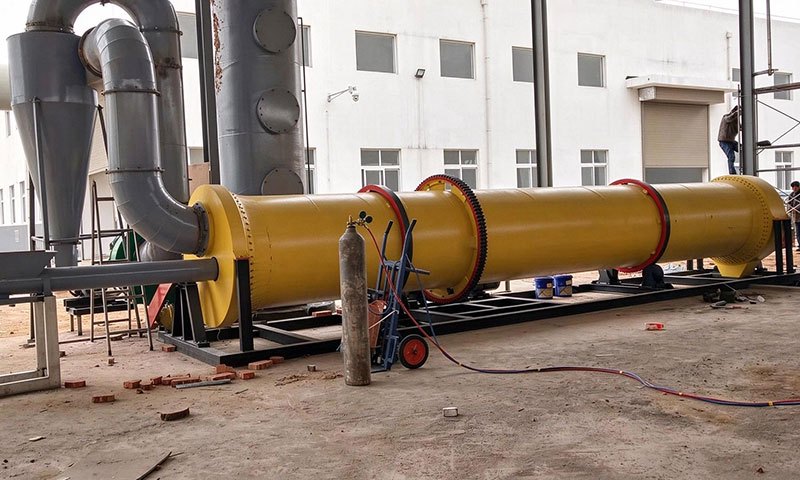
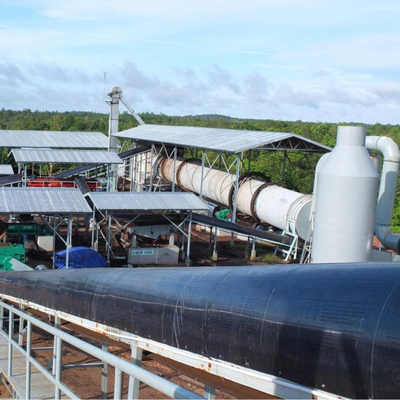
Henan Hongke Heavy Machinery Co., Ltd. is a Chinese manufacturer of industrial rotary kilns, rotary dryers, ball mills, crushers and complete mineral processing production lines. The industrial rotary dryer is a key dewatering unit in mineral processing. Its sizing, airflow configuration and heat efficiency directly affect drying results, energy consumption and operating cost. This article reviews the topic from three angles: sizing calculation, airflow configuration and heat efficiency, as a reference for mineral drying project selection and operation optimization.
1. Sizing: From Material Properties to Drum Dimensions
Sizing a rotary dryer is not simply matching a model to a throughput figure. It starts from material properties and works step by step to drum dimensions, rotation speed, retention time and supporting systems. The following basic parameters should be defined first:
Material name and properties: mineral type, particle size, stickiness, bulk density and whether it contains volatile components;
Initial moisture and target final moisture: these decide the amount of water to be evaporated and are the core basis for sizing;
Throughput: per hour or per day, and it must be clear whether the figure is for wet material or dry material;
Heat source type: coal, natural gas, biomass or steam heat exchange, which affects inlet gas temperature and system configuration;
Site conditions: altitude, ambient temperature, power supply and environmental requirements.
The evaporation rate can be estimated as follows: evaporation rate = wet material throughput × (initial moisture − target final moisture) / (100 − target final moisture). For example, with 20% initial moisture, 2% target final moisture and 10 t/h wet material, the evaporation rate is about 1.84 t/h. This value directly decides the required hot air volume and drum heat exchange area.
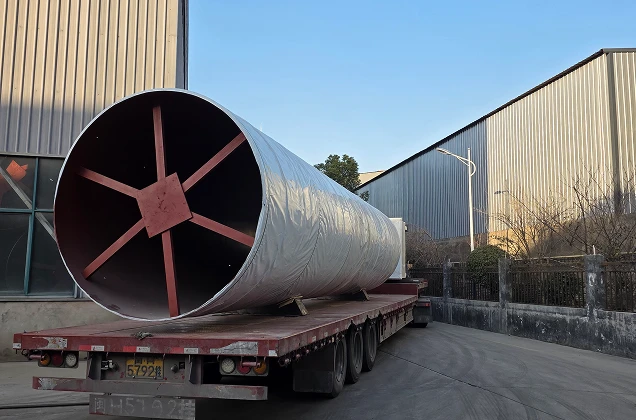
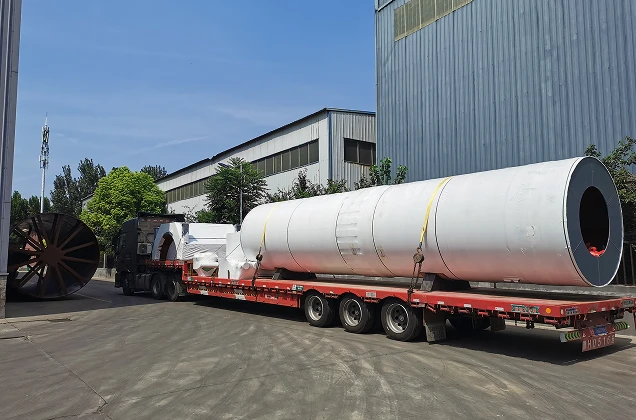
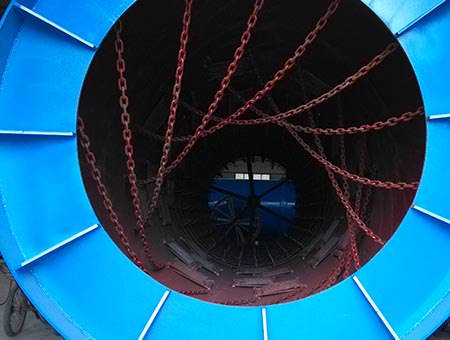
Drum dimensions are usually decided by the length-to-diameter ratio and retention time together. Mineral drying commonly uses a length-to-diameter ratio of 4–8, and retention time is adjusted in the range of 20–60 minutes according to particle size and moisture. After drum diameter and length are set, the lifting flight type, rotation speed and inclination should also match so that the material forms an even curtain inside the drum and contacts the hot air fully.
Sizing Parameter | Typical Range / Notes | Effect on Drying |
|---|---|---|
Length-to-diameter ratio | 4–8 | Affects retention time and heat exchange area |
Retention time | 20–60 min | Affects final moisture and output |
Drum rotation speed | 2–6 r/min, variable frequency adjustable | Affects curtain uniformity and material forward speed |
Inclination | 2%–5% | Affects axial movement speed of material |
Lifting flight type | Lifting, distributing or combined | Affects curtain thickness and hot air contact area |
Filling rate | 10%–20% | Too high affects airflow; too low reduces heat exchange efficiency |
Data refers to general industry ranges. Actual parameters should be based on material tests and the project technical agreement.
2. Airflow: Matching Hot Air Volume, Air Velocity and System Resistance
Airflow configuration is an easily underestimated part of rotary dryer design. If air volume is too low, evaporated moisture cannot be removed in time, humidity inside the drum rises and drying speed drops. If air volume is too high, heat loss increases, the dust control system load rises and the risk of fine particles being carried out increases.
Hot air volume is first decided by the heat balance. Based on evaporation rate, inlet gas temperature and exhaust gas temperature, the required hot air volume can be estimated. The higher the inlet temperature and the lower the exhaust temperature, the more water each unit of heat can evaporate. However, too low an exhaust temperature may cause condensation and bag filter blocking, so a safety margin should be kept in actual design.
Drum air velocity is usually controlled in the range of 1–3 m/s. If velocity is too low, material suspension and heat exchange are insufficient. If velocity is too high, fine particles are carried out of the drum and the dust control burden increases. For minerals with fine particle size or low bulk density, velocity should be kept at the lower end, together with suitable lifting flight type and drum rotation speed.
System resistance includes the drum, ducts, cyclone and bag filter resistance. Fan selection should calculate air volume and pressure under the most unfavorable condition and keep a margin of 10%–15%. Air volume is usually adjusted with variable frequency fans and valves, so operating parameters can be adjusted when material moisture changes.
3. Heat Efficiency: Heat Consumption Indicators and Influencing Factors
Rotary dryer heat efficiency is usually measured by the heat required to evaporate one kilogram of water, in kJ/kg water. Actual heat consumption of mineral drying systems is generally in the range of 3500–5000 kJ/kg water, depending on inlet temperature, exhaust temperature, drum heat loss, air leakage and material properties. The theoretical minimum is about 2500 kJ/kg water, which is difficult to reach in practice. Main reasons include:
Heat carried away by exhaust gas: the higher the exhaust temperature, the more heat is carried away;
Drum heat loss: drum insulation directly affects heat loss;
Air leakage: poor sealing at kiln inlet and outlet introduces cold air and lowers heat efficiency;
Material moisture and particle size: higher moisture and finer particle size make drying harder;
Excess air ratio: excess air carries away more heat.
Common measures to improve heat efficiency include raising inlet temperature (limited by material temperature resistance), lowering exhaust temperature (while preventing condensation), improving drum insulation, improving seals to reduce air leakage, using partial exhaust gas recirculation and optimizing lifting flights and rotation speed. For mineral drying projects, heat efficiency improvement usually requires step-by-step adjustment based on heat balance tests and operating data, not simply replacing one component.
4. Points to Watch in Selection and Operation
The drying result and operating economy of a rotary dryer depend on matching sizing, airflow and heat efficiency. The following points are worth attention in actual projects:
Run a material test first: mineral types vary widely in properties. A drying test should be done before selection to confirm final moisture, wall sticking and dust conditions;
Match airflow with heat source: the heat source type decides inlet temperature, and inlet temperature affects required air volume. The three should be calculated together;
Sealing and insulation: air leakage and heat loss are the main sources of heat efficiency loss and should be checked carefully during installation and operation;
Dust control system matching: after air volume is set, dust collector size and fan selection should match to avoid excessive system resistance;
Adjustable operating parameters: fan variable frequency, drum variable frequency and feed rate adjustment should be available so parameters can be adjusted when material changes.
5. FAQ
Q1: How is the throughput of a rotary dryer determined?
First confirm whether the throughput figure is for wet material or dry material. Then calculate the evaporation rate based on initial moisture and target final moisture. Finally determine drum dimensions based on retention time and drum heat exchange area. Do not select a model by wet material tonnage alone.
Q2: Is a larger airflow always better for a rotary dryer?
No. Too little airflow affects moisture removal and drying speed. Too much airflow increases heat loss and dust control load and may carry away fine particles. Air volume should be decided by heat balance and the drum air velocity range, with a reasonable margin.
Q3: What is the typical heat efficiency of a rotary dryer?
Actual heat consumption of mineral drying systems is generally in the range of 3500–5000 kJ/kg water. Heat efficiency depends on inlet temperature, exhaust temperature, insulation and air leakage. Specific values should be determined by heat balance tests and cannot be taken from a fixed figure.
Q4: Can Henan Hongke provide rotary dryer selection and supporting equipment?
Yes. Henan Hongke can provide rotary dryer selection, heat balance calculation, lifting flight configuration, dust control and fan matching, installation guidance and commissioning training. For more information, see spare parts and after-sales service.
6. Planning a Mineral Drying Project? Contact Henan Hongke
If you are planning an industrial rotary dryer project for minerals, or if you need dryer selection, airflow calculation and heat efficiency evaluation, please send the following information to Henan Hongke:
Mineral name, particle size, stickiness and bulk density;
Initial moisture, target final moisture and throughput;
Heat source type, fuel heating value and supply conditions;
Project location, altitude and ambient temperature;
Environmental, dust control and automation requirements.
Henan Hongke will provide a preliminary rotary dryer selection suggestion and heat balance proposal based on the project conditions. Please use contact Hongke to send your requirements, or visit our products page to learn more about rotary dryer products.