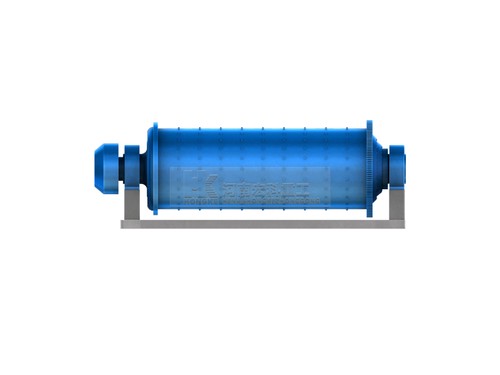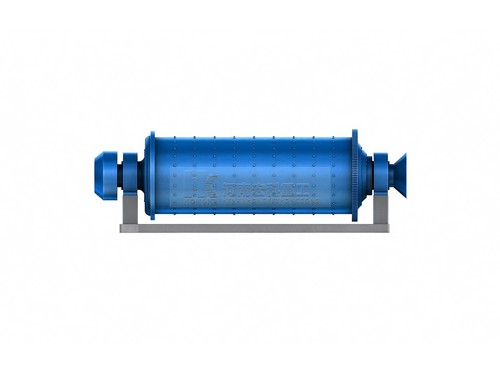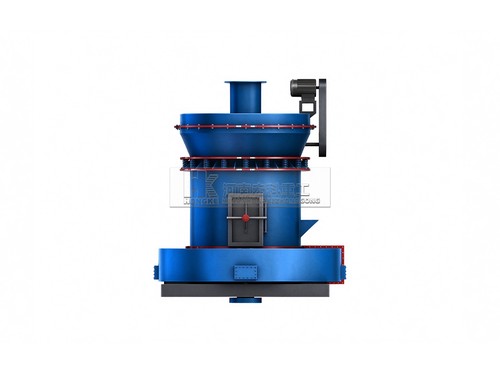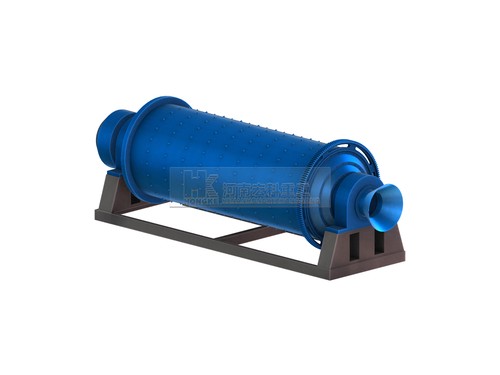

Mining Ball Mill Specifications: Wet vs Dry Grinding Applications
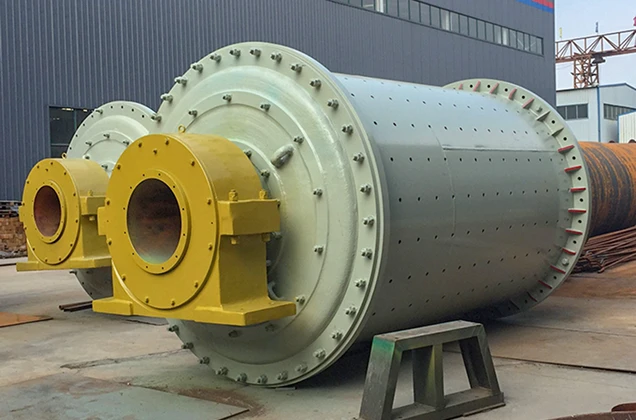
Henan Hongke Heavy Machinery Co., Ltd. is a Chinese manufacturer of industrial rotary kilns, rotary dryers, ball mills, crushers and complete mineral processing production lines. The mining ball mill is the core equipment in the grinding stage of a mine. Its specification selection and the matching of wet or dry grinding directly affect grinding fineness, throughput and operating cost. This article reviews the main specification parameters of mining ball mills and the application scenarios of wet and dry grinding, as a reference for mine selection and process design.
1. Main Specification Parameters of a Mining Ball Mill
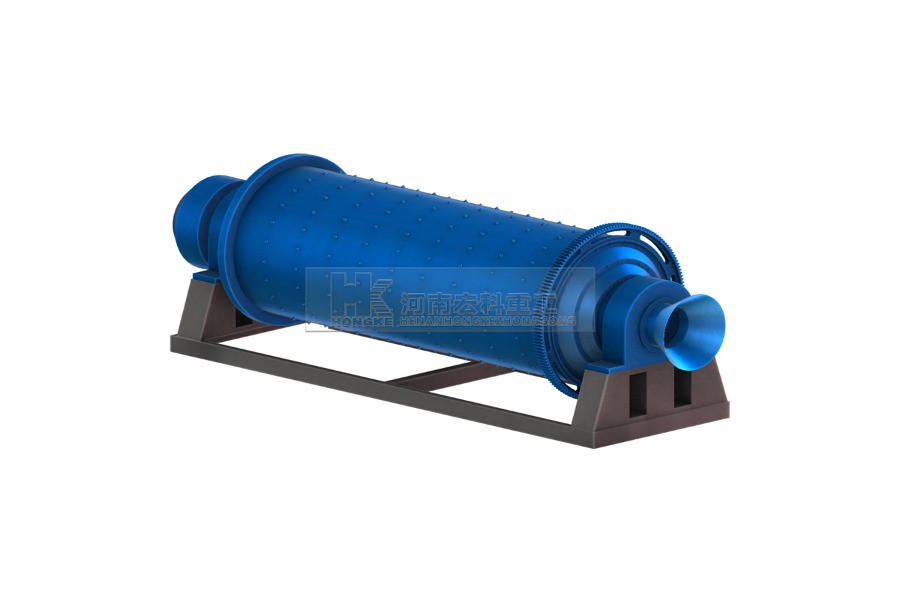
Mining ball mill specifications are usually written as “shell diameter × length”, such as Φ1.5×3.0m, Φ2.1×3.6m, Φ2.7×3.6m or Φ3.2×4.5m. The key parameters to check during selection include shell size, effective volume, ball load, rotation speed, main motor power and processing capacity. The table below lists some typical specifications and main parameters for preliminary selection. Actual selection should be based on ore properties, feed particle size, target fineness and throughput. Items marked “according to project configuration” should follow the contract technical agreement and final drawings.
Specification (m) | Effective Volume (m³) | Ball Load (t) | Speed (r/min) | Main Motor Power (kW) | Reference Capacity (t/h) |
|---|---|---|---|---|---|
Φ1.5×3.0 | 4.5 | 6–8 | 27–34 | 75–95 | 2–5 |
Φ2.1×3.6 | 9.5 | 15–20 | 23–25 | 210–240 | 8–15 |
Φ2.7×3.6 | 17.5 | 25–30 | 20–22 | 380–420 | 15–25 |
Φ3.2×4.5 | 31 | 45–50 | 18–20 | 800–1000 | 30–50 |
Φ3.6×4.5 | 41 | 60–70 | 16–18 | 1250–1500 | 50–80 |
The table shows that larger shell diameter and length usually mean higher ball load, power and capacity. Ball mill rotation speed should be controlled within a certain percentage of the critical speed, usually around 70%–80%, so that the grinding balls form an effective cascading motion instead of rotating together with the shell. Ball load, ball size distribution and shell rotation speed together decide grinding efficiency and product fineness.
2. Basic Differences Between Wet and Dry Grinding
Wet grinding and dry grinding are the two basic process methods for ball mills. The differences are mainly in the medium, discharge method, product form and supporting systems.
Wet grinding adds water or slurry into the shell for grinding, and the material is discharged as slurry. Its advantages are low dust, adjustable grinding concentration and easy control of product fineness, and it suits downstream mineral processing operations. Its disadvantages are the need for thickening, filtration or dewatering stages, and water consumption and tailings handling must be considered.
Dry grinding uses no liquid medium in the shell, and the material is discharged as dry powder. Its advantage is that the product is already dry powder and no dewatering stage is needed, so it suits direct dry powder supply or downstream dry processes. Its disadvantages are higher dust and the need for a dust control system, and material with too high moisture may block the mill or coat the balls.
Comparison Item | Wet Grinding | Dry Grinding |
|---|---|---|
Grinding medium | Water or slurry | No liquid, dry powder |
Discharge form | Slurry | Dry powder |
Dust | Relatively low | Relatively high, needs dust control |
Product fineness control | Adjusted by concentration and classification | Adjusted by air flow and classification |
Downstream process | Needs thickening, filtration or dewatering | Can enter dry process directly |
Application | Concentrator grinding, tailings regrinding | Dry powder products, cement, chemical materials |
Material moisture requirement | Wider range | Too high moisture may cause blocking |
3. Application Scenarios for Wet and Dry Grinding
The choice between wet and dry grinding mainly depends on the product form required by the downstream process and the properties of the material itself.
Scenarios suitable for wet grinding: metal ore concentrator grinding, such as copper, iron, gold, lead-zinc ores, where the ground product goes directly to flotation, magnetic separation or cyanide leaching; tailings regrinding and concentrate regrinding; cases where dust must be controlled; processes where the material has high moisture or needs water to form slurry.
Scenarios suitable for dry grinding: the product is supplied directly as dry powder, such as cement clinker, limestone, quartz sand and kaolin; the downstream process is dry, such as dry magnetic separation or dry classification; the project site has limited water resources or environmental requirements do not allow wet discharge; the material has low moisture and does not easily block.
4. Points to Watch During Selection
Selecting a mining ball mill is not just choosing a specification. Ore properties, process method and supporting systems should be considered together. The following points are worth attention in actual projects:
Run an ore grinding test first: a grinding test should determine ore grindability, the time and energy needed for the target fineness, as the basis for selection;
Match wet or dry grinding with the downstream process: wet grinding products need dewatering, while dry grinding products need dust control and moisture protection. The whole flow should be calculated together;
Ball load and ball size distribution: ball load affects grinding capacity and power consumption, while ball size distribution affects product particle size and grinding efficiency. Both should be adjusted according to material and target fineness;
Rotation speed and critical speed: speed is usually controlled at 70%–80% of critical speed. Too high a speed causes the balls to centrifuge, while too low a speed reduces grinding efficiency;
Liners and discharge method: wet and dry grinding use different liner forms, discharge grates and discharge devices and cannot be mixed;
Dust control and dewatering support: dry grinding needs a dust control system, while wet grinding needs thickening or filtration equipment. Both should be considered during selection.
5. FAQ
Q1: Is a larger mining ball mill always better?
No. The specification should match throughput, ore hardness and target fineness. A mill that is too large running at low load increases power and ball consumption, while a mill that is too small cannot reach the design output. Selection should be based on grinding tests and process calculations.
Q2: Can wet grinding and dry grinding be converted into each other?
Some equipment can be converted by changing liners, discharge devices and supporting systems, but not all ball mills are suitable. Wet and dry grinding differ in shell structure, discharge method and supporting systems. Equipment structure and process feasibility should be confirmed before conversion.
Q3: Does higher ball mill speed mean higher grinding efficiency?
No. Speed should be controlled at about 70%–80% of critical speed. If speed is too high, the balls rotate together with the shell and lose the cascading impact action, so grinding efficiency drops. If speed is too low, the balls are not lifted high enough and grinding results become worse.
Q4: Can Henan Hongke provide mining ball mill selection and supporting equipment?
Yes. Henan Hongke can provide mining ball mill selection, wet or dry grinding process configuration, liner and ball size distribution suggestions, supporting classification and dust control equipment, installation guidance and commissioning training. For more information, see spare parts and after-sales service.
6. Planning a Mining Ball Mill Project? Contact Henan Hongke
If you are planning a mine grinding project, or if you need mining ball mill selection, wet or dry grinding process configuration and supporting equipment, please send the following information to Henan Hongke:
Ore name, hardness, feed particle size and moisture content;
Target throughput and product fineness requirements;
Wet or dry grinding process and the downstream mineral processing or dry process;
Project location, power supply conditions and environmental requirements;
Automation control and dust control requirements.
Henan Hongke will provide a preliminary mining ball mill selection suggestion and configuration proposal based on the project conditions. Please use contact Hongke to send your requirements, or visit our products page to learn more about ball mill products.