
I. Background
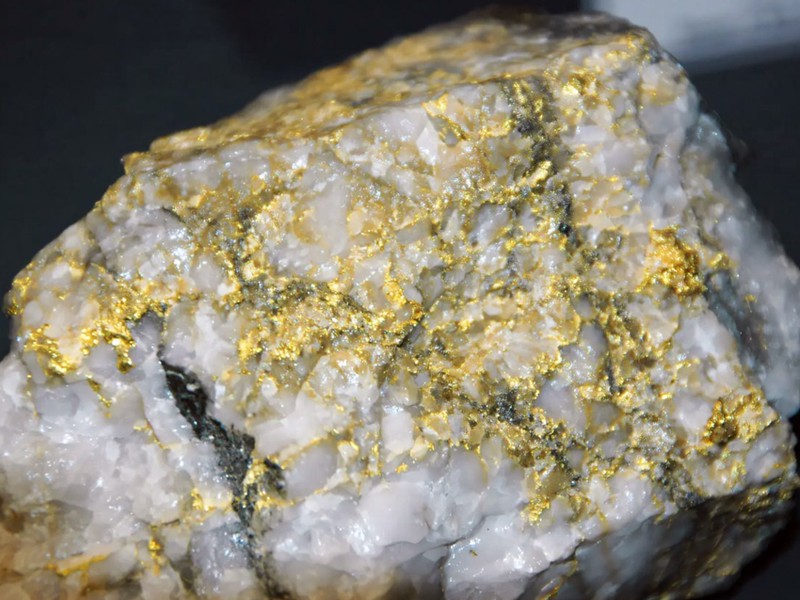
Quartz vein gold ore is one of the common types of lode gold ore and is distributed in many gold mining areas around the world.This type of ore is usually dominated by native gold, with gold mostly in free state or associated with a small amount of sulfides such as pyrite. The sulfide content is relatively low and the arsenic content is low, making it a relatively easy-to-process gold ore type. However, the dissemination size of gold, the degree of liberation, and the mud content vary considerably among different mining areas. If a single process is adopted, problems such as overgrinding and sliming of coarse gold and insufficient recovery of fine gold are likely to occur.
For low-sulfur, low-arsenic quartz vein primary gold ore, Henan Hongke Heavy Machinery recommends a combined beneficiation process of “crushing and screening — grinding and classification — centrifugal gravity separation — flotation”: coarse gold is recovered as early as possible by gravity separation, and the gravity tailings are then subjected to flotation to recover fine gold and gold-bearing sulfides, forming a rational configuration of “gravity first where possible, combined gravity and flotation.”
Note: The specific process and equipment selection should be based on the ore process mineralogy report and beneficiation test results. If the ore contains carbonaceous matter or has excessive arsenic or sulfide content, the pretreatment scheme should be adjusted separately.
II. Applicable Ore Characteristics
This solution is mainly applicable to quartz vein gold ore with the following characteristics:
Gold is mainly native gold, mostly in free state or associated with a small amount of pyrite;
Sulfide content is relatively low, arsenic content is low, and it is not a typical arsenic-bearing refractory gold ore;
The ore contains a certain proportion of both coarse gold and fine gold;
The raw ore has moderate mud content, and overgrinding and sliming of coarse gold should be avoided after grinding;
Both early recovery of coarse gold and flotation recovery of fine gold need to be considered.
For ore in which gold is almost entirely fine-grained liberated gold, a route such as “gravity separation — all-sliming cyanidation” may be adopted on the basis of experimental verification; for ore with high carbon or arsenic content, pretreatment processes such as decarbonization, roasting, biological oxidation, or pressure oxidation need to be added.
III. Recommended Process Flow
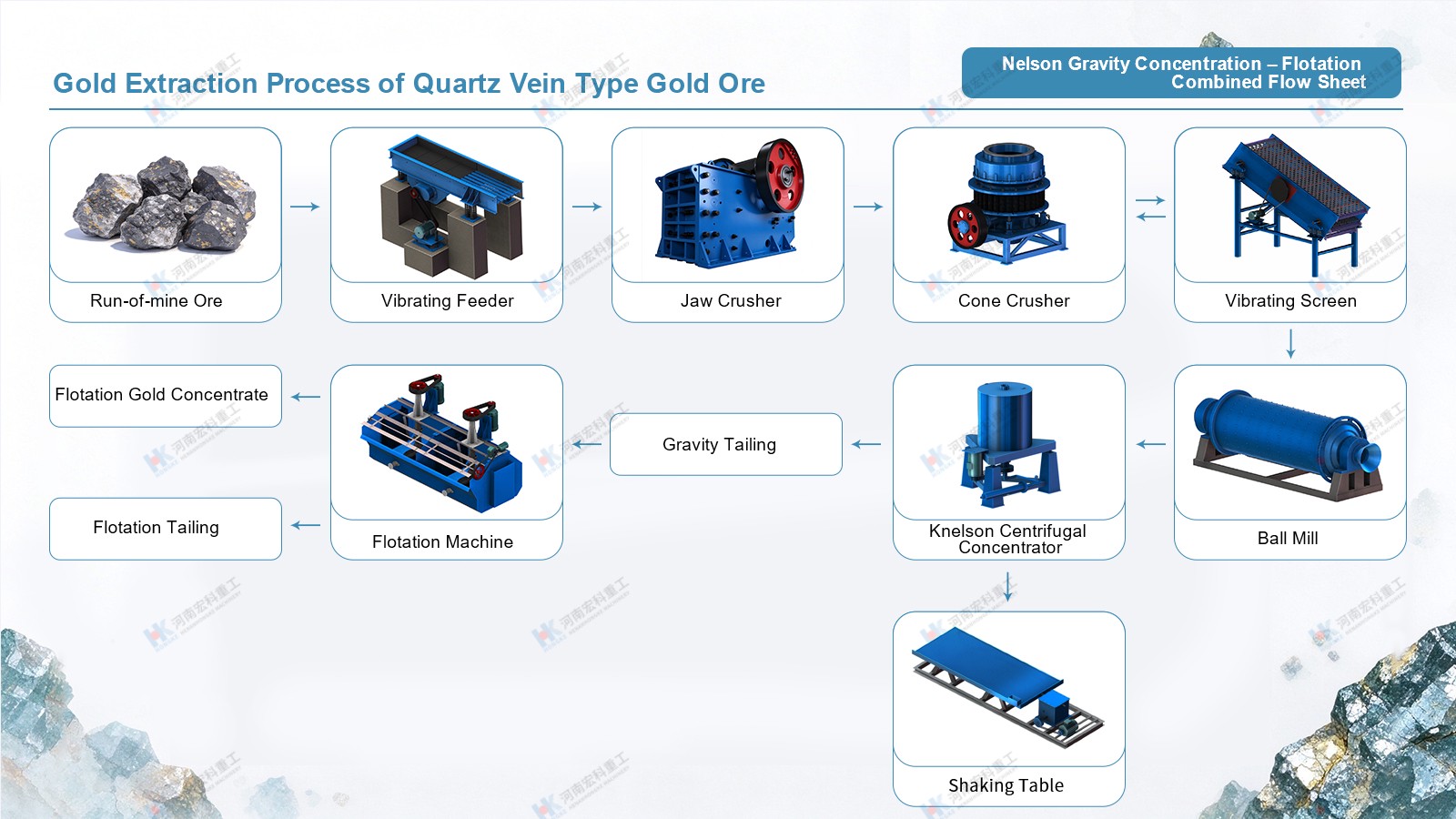
Process route: combined centrifugal gravity separation–flotation process
Raw ore → coarse crushing → medium-fine crushing → screening → grinding and classification → centrifugal gravity separation → gravity concentrate → shaking table cleaning → gold concentrate
Centrifugal gravity tailings → flotation roughing → flotation scavenging → flotation cleaning → flotation gold concentrate
Flotation tailings → thickening → pressure filtration → dry tailings discharge/tailings pond
Process description:
Crushing and screening
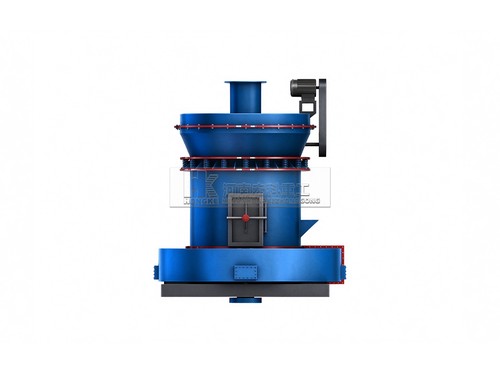
The raw ore is fed by a feeder into a jaw crusher for coarse crushing, then into a cone crusher for medium-fine crushing, and combined with a vibrating screen to form a closed-circuit crushing system to control the feed size to grinding and reduce grinding energy consumption.
Grinding and classification
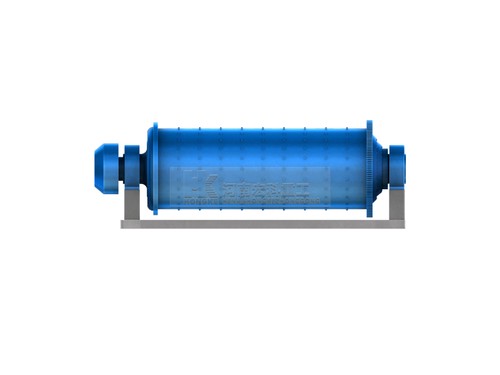
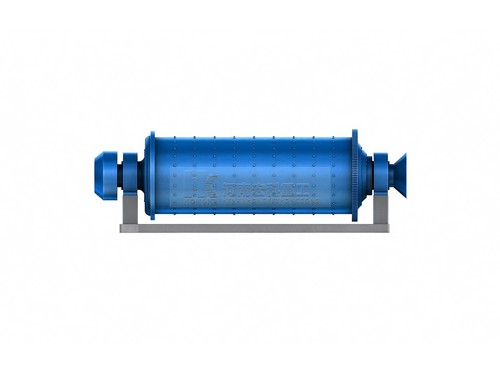
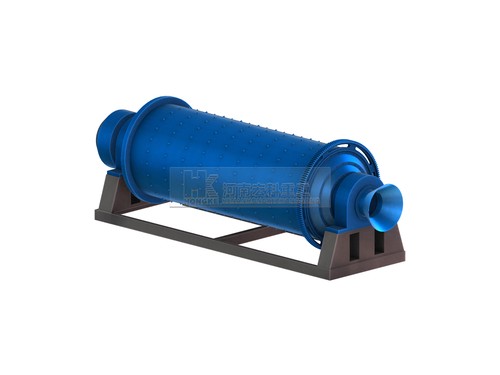
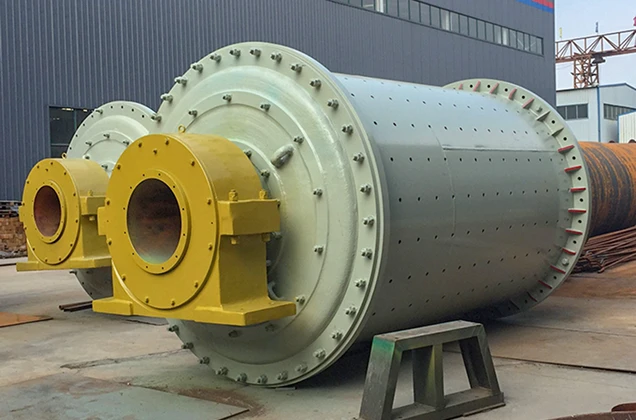
The crushed product enters a ball mill and forms a closed-circuit grinding and classification system with a spiral classifier or hydrocyclone. The grinding fineness should be determined according to the dissemination size of gold, with the principle of liberating coarse gold as early as possible while avoiding overgrinding and sliming.
Centrifugal gravity separation
The overflow from grinding and classification enters a centrifugal concentrator for gravity separation to preferentially recover liberated coarse native gold. The gravity concentrate can be further cleaned by a shaking table to obtain high-grade gold concentrate. The gravity separation stage has the function of early recovery, rapid recovery, and reducing the loss of coarse gold.
Flotation recovery of fine gold
The gravity tailings enter the flotation system, adopting a roughing–scavenging–cleaning flow to recover fine gold and gold-bearing sulfides. Commonly used reagents include collectors and frothers, with activators and regulators added when necessary. The specific reagent regime should be determined by beneficiation tests.
Concentrate and tailings treatment
The gravity gold concentrate and flotation gold concentrate are dewatered separately and then sent for smelting or sale; the flotation tailings are thickened by a thickener and dewatered by a filter press, and according to project conditions, dry tailings discharge, tailings pond storage, or backfilling is adopted, with proper water reuse and environmental compliance.
IV. Core Equipment Configuration
Process | Equipment Available from Hongke Heavy Machinery | Function Description |
|---|---|---|
Feeding and crushing | Vibrating feeder, jaw crusher, cone crusher, vibrating screen | Coarse crushing, medium-fine crushing and closed-circuit screening to control the feed size to grinding |
Grinding and classification | Ball mill, spiral classifier, hydrocyclone | Fully liberate gold minerals and control grinding fineness |
Gravity separation | Centrifugal concentrator, shaking table, spiral chute | Preferentially recover coarse native gold and clean gravity concentrate |
Flotation | Flotation machine, reagent mixing tank, reagent dosing system | Recover fine gold and gold-bearing sulfides |
Dewatering | Thickener, filter press, concentrator | Concentrate dewatering, tailings thickening and dry discharge |
Auxiliary | Conveying equipment, feeding equipment, pumps, automatic control system | Ensure stable operation of the process |
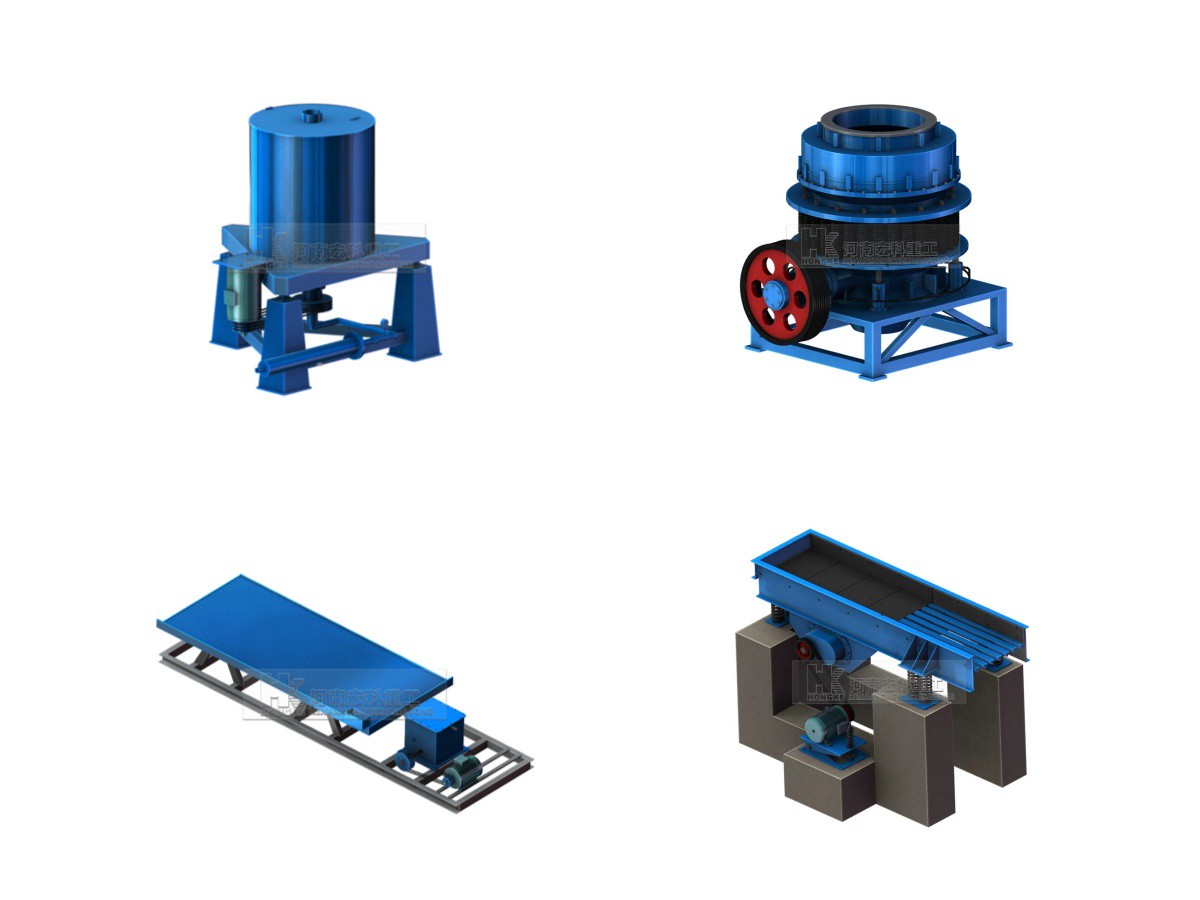
Equipment models and specifications should be selected and configured according to project throughput, raw ore properties, grinding fineness, and product index requirements. Hongke Heavy Machinery can assist in equipment matching and process layout based on ore samples and test reports provided by customers.
V. Advantages of the Solution
Early recovery of coarse gold, reducing overgrinding losses
Through centrifugal gravity separation after the grinding circuit, coarse native gold is recovered as early as possible, reducing the risk of coarse gold loss in flotation and tailings.
Combined gravity and flotation, covering both coarse and fine gold
Gravity separation recovers coarse gold, while flotation recovers fine gold and gold-bearing sulfides. The process has strong adaptability and is suitable for the common occurrence characteristics of low-sulfur, low-arsenic quartz vein gold ore.
Modular process, easy to customize according to the ore
According to ore test results, the grinding fineness, number of gravity separation stages, flotation circuit, and reagent regime can be adjusted to form different configurations such as single-stage or two-stage gravity separation and roughing–scavenging–cleaning.
Emphasis on environmental protection and tailings treatment
The flotation tailings can be equipped with thickening, pressure filtration, and dry discharge systems to reduce tailings water discharge and facilitate water reuse and on-site environmental management.
Complete equipment and supporting services
Hongke Heavy Machinery can provide complete equipment from feeding, crushing, grinding, gravity separation, and flotation to dewatering and tailings treatment, and can provide services such as process design, equipment manufacturing, installation and commissioning, and technical training according to project needs.
VI. Key Issues to Confirm Before Implementation
To ensure the implementation of the solution, it is recommended to complete the following work before equipment selection and process design:
Process mineralogy analysis: clarify the occurrence state of gold, dissemination size, and types of gold-bearing minerals;
Beneficiation tests: carry out gravity separation and flotation condition tests and closed-circuit tests to determine grinding fineness, reagent regime, and process structure;
Carbon, arsenic, and sulfur detection: if carbonaceous matter causes gold loss or arsenic and sulfur contents are high, the pretreatment scheme needs to be adjusted;
Confirmation of throughput and site conditions: determine equipment specifications, layout scheme, and investment budget accordingly;
Confirmation of tailings and environmental protection scheme: clarify dry tailings discharge, tailings pond, or backfilling methods, and provide supporting water reuse and environmental protection facilities.
VII. Hongke Heavy Machinery Service Process
Ore property communication → Test recommendations and preliminary process design → Equipment selection and quotation → Process layout and equipment manufacturing → Installation and commissioning → Operator training → After-sales technical service
Henan Hongke Heavy Machinery can provide quartz vein gold ore beneficiation process consulting and equipment supporting services according to customer ore samples and project requirements. We recommend that customers attach importance to beneficiation tests in the early stage of the project and determine the final process and equipment configuration based on test data, avoiding direct application of generic solutions.
VIII. Conclusion
The key to beneficiating low-sulfur, low-arsenic quartz vein gold ore lies in rationally configuring a combined process of “gravity separation for early recovery of coarse gold and flotation for recovery of fine gold” according to the dissemination size and occurrence state of gold. Henan Hongke Heavy Machinery is willing to provide pragmatic support from scheme design to equipment operation for gold ore projects with its complete set of beneficiation equipment and process supporting capabilities.