

In the steel industry, iron ore smelting follows two main routes: the traditional blast furnace method and direct reduction. The blast furnace route requires sintering and coking of iron ore to reduce iron oxides into liquid pig iron at high temperatures. Direct reduction, on the other hand, reduces iron oxides in the ore to solid metallic iron at temperatures below the ore's melting point (typically 900-1100°C). The product resembles a sponge in structure, hence the name "sponge iron."
Direct Reduced Iron (DRI) has become an important high-quality steelmaking raw material that can replace scrap steel, thanks to its low impurity content and stable composition. Its total iron content can reach 90%-93%, with a metallization rate exceeding 85%, and extremely low levels of harmful elements such as sulfur and phosphorus. With global scrap steel resources becoming increasingly scarce and the advancement of "dual carbon" goals, the market demand for DRI continues to grow, and it is considered one of the core pathways toward "near-zero carbon emissions" in the steel industry.
This article starts from iron ore raw materials, combines Hongke Heavy Industry's process experience in coal-based rotary kiln direct reduction, and systematically presents the complete production process of DRI, the core equipment required at each stage, as well as the main uses of the product and selection recommendations.
I. Raw Material Foundation: What Kind of Iron Ore Can Produce DRI?
The production of DRI has relatively high requirements for raw materials. Not all iron ores are suitable for direct reduction processes. The grade, particle size, and gangue composition of the raw material directly affect the quality and economic efficiency of the final product.
Raw Material Types:
Raw Material Type | Characteristics | Suitability |
|---|---|---|
High-grade lump ore | Iron grade >66%, low gangue content | Can be fed directly into the kiln, short process flow |
Iron concentrate fines | Requires beneficiation, grade 35-65% | Requires pelletizing or briquetting before kiln feed |
Mill scale/dust | Iron-bearing waste, resource recovery | Requires pretreatment, can be blended |
In terms of raw material requirements, the metallization rate of DRI is generally required to be 85-93%, silica content typically below 2.5%, and carbon content controlled at 0.5-2.0%. For low-grade complex iron ores, the direct reduction roasting-magnetic separation process can still produce high-quality DRI powder with an iron grade of 88-92% and an iron recovery rate of over 80%.
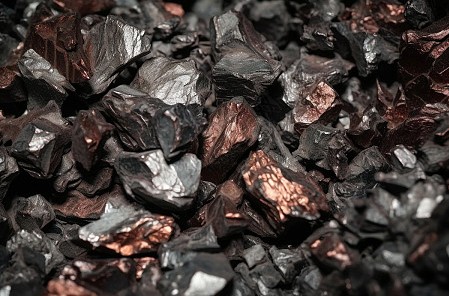
II. Product Value: Core Uses of Direct Reduced Iron (DRI)
After cooling, crushing, magnetic separation, and other processing steps, DRI is mainly used in the following areas:
Electric Arc Furnace (EAF) Steelmaking (accounting for over 70%): This is the most important application direction for DRI. Compared with scrap steel, DRI has a stable chemical composition and low impurity content (especially P, S, and N), which is beneficial for producing high-quality steel grades (such as pipeline steel, bearing steel, and stainless steel mother liquid). Using DRI can shorten the smelting cycle, reduce electrode consumption, and extend furnace lining life. When scrap steel prices are high, using DRI can also significantly reduce raw material costs.
Blast Furnace Ironmaking: DRI can be used as a portion of blast furnace burden. For every 10% increase in the metallization rate of blast furnace burden, hot metal output can increase by approximately 7%, and the coke rate can decrease by approximately 7%.
Converter Steelmaking Coolant: DRI can be used as a coolant in converter steelmaking without altering the normal smelting regime, and it helps reduce the content of elements such as P, S, Cu, and N in steel.
Substitute for Foundry Pig Iron: Used in the production of ductile iron and compacted graphite iron.
Other Applications: Powder metallurgy raw materials, direct rolling into finished products, etc. HBI (Hot Briquetted Iron), which has high density and strong oxidation resistance after briquetting, can be stored in the open air for long periods and is convenient for ocean transportation. It is the main form of global DRI trade (accounting for more than 80% of trade volume).
III. Complete Process Flow and Core Equipment Analysis
There are several production process routes for DRI, among which the most widely used are the coal-based rotary kiln method (accounting for about 20% of global DRI production) and the gas-based shaft furnace method (accounting for about 75% of global DRI production). In regions such as China, India, South Africa, and Vietnam, where natural gas is scarce but coal is abundant, the coal-based rotary kiln remains the most cost-effective DRI route. This article uses the rotary kiln method as the main line to introduce the complete process flow and required equipment from raw material to finished product.
Overall Process Flow Overview
DRI production is a continuous physical and chemical process. The complete flow from raw material processing to finished product output can be summarized as follows:
Raw material preparation (ore/coal/desulfurizer pretreatment) → Batching and mixing → Rotary kiln reduction roasting (950-1100°C) → Cooling → Magnetic separation → DRI product → (Optional) Hot briquetting → HBI product
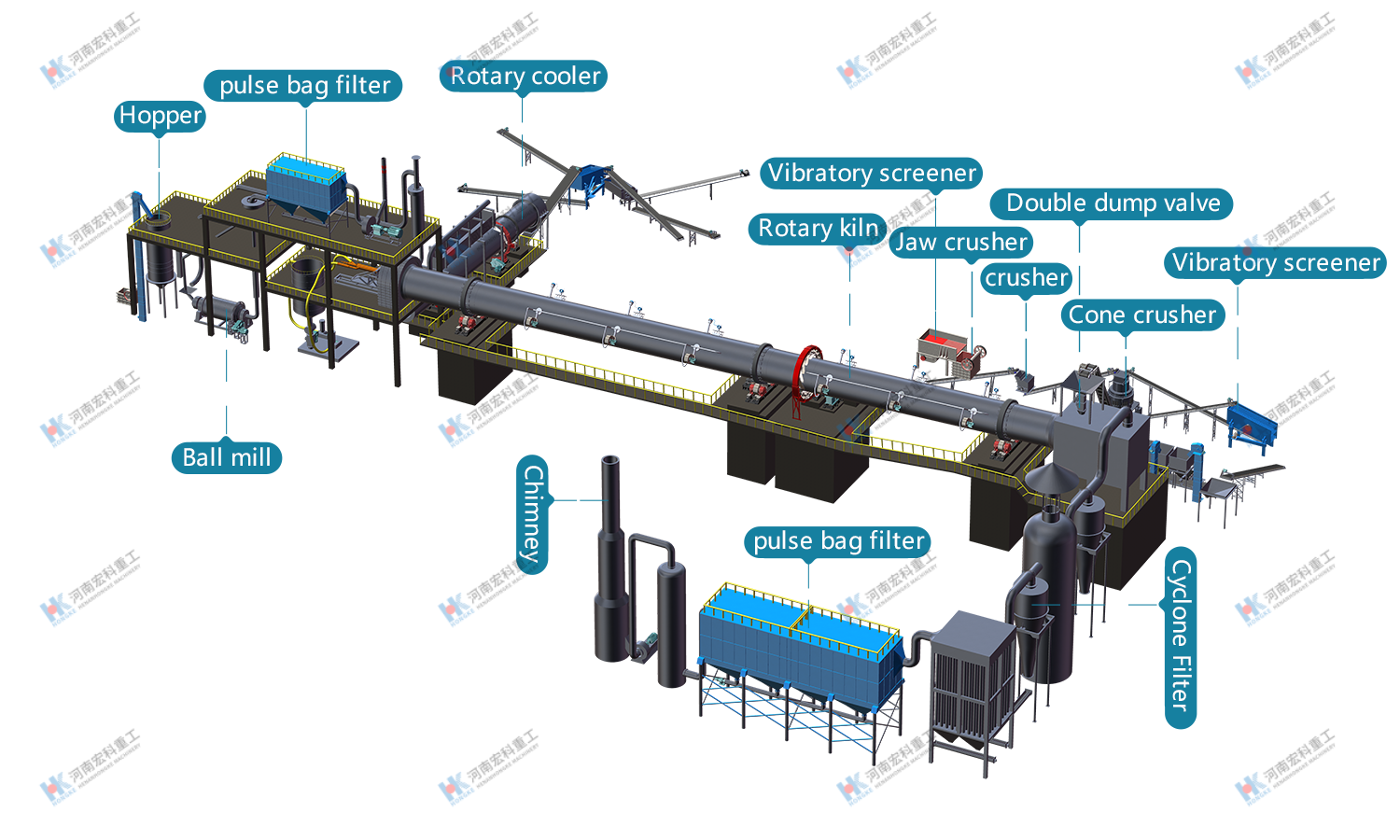
Stage 1: Raw Material Preparation and Pretreatment
Process Objective: To process iron ore raw materials into a form and particle size suitable for kiln feed, and to mix them with reducing agents, desulfurizers, and other auxiliary materials in proportion.
1. Iron Ore Pretreatment
Lump ore screening: The ore is screened by a vibrating screen into 10-20mm (kiln feed) and <10mm (fines require pelletizing or are sold separately).
Pelletizing (if using fines): The fines are formed into Φ8-16mm pellets by a disc pelletizer/granulator, then dried and preheated to 300-500°C by a grate machine to achieve sufficient strength before kiln feed.
Ore washing (optional): Washing high-clay ores to reduce SiO₂ and Al₂O₃ content.
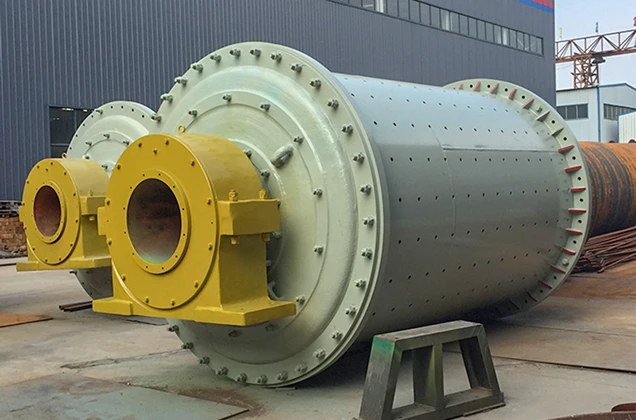
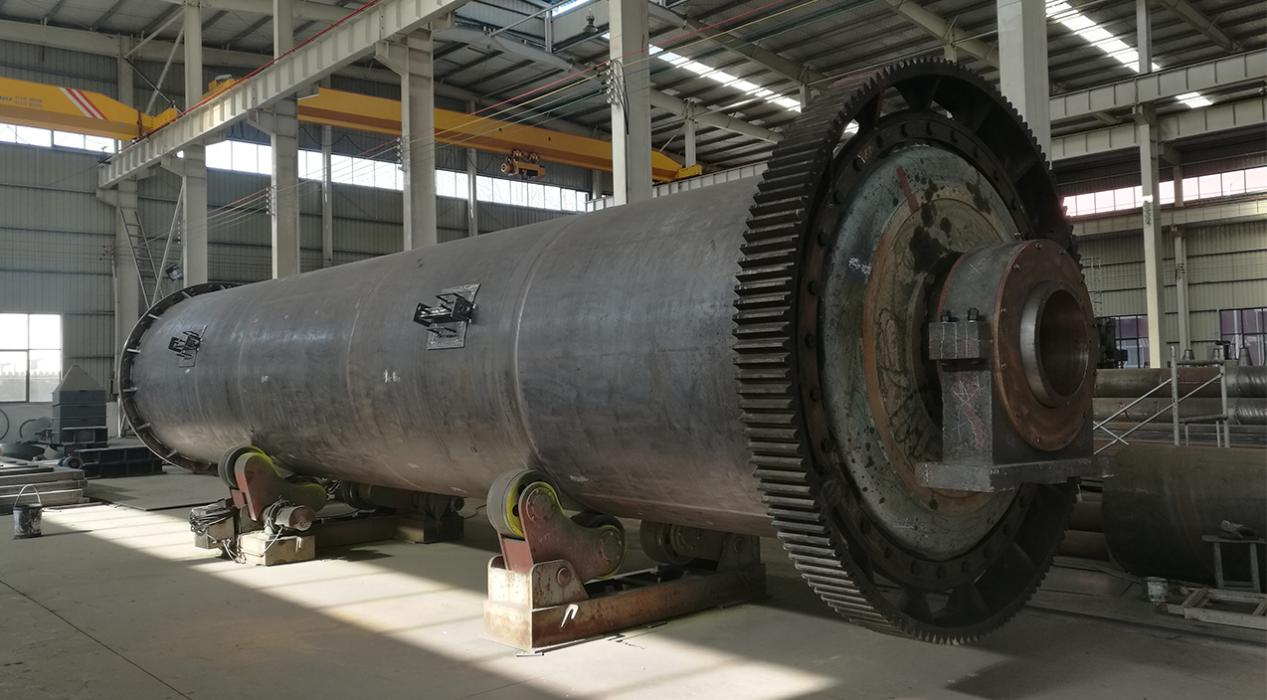
Required equipment: Jaw crusher (coarse crushing), Cone crusher (medium/fine crushing), Vibrating screen, Ball mill (grinding ore to -200 mesh >80%), Magnetic separator (beneficiation), Disc pelletizer/Briquetting press (forming green pellets or briquettes), Grate machine (drying and preheating).
2. Coal Pretreatment
Crushing and screening: Raw coal is crushed and screened by a vibrating screen into 10-25mm (kiln feed) and <10mm (fines can be used as fuel or pulverized).
Coal blending: Different coal types are blended according to fixed carbon, volatile matter, and sulfur content indicators to ensure stable coal quality for kiln feed.
Required equipment: Jaw crusher, Vibrating screen, Batching belt scale system.
3. Desulfurizer/Flux Preparation
Limestone is crushed to 5-15mm and mixed with ore and coal according to the ratio.
Required equipment: Crusher, Vibrating screen.
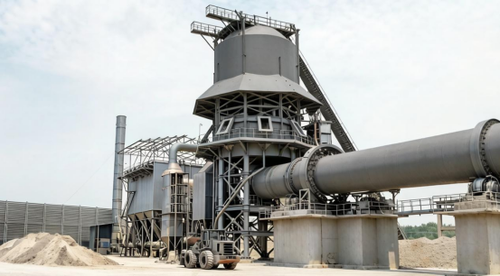
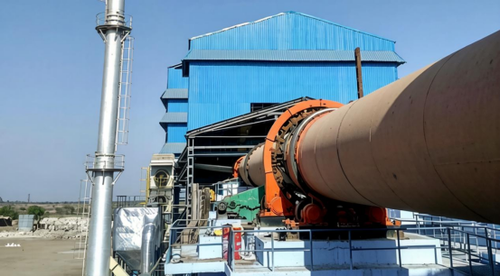
Stage 2: Rotary Kiln Reduction Roasting – The Core Process
Process Objective: To reduce iron oxides to metallic iron at high temperatures (950-1150°C) using solid carbon (coal) as the reducing agent.
This is the core step in DRI production. The pretreated raw materials, reducing coal, and desulfurizer are mixed in proportion and fed into the rotary kiln from the kiln tail (the higher end). The material continuously tumbles and moves toward the kiln head as the shell rotates, coming into counter-current contact with the hot gas flow.
Temperature Zones and Reactions Inside the Kiln:
Drying/preheating zone (kiln tail, 200-600°C) : Free and adsorbed water is removed from the material, and volatile matter in the coal begins to be released. The ore structure develops micro-cracks due to dehydration, which facilitates the inward diffusion of reducing gases.
Prereduction zone (600-800°C) : CO and H₂ generated from the pyrolysis of fixed carbon and volatile matter in the coal begin to reduce Fe₂O₃ → Fe₃O₄ → FeO. This zone accounts for approximately 40-50% of the total reduction.
Main reduction zone (800-1000°C) : This is the region with the fastest reduction reaction. FeO is largely reduced to metallic iron (Fe). Reactions: FeO + CO → Fe + CO₂; FeO + C → Fe + CO. This zone accounts for approximately 40-50% of the total reduction. The temperature is best controlled at 950±30°C.
Final reduction/carburizing zone (1000-1100°C, kiln head) : Residual FeO is further reduced, while some metallic iron absorbs carbon (carburization) to form Fe₃C. Controlling the endpoint temperature at 1050-1100°C can achieve a metallization rate of 90-93%.
Key Process Parameters:
Metallization rate (M): M = Fe_metal / Fe_total × 100%. Target: 85-93%.
Kiln atmosphere: A strongly reducing atmosphere must be maintained (CO/CO₂ ≥ 2.5, H₂/H₂O ≥ 2.0).
Fill rate: Typically 8-12%.
Kiln speed: 0.3-1.0 rpm, variable frequency drive.
Material residence time: Usually 6-10 hours (depending on kiln length, speed, slope, and fill rate).
Coal-to-iron ratio (C/Fe): Typically 0.6-1.0.
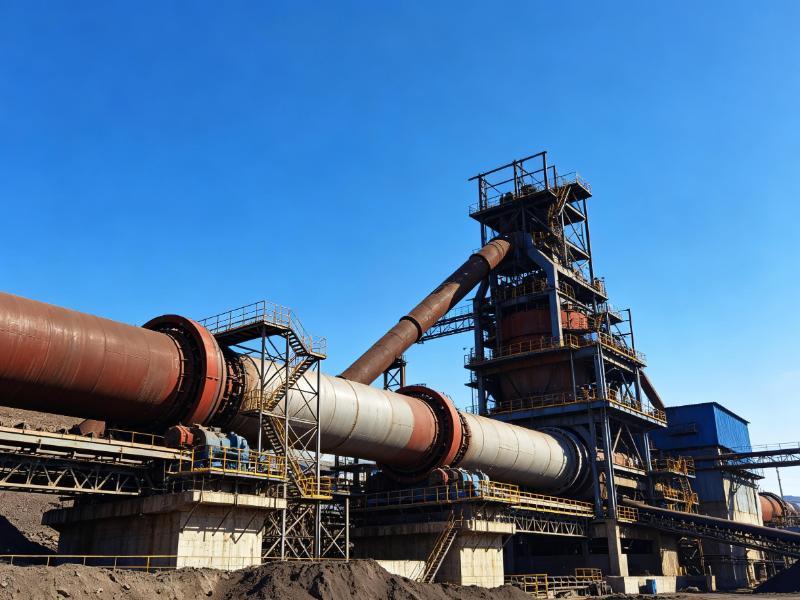
Core Equipment: Rotary Kiln
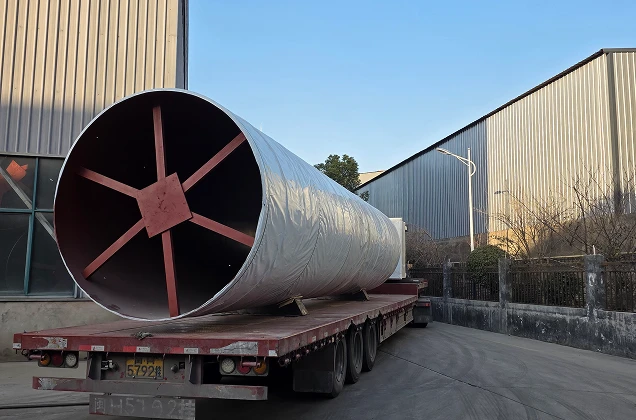
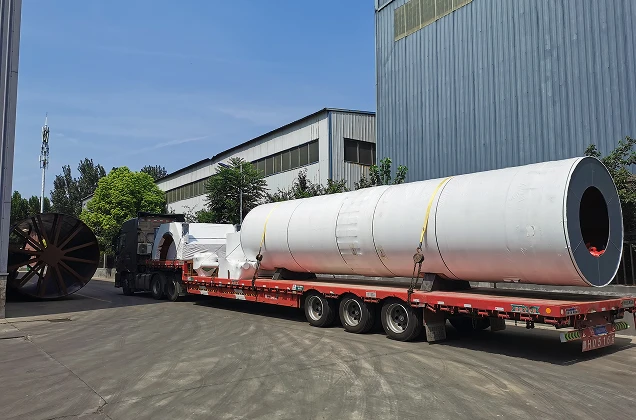
The rotary kiln is the core equipment with the highest investment and energy consumption in the DRI production line. Its key features include:
Length-to-diameter ratio (L/D): Recommended 14-18:1, much shorter than cement kilns.
Refractory lining: The reduction zone (800-1100°C) is recommended to use high-alumina bricks (Al₂O₃ ≥ 70%).
Sealing device: The lifeline of the DRI kiln; composite sealing must be used with an air leakage coefficient <3%.
Stage 3: Cooling
Process Objective: To cool the high-temperature sponge iron (approx. 1000-1100°C) discharged from the kiln to the temperature required for subsequent processing, preventing reoxidation.
Required Equipment:
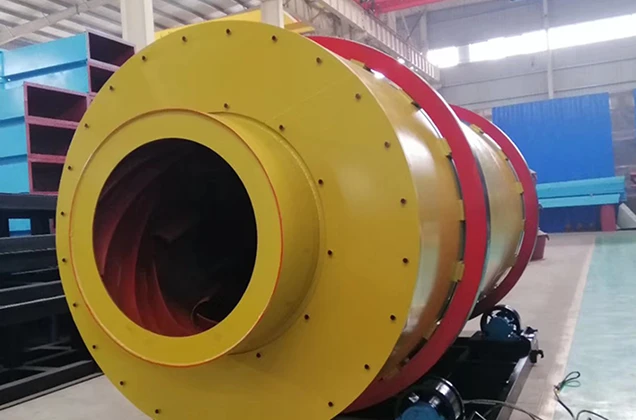
Single-shell cooler: The preferred choice for DRI lines; cools to <100°C through counter-current heat exchange with cold air.
Shaft cooler: Suitable for large-scale lines (>300,000 t/y); high cooling efficiency, heat recovery rate >70%.
DRI is prone to "secondary oxidation" (2Fe + O₂ → 2FeO) with oxygen in the air in the 400-600°C range. Therefore, the cooler must maintain a slight positive pressure or be purged with nitrogen to prevent air ingress.
Stage 4: Product Separation and Post-Treatment
Process Objective: To separate the sponge iron from unreduced gangue, residual coal ash, etc., obtaining a pure DRI product.
1. Crushing and Screening: The cooled DRI must be crushed and screened.
Required equipment: Jaw crusher, Vibrating screen.
2. Magnetic Separation: Separation is achieved using the difference in magnetic properties between DRI (magnetic) and gangue (non-magnetic).
Required equipment: Permanent magnetic drum separator (magnetic field intensity 1500-2500 Gauss), two-stage separation (roughing + cleaning) to ensure DRI grade TFe ≥ 90%.
3. Hot Briquetting (HBI process, optional but mainstream) :
Process Objective: High-temperature DRI (approx. 800-900°C) is directly taken from the kiln head and fed into a briquetting press to form high-density briquettes (density ≥ 5.0 g/cm³).
Required equipment: Briquetting press (hydraulic, 630T-1000T), Water-cooled screw conveyor.
HBI advantages: High density facilitates ocean transportation; isolation from air prevents DRI reoxidation (DRI slowly oxidizes and releases heat in air, and can even spontaneously ignite).
Auxiliary Systems: Flue Gas Treatment and Waste Heat Utilization
The high-temperature flue gas from the kiln tail contains CO (up to 10-20%) and has high calorific value. It is typically equipped with:
Dust collection system: Cyclone pre-collector + Baghouse dust collector (PPS or PTFE-coated filter media).
Waste heat recovery system: Waste heat boiler for power generation or raw material preheating using the high-temperature flue gas.
Desulfurization and denitrification devices: SNCR + semi-dry desulfurization to ensure emissions meet standards.
IV. Summary of Main Equipment List (Reference for 200,000 t/y Production Line)
The following is a typical production line configuration based on high-grade lump ore + bituminous/anthracite coal blend, with product being DRI or HBI:
No. | Process Stage | Core Equipment | Example Specification | Quantity |
|---|---|---|---|---|
1 | Raw Material Pretreatment | Jaw Crusher (Ore) | PE-600×900 | 1 unit |
Vibrating Screen (Ore) | 2YK-2160 | 2 units | ||
Jaw Crusher + Screen (Coal) | PE-400+2YK | 1 set | ||
Batching Belt Scale System | B1000 Electronic Belt Scale | Several | ||
2 | Rotary Kiln Reduction | DRI Rotary Kiln | Φ4.0×60m / Φ4.2×65m | 1 unit |
Kiln Head Burner | Four-channel coal/gas | 1 set | ||
Kiln Tail Sealing | Labyrinth + leaf spring composite | 1 set | ||
3 | Cooling System | Single-shell Cooler | Φ2.2×22m | 1 unit |
4 | Magnetic Separation | Permanent Magnetic Drum Separator | CTB-1024 | 2-3 units |
Vibrating Screen | 2YK-1548 | 1-2 units | ||
5 | HBI System (Optional) | Briquetting Press | 630T/1000T Hydraulic | 1-2 units |
Cooling Conveyor Line | Water-cooled conveyor belt | 1 set | ||
6 | Flue Gas Treatment | Settling Chamber/Cyclone | Multi-tube cyclone | 1 set |
Waste Heat Boiler (Optional) | Evaporation 5-8 t/h | 1 unit | ||
Baghouse Dust Collector | Pulse type, PPS filter | 1 set | ||
Desulfurization/Denitrification | SNCR + Semi-dry desulfurization | 1 set | ||
7 | Electrical Control | DCS System | — | 1 set |
Typical Kiln Types for Different Capacities:
Capacity (10,000 t/y) | Recommended Kiln Type | Remarks |
|---|---|---|
10 | Φ3.6×55m | Small-scale line, suitable for starting |
20 | Φ4.0×60m or Φ4.2×65m | Mainstream specification |
30 | Φ4.5×70m or double kilns | Single kiln limit approx. 350,000 t/y |
50 | Double kilns (2×Φ4.5×70m) | Large plant configuration |
V. Frequently Asked Questions
Q1: How to prevent and manage frequent ring formation inside the rotary kiln?
A: Ring formation in DRI kilns is the most common and troublesome issue, essentially caused by localized high temperatures that soften and adhere the material surface. There are three common types: ① Low-temperature slurry ring (kiln tail 400-600°C): Fine powder and moisture form a sticky slurry. Prevention: Strengthen screening, control feed moisture <3%. ② Medium-temperature bonding ring (800-950°C): FeO formed during reduction reacts with SiO₂/Al₂O₃ to form low-melting-point iron silicate (Fe₂SiO₄, melting point approx. 1200°C), which softens and bonds in localized high-temperature areas. Prevention: Control ore SiO₂+Al₂O₃ <5%, maintain uniform kiln temperature below 1050°C, and add limestone to raise the slag melting point. ③ High-temperature over-burning ring (>1100°C): Local overheating causes semi-melting of the material. Prevention: Burner flame should not directly impinge on the material, control kiln head temperature <1100°C. Remedies: Mild rings can be eliminated by raising temperature or reducing speed for friction removal; severe rings require kiln shutdown for pneumatic or manual removal. The fundamental solution is a combination of raw material pretreatment, precise temperature control, and atmosphere control.
Q2: DRI product has high sulfur content (>0.05%), how to reduce sulfur?
A: Sulfur in DRI mainly comes from coal (sulfur in coal → gas-phase H₂S/COS → absorbed by DRI). Ways to reduce sulfur: ① Use low-sulfur coal (S<0.6%); ② Increase desulfurizer (limestone) addition to 5-8%, so CaO reacts with H₂S to form CaS into the slag phase; ③ Increase slag basicity (CaO/SiO₂ ≥ 1.5) to enhance thermodynamic conditions for desulfurization; ④ Control kiln atmosphere (high CO/CO₂ is conducive to stable CaS existence, preventing sulfur reversion); ⑤ If necessary, add desulfurizer for deep removal in the EAF stage, but at higher cost. It is recommended to achieve this in one step within the kiln.
Q3: Does DRI spontaneously ignite in air? How to store it safely?
A: Yes, DRI (especially fine DRI powder) slowly oxidizes and releases heat in air. When heat accumulates to the ignition point (approx. 200-300°C), it can spontaneously ignite. It is a recognized hazardous material. Safety measures: ① Prioritize HBI production: High density and low specific surface area after hot briquetting make it less prone to oxidation, allowing safe storage for 3-6 months. ② Nitrogen-sealed storage: DRI silos and packaging should have nitrogen protection with O₂ <5%. ③ Control moisture: DRI contact with water produces H₂ (3Fe + 4H₂O → Fe₃O₄ + 4H₂↑), causing iron loss and generating explosive gas. Must be moisture-proof. ④ Stockpile management: DRI stockpile height <3m, temperature <60°C, regular temperature checks, and CO monitoring. ⑤ Transport: Use sealed tankers or nitrogen-purged containers; open trucks are prohibited.
Q4: What is the approximate payback period for a new 200,000 t/y DRI rotary kiln line?
A: Rough estimate (coal-based route, including HBI briquetting): Total investment is approximately RMB 150-250 million (including mining/raw material assurance, rotary kiln, magnetic separation, HBI, environmental protection, civil works and installation, electrical and automation). Raw material costs (ore + coal) are about RMB 1,800-2,200/t DRI, processing costs (electricity + labor + depreciation + environmental + maintenance) about RMB 600-900/t. Total cost per ton is approximately RMB 2,400-3,100. DRI ex-factory price (depending on region and quality) is about RMB 3,200-4,000/t, and HBI can add a premium of RMB 200-400/t. Net profit per ton is about RMB 500-900. At full capacity of 200,000 t/y, annual net profit is about RMB 100-180 million. The payback period is approximately 2-3 years (including 1-1.5 years of construction). If an HBI production line for export is built, the payback period can be further shortened to 1.5-2.5 years. This is the core logic that makes DRI projects attractive for investment.
Q5: What should the energy consumption target be for rotary kiln DRI?
A: Advanced thermal consumption targets for coal-based rotary kiln DRI: Standard coal consumption approximately 0.65-0.85 t/t DRI (equivalent to approximately 13-17 GJ/t). Influencing factors: ① Ore grade (every 1% increase in TFe reduces energy consumption by about 3%); ② Whether a preheater is installed at the kiln tail (recovers waste heat, reducing energy consumption by 8-12%); ③ Cooler hot air recovery (recovering 400-600°C hot air as secondary air, reducing energy consumption by 5-8%); ④ Kiln insulation (aluminum silicate fiber + lightweight brick composite, reducing heat loss by 3-5%); ⑤ Waste heat power generation (large lines can be equipped with pure low-temperature waste heat boilers, self-generating 30-50% of power). When committing to clients, standard coal consumption ≤0.75 t/t DRI is a reasonable and competitive indicator.
Customized Solution Services
Each DRI production line is unique – ore type, grade, capacity scale, fuel conditions, and product uses all differ. We offer professional one-on-one customized solution services, covering the complete process flow design and equipment matching from raw material handling to finished product output.
Contact Us: No matter which stage your project is at – raw material evaluation, process validation, or equipment selection – we welcome your enquiry.
The right way to contact a manufacturer: Please inform us of your ore type, iron grade, target capacity, and product use (e.g., DRI for EAF steelmaking), and our engineers will provide you with a tailored DRI production solution.