

Key Commissioning Points for Ceramsite Sand Rotary Kilns and Ring Formation Treatment: An Operational Guide
The stable operation of a ceramsite sand rotary kiln depends on the precise control of two key links: standardized operations during the commissioning phase, and timely handling of ring formation problems. The former determines whether the equipment can smoothly enter normal production status, while the latter directly affects the continuity of the production cycle and the stability of product quality. Below is a summary of the practical key points for these two links.
I. Commissioning Steps for Ceramsite Sand Rotary Kilns
Commissioning of a ceramsite sand rotary kiln is usually divided into five stages, progressing from shallow to deep and gradually increasing load, ensuring that the equipment completes performance verification under controlled conditions.
1. Preparatory Work Before Commissioning
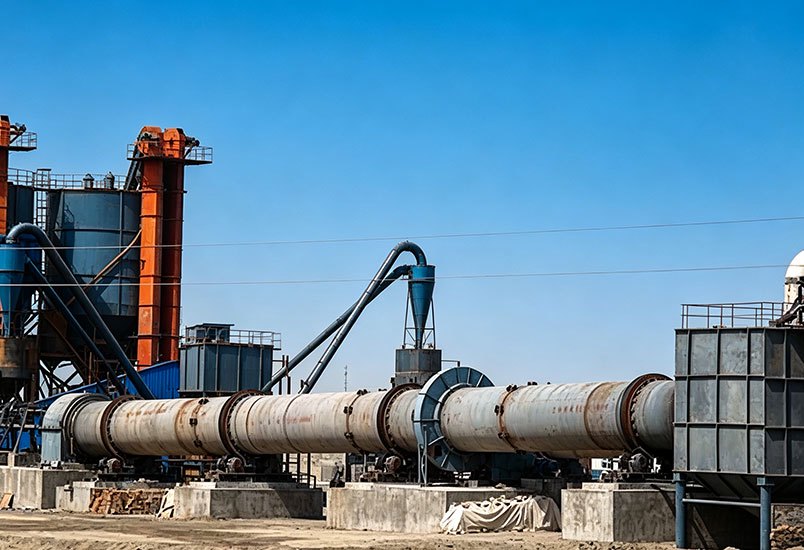
Before starting any commissioning procedure, a systematic inspection must be completed. Confirm that all components are correctly installed, fasteners are not loose, and the lubrication system is operating normally. Clear debris around the equipment to ensure a clean operating environment. Check that all electrical connections are correct, grounding is good, and the control system is working properly. In addition, the kiln head and kiln tail sealing devices should be free of friction and looseness, the support rollers and thrust rollers should show no abnormal wear, and the cooling water circulation should be unobstructed.
2. No-Load Trial Run
Start the main motor and run the equipment without material. Focus on checking three aspects: whether the motor runs smoothly without abnormal noise; whether the transmission system has abnormal vibration or noise, and whether gears and chains operate normally; and the operating condition of the support rollers and thrust rollers to ensure no abnormal wear. The no-load trial run is the first checkpoint for verifying the assembly quality of the mechanical system.
3. Low-Load Trial Run
Add a small amount of ceramsite sand raw material, start the rotary kiln, and observe the movement of the material inside the kiln. Use an infrared thermometer to check the temperature distribution inside the kiln to ensure uniform temperature. At the same time, confirm that the exhaust system is unobstructed and free of blockage. The core purpose of this stage is to verify the flowability and heat transfer effect of the material under low-temperature and low-load conditions.
4. Full-Load Trial Run
Add a sufficient amount of ceramsite sand raw material and observe the equipment's operation under full-load conditions. Record output data and check whether the quality and particle size of the ceramsite sand meet requirements. Adjust the burner combustion parameters according to actual conditions to ensure stable kiln temperature. The full-load trial run is the final verification of the equipment's comprehensive performance.
5. Parameter Optimization
Adjust the burner air damper and fuel supply according to the kiln temperature and fuel consumption. Adjust the rotary kiln speed according to raw material characteristics and output requirements. Adjust the feed rate according to kiln temperature and output to ensure stable production. The goal of parameter optimization is to find the best balance between energy consumption and output while ensuring product quality.
II. Treatment Methods for Ring Formation Inside the Rotary Kiln
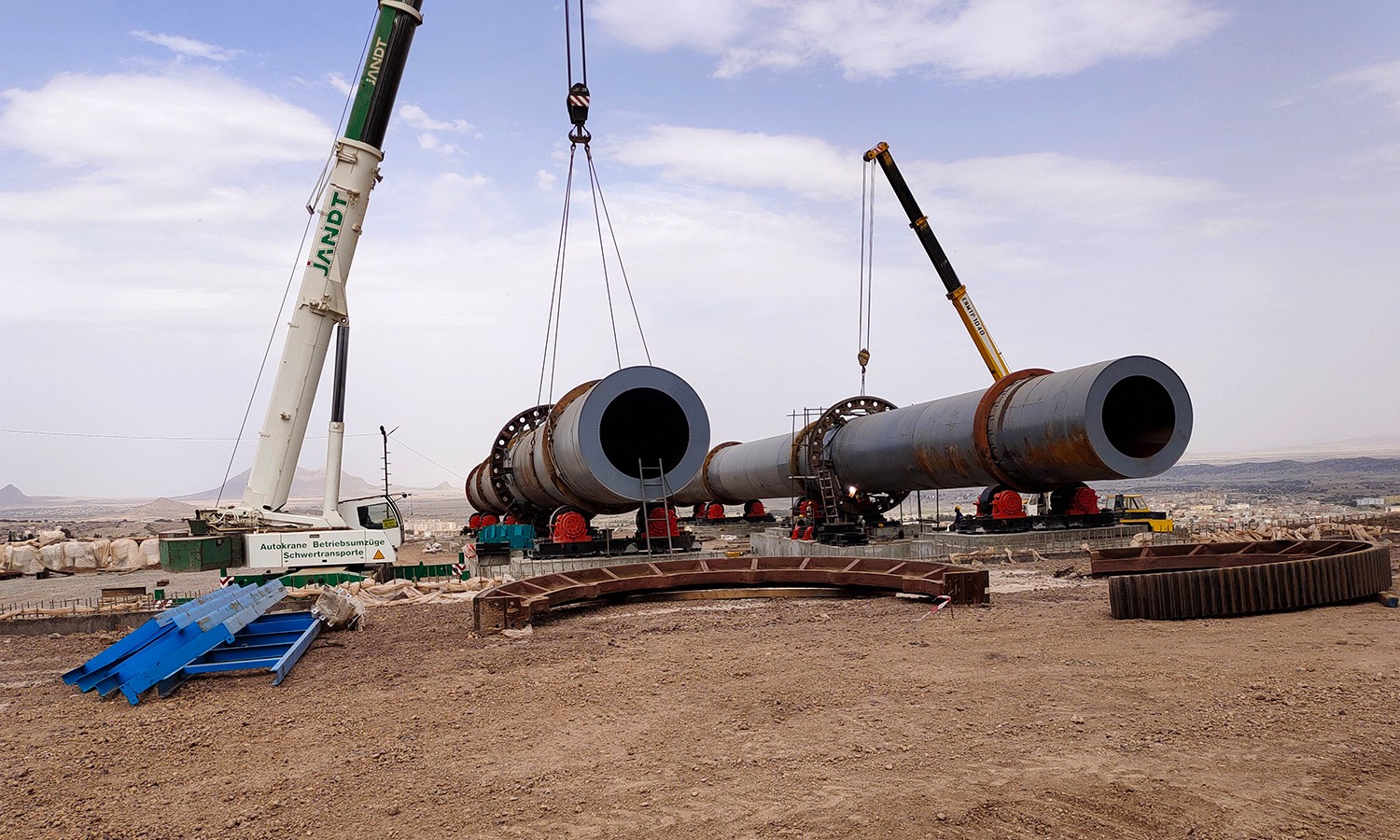
Ring formation (ring buildup) is an inherent defect in rotary kiln operation, referring to annular obstacles formed by material adhering to the surface of the refractory kiln lining. Its formation is related to improper control of the reducing atmosphere inside the kiln, fluctuations in raw material composition, and drastic temperature changes. The main mechanism is the condensation and adhesion of high-temperature liquid phase on the kiln lining surface, which gradually thickens. Ring formation obstructs ventilation inside the kiln and disrupts the thermal regime, requiring kiln shutdown for treatment in severe cases.
1. Shutdown Cooling and Inspection
When ring formation becomes severe enough to affect normal production, first stop the rotary kiln and allow the shell to cool naturally to a safe temperature. Operators wearing protective equipment enter the kiln to inspect the specific location, size, and shape of the ring formation, record the findings, and develop a removal plan.
2. Physical Removal
Use pneumatic picks, shovels, hammers, and other tools to carefully remove the ring formation. The key precaution is not to damage the refractory bricks inside the kiln. If the ring formation is large in volume, it should be removed in sections to avoid removing too much at once and causing uneven stress on the equipment.
3. Chemical Cleaning
For ring formations that are difficult to remove by physical means, chemical cleaning agents can be used. Select a cleaning agent suitable for the kiln's operating conditions and operate according to the instructions. After cleaning, flush the kiln interior with a high-pressure water gun to ensure that cleaning agents and ring formation residues are thoroughly removed.
4. Process Parameter Adjustment
After removing the ring formation, process parameters must be adjusted at the source to prevent recurrence: appropriately adjust the kiln temperature to avoid localized high temperatures; optimize the raw material mixture ratio to reduce the content of substances prone to ring formation; adjust burner parameters to ensure uniform temperature distribution inside the kiln.
5. Online Cleaning Technology
In recent years, various online cleaning methods have been developed that can handle ring formation without stopping production. One method involves installing a long-stroke heating burner at the kiln head hood to heat the ring formation to its softening and melting temperature so that it falls off; at the same time, residual carbon is fed from the kiln tail, using its combustion heat to clean ring formations in the middle section of the kiln shell. Another method uses temperature measurement points on the outer wall of the kiln shell to monitor the ring formation position, and injects fuel to the ring formation position through a pulverized coal lance for high-temperature heating, causing the ring formation to soften and fall off. The common principle of these technologies is using high temperature to soften the ring formation, then relying on kiln rotation to discharge it.
III. Fundamental Measures to Prevent Ring Formation
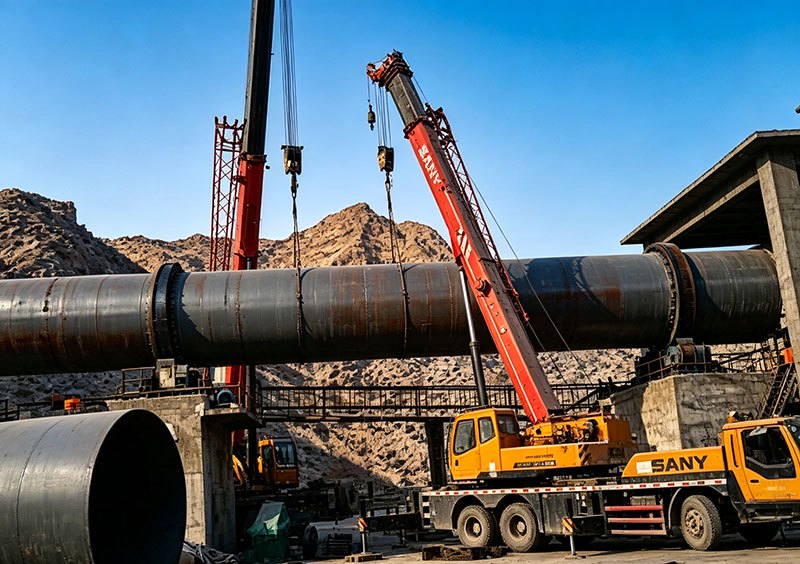
Ring formation treatment should follow the principle of "prevention first, removal second." Preventive measures include: optimizing the batching scheme and stabilizing the raw meal composition; controlling pulverized coal fineness to ensure complete combustion and reduce reducing atmosphere and concentrated coal ash deposition; implementing "thin material, fast rotation" operation to stabilize the kiln thermal regime; and reducing the content of harmful components such as alkali metals, sulfur, and magnesium oxide in raw materials to prevent them from promoting liquid phase formation.
If you encounter specific problems in the commissioning or ring formation treatment of your ceramsite sand rotary kiln, welcome to contact us through the online customer service on our official website. Our technical team can provide targeted commissioning plans and ring formation treatment recommendations based on your kiln type, raw material characteristics, and operating conditions.