

What to Do When the Atmosphere Inside a Zinc Oxide Rotary Kiln Goes Out of Control or an Unexpected Shutdown Occurs? Two Core Operations Explained at Once
In the production practice of zinc oxide rotary kilns, operators frequently face two problems that directly determine profitability: the kiln atmosphere deviating from target values, causing product quality fluctuations, and unexpected kiln shutdowns, causing output losses and even equipment damage. Many enterprises handle these two problems separately—adjusting air and coal when the atmosphere is off, and simply restarting after a shutdown. But this often treats the symptoms rather than the root cause. In reality, there is a direct causal relationship between the stability of the kiln atmosphere and the frequency of shutdowns: atmosphere loss of control is often a precursor to shutdown triggers such as ring formation and balling, and every unplanned shutdown disrupts the established thermal balance, making atmosphere control even more difficult. Examining these two links within the same operational logic is the fundamental path to reducing unplanned shutdowns and stabilizing product quality.

I. How to Detect the Kiln Atmosphere: Focus on Four Key Monitoring Points
The core of the atmosphere inside a zinc oxide rotary kiln is controlling the concentration relationship among oxygen, carbon monoxide, and carbon dioxide. The nature of the atmosphere—whether oxidizing, reducing, or neutral—directly determines whether zinc vapor can be effectively oxidized to zinc oxide, and also determines fuel combustion efficiency.
First, online gas analyzers are the basic configuration. Installing online gas analyzers at the kiln tail or exhaust duct allows real-time monitoring of gas composition inside the kiln. Commonly used analytical methods include infrared analyzers (for CO and CO₂), gas chromatographs, and thermal conductivity analyzers. Key components to monitor include O₂, CO, CO₂, and SO₂. Changes in the concentrations of these gases directly reflect the efficiency of the oxidation reaction and the stability of the kiln atmosphere.
Second, oxygen concentration needs to be watched separately. Zinc oxide production depends on the oxidation reaction between zinc vapor and oxygen. Insufficient oxygen leads to incomplete oxidation, leaving residual metallic zinc in the product and affecting grade. Excessive oxygen may cause over-oxidation of zinc powder or loss of control over kiln temperature. Measuring oxygen concentration inside the kiln separately with an oxygen analyzer is a basic means of ensuring sufficient oxidation reaction.
Third, infrared gas sensors are used to track CO and CO₂ trends. High CO concentration indicates incomplete combustion or an overly strong reducing atmosphere. Abnormal CO₂ concentration may reflect deviations in combustion status or material reactions. Continuous recording of these two indicators is more valuable than single measurements—they help operators determine whether the atmosphere is drifting toward oxidizing or reducing conditions.
Fourth, flue gas composition analysis cannot be neglected. Installing a flue gas composition analyzer at the exhaust duct to monitor changes in CO₂ and SO₂ content in real time can evaluate the degree of oxidation reaction and combustion efficiency inside the kiln. The appearance of SO₂ often means that sulfides in the raw material are being released under specific atmospheric conditions—this itself is a signal of changing atmospheric conditions.
From the perspective of detection method selection, modern industrial-grade process gas analyzers can already measure directly under the most demanding conditions of a rotary kiln, covering multiple components including CH₄, CO, CO₂, H₂O, HCl, O₂, and SO₂, with temperature resistance up to 1400°C and dust concentrations up to 2000 g/m³. For zinc oxide rotary kilns, choosing an extractive analysis system with dust and high-temperature resistance is more suitable for continuous production than simple portable detectors.
II. What to Do After a Shutdown: Distinguish the Situation and Follow Procedures
Zinc oxide rotary kiln shutdowns fall into two categories: short-term shutdown and long-term shutdown. The operational priorities for the two are completely different. The dividing standard is usually 30 minutes and 4 hours.
Short-Term Shutdown (Within 30 Minutes)
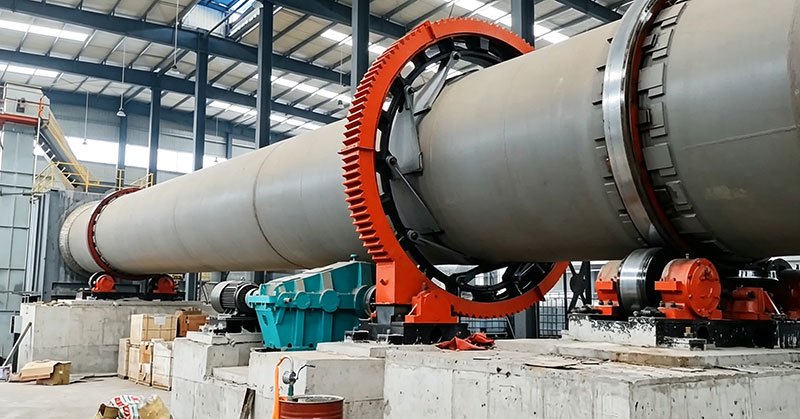
If the shutdown does not exceed 30 minutes, the correct operation is: stop feeding and coal injection, but keep the fan running to help cool the nozzle. The exhaust system damper opening can be slightly reduced. About 10 minutes after shutdown, rotate the kiln shell once, 90 degrees each time. The purpose of rotating the kiln is to prevent the high-temperature shell from bending and deforming under its own weight and thermal stress while stationary.
Short-Term Shutdown (30 Minutes to 4 Hours)
If the shutdown exceeds 30 minutes but does not exceed 4 hours, in addition to the above operations, turn off the kiln tail fan and stop exhaust. After shutdown, follow the long-term shutdown procedures for kiln rotation and inspection. For wet-process kilns, stop feeding and add water for flushing 15 to 30 minutes before shutdown to prevent mud rings from forming inside the kiln.
Long-Term Shutdown (Over 4 Hours)
If the estimated shutdown time exceeds 4 hours, it must be treated as a long-term shutdown. The core operational points are as follows:
Stop feeding and cool down: Before shutdown, first reduce feeding and control the kiln tail temperature not to exceed the normal indicator value. After the kiln tail temperature continues to drop, gradually reduce the feed rate until feeding is completely stopped. When extinguishing the flame, pull the burner out of the kiln. Decide whether to discharge the material inside the kiln based on maintenance tasks.
Kiln rotation schedule: Immediately after shutdown, the kiln shell temperature is still very high, and the kiln shell must be rotated at regular intervals. If the kiln is not rotated on schedule, during the cooling and contraction of the hot shell, the static friction resistance between the tires and support rollers at each station will form tensile stress in the shell. These stresses may ultimately concentrate and transfer to the station with the thrust roller, causing serious damage to the thrust roller device and the civil foundation. The hot kiln shell must be rotated according to specifications until it is completely cooled.
Cooling water management: The cooling water for the two support roller bearing groups at the kiln head cannot be cut off immediately. It should be gradually reduced, and only completely shut off after confirming that the kiln shell has basically cooled.
Emergency Handling When the Kiln Cannot Be Restarted After Shutdown
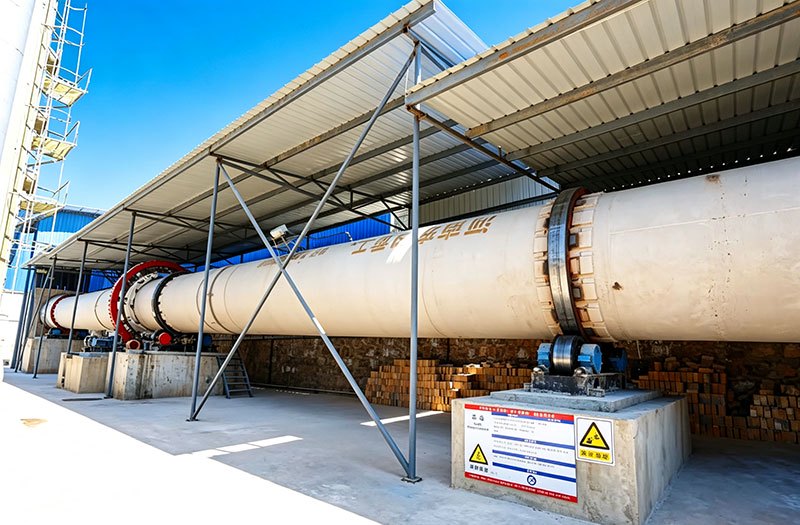
One situation deserves separate mention: after shutdown, the kiln shell cannot rotate when restarted. This is usually because during shutdown, the material stopped on one side of the kiln wall rather than at the centerline position, creating a resistance opposite to the rotation direction at startup, offsetting the driving torque. Or the kiln coating thickness is uneven, similarly creating a reverse torque.
In this situation, try reverse startup: first let the kiln shell rotate in reverse, causing the material inside the kiln to transfer from one side to the other, generating a force favorable for forward rotation. After observing that the material has reached the low point, immediately switch to forward startup, which usually restores normal operation. This method is simple, direct, and effective, but can only be used as an emergency measure—the fundamental solution remains strictly executing material position control and kiln coating uniformity management during shutdown.
III. Linking Atmosphere Control and Shutdown Prevention
The stability of the kiln atmosphere is not just a matter of product quality—it is the first line of defense for preventing shutdowns. Ring formation and balling are the number one cause of zinc oxide rotary kiln shutdowns, and ring formation is often directly related to atmosphere loss of control. When a locally overly reducing atmosphere appears inside the kiln, low-melting-point components in the material tend to soften and bond, gradually forming annular deposits that ultimately force a shutdown for cleaning.
From an operational perspective, changes in flame color are the most intuitive "instrument" of atmospheric conditions. A blue flame represents complete combustion and an ideal oxidizing atmosphere; a yellow or orange flame indicates incomplete combustion and a partially reducing environment; black smoke accompanied by a dim flame clearly indicates incomplete combustion, requiring immediate adjustment of oxygen supply and fuel input. Combining flame observation with online gas analyzer readings allows operators to detect atmospheric deviations in the early stages of ring formation, make timely adjustments, and avoid the problem developing to the point where shutdown is necessary.
For rings that have already formed, if conditions permit, consider a non-shutdown ring removal method: mix coke particles and kiln slag in proportion and feed them from the kiln tail, using the high-temperature liquid material to contact the ring and form a melt, which is then discharged through the kiln head air pipe by air force. This method can handle ring formation without interrupting production, reducing output losses caused by shutdown.
The stable operation of a zinc oxide rotary kiln depends on the synergy of two main lines: "controllable atmosphere" and "preventable shutdown." Atmosphere detection is the early warning system—it tells operators what is happening inside the kiln. Shutdown procedures are the emergency system—they tell operators how to minimize losses when abnormalities occur. What links the two together is the operator's comprehensive judgment capability regarding flame conditions, gas readings, and kiln operating parameters. Equipment can be fully equipped, procedures can be established, but what truly determines whether the kiln condition remains stable is always the degree of refinement at the operational level.
If you encounter specific problems in kiln atmosphere control or shutdown handling for your zinc oxide rotary kiln, welcome to contact us through the online customer service on our official website. Our technical team can provide targeted recommendations for atmosphere detection schemes and shutdown emergency plans based on your kiln type, raw material characteristics, and operating conditions.