

Chemical Rotary Kiln Shutdown Time Control and Product Purity Assurance
The stable operation of chemical rotary kilns faces two core challenges: production losses caused by unplanned downtime, and declining product purity due to contamination or process fluctuations. These two issues are not isolated—frequent downtime often stems from equipment degradation or crusting and blockage, and these same factors also disrupt the stability of the kiln atmosphere and temperature regime, thereby affecting product purity. The following sections address downtime control and purity assurance from two dimensions.
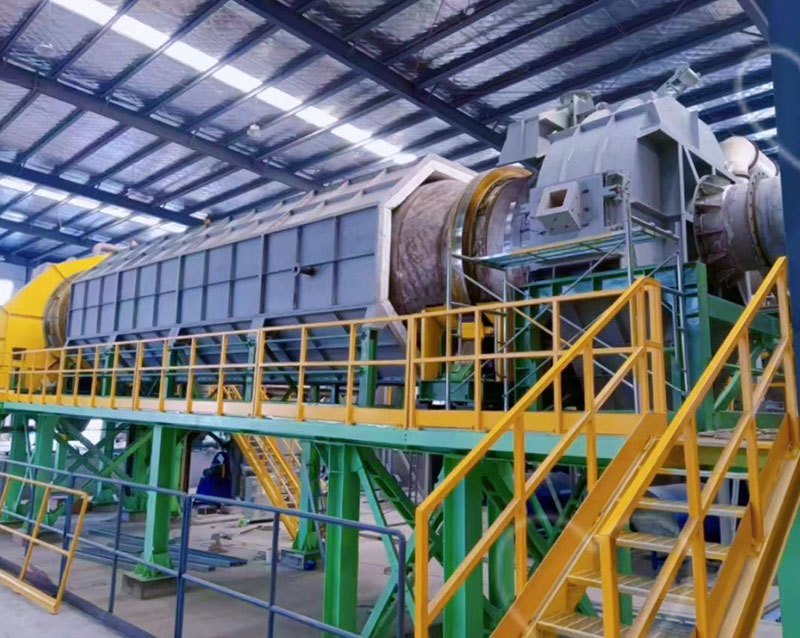
I. How to Reduce Downtime in Chemical Rotary Kilns
Downtime in chemical rotary kilns falls into two categories: planned downtime (maintenance, brick replacement) and unplanned downtime (failures, crusting and blockage). The core strategy for reducing downtime is to convert unplanned downtime into a predictable, plannable state.
1. Establish a Preventive Maintenance System
Rotary kilns are continuous-operation equipment. Their reliability model shows that normal-state availability is approximately 88.9%, while degraded states, though still capable of production, contribute significantly less economic value. This means that when equipment is "still running," it may already be eroding profitability.
The key to preventive maintenance is detecting weak signals early. Abnormal changes in kiln shell temperature, shifts in vibration trends, rising bearing temperatures, increased fuel consumption, kiln thrust fluctuations, or process instability are all precursors to downtime. By remotely monitoring these parameters in the control room through intelligent monitoring systems, intervention can occur before problems escalate into failures.
2. Daily Inspections and Periodic Checks
Daily inspections are the lowest-cost means of downtime prevention. Daily checks should include: support roller lubrication levels, gear lubrication status, kiln shell axial position, support roller cooling water flow, burner fuel and air connection leaks, and flame shape normality.
Weekly checks should include: tire slip measurement, major component wear records, kiln drive current fluctuations, kiln head and tail seal and shell radial runout, drive bolt tightening, and kiln shell temperature curve fluctuations.
Monthly checks focus on: whether auxiliary drive motors can be activated in emergencies, pinion and girth gear meshing clearance changes, reducer oil level and drive bearing temperatures, and vibration analysis of gears and drive systems.
3. Regular Kiln Alignment Correction
Poor kiln alignment is one of the main causes of premature refractory brick damage, abnormal wear of support rollers and tires, and increased drive power. Studies show that proper kiln alignment can reduce the electricity required for rotation by up to 42%.
Kiln alignment assessment should be routinely performed every three years. Hot alignment can be conducted without interrupting production, using laser equipment to measure kiln shell profile, ovality, support roller shaft deflection, gear and tire axial runout, and other parameters, calculating the actual position of the kiln shell rotation axis at each support point.
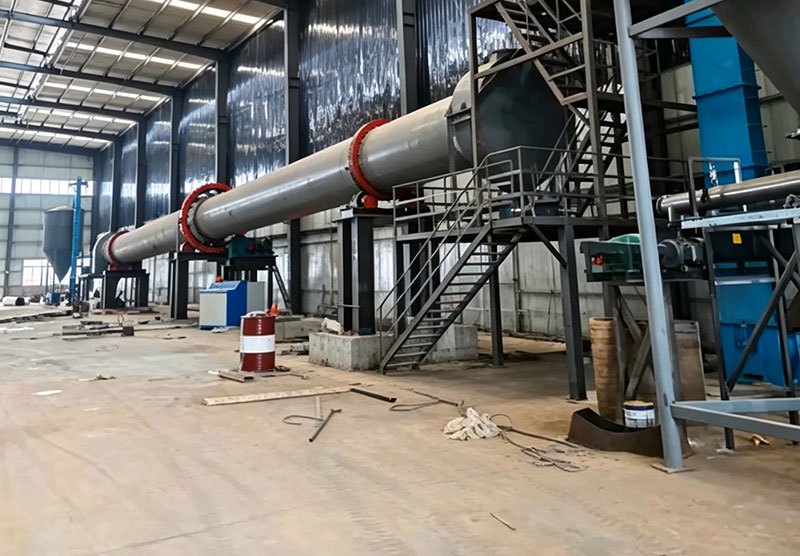
4. Reducing Unplanned Downtime from Crusting and Blockage
Chloride ions, alkali metals, and other components in chemical materials easily form low-melting-point compounds in the kiln tail smoke chamber, causing crusting and blockage. A case study showed that when chloride ion content in raw materials reached 0.06% (allowable value ≤0.04%), the rotary kiln system experienced an average of 3 unplanned shutdowns per month, with each blockage removal taking more than 8 hours.
Control measures include: strictly testing harmful component content in raw materials, optimizing batching schemes to dilute harmful elements, and installing bypass bleed systems when necessary. In addition, spraying a low-roughness refractory coating on the refractory brick surface can reduce friction between materials and the kiln wall, effectively preventing material adhesion and ring formation.
5. Pre-positioning Spare Parts and Resources
Reliability model analysis shows that improving the speed of major overhauls has a more significant effect on availability improvement than equivalent proportional improvements in minor repairs. Therefore, critical spare parts should be stocked in advance, professional maintenance personnel should remain on standby, and restart procedures should be standardized. These measures can significantly shorten downtime caused by major overhauls.
II. How to Ensure Product Purity in Chemical Rotary Kilns
Chemical products often have extremely strict purity requirements. Lithium iron phosphate precursors require purity ≥99.5%, and high-purity silicon nitride requires purity >99.9%. The core of purity control lies in isolating contamination sources, precisely controlling atmosphere, and stabilizing process parameters.
1. Choose Indirect Heating to Isolate Contamination
For high-purity products, indirectly heated rotary kilns are the preferred solution. Unlike direct heating, the combustion process in indirect heating occurs outside the shell, and heat is transferred to the material through the shell wall, with flames and combustion gases never entering the material chamber.
The purity advantage of this design is fundamental: the material is never contaminated by fuel by-products (ash, corrosive gases). Indirect rotary kilns are particularly suitable for calcination of catalysts, molecular sieves, lithium iron phosphate, high-purity oxides, and other purity-sensitive products.
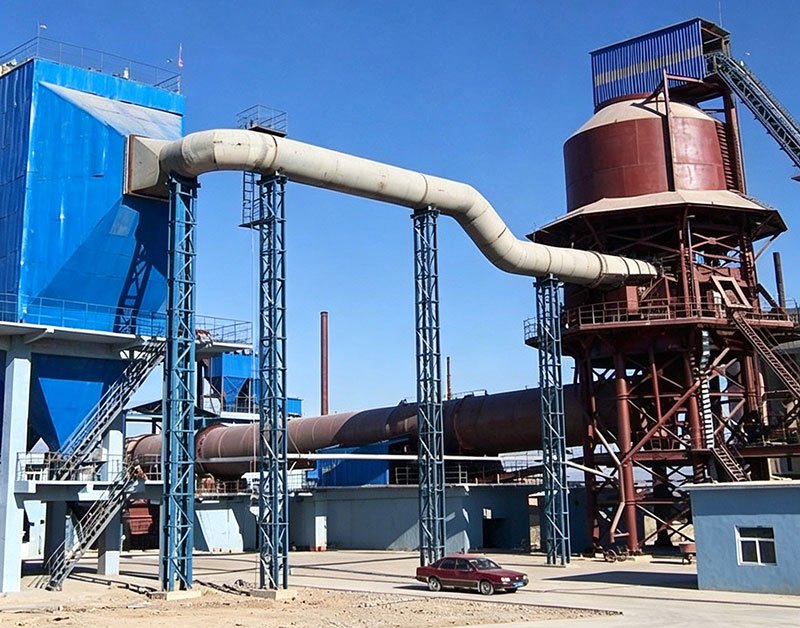
2. Shell Material Selection and Protection
The shell material directly contacts the material, and its selection is crucial to purity. Lithium iron phosphate rotary kilns use SUS310S high-temperature stainless steel as the shell material to resist high-temperature corrosion and avoid material shedding contaminating the product.
For drying and purification of quartz glass particles, the inner wall of the shell is made of quartz glass to avoid contamination of the particles. In more demanding scenarios, rotating tubes made of synthetic alumina (Alsint) can be used to ensure no reaction with materials at high temperatures.
3. Precise Atmosphere Control
Chemical calcination often requires specific oxidizing or reducing atmospheres. The advantage of indirect rotary kilns is that they can adjust the oxidizing or reducing atmosphere, or introduce special gases for calcination, and the gases decomposed from materials during calcination do not mix with flue gas, facilitating recovery or utilization.
High-purity silicon nitride production requires reaction in the presence of a nitrogen-hydrogen mixed gas, with nitrogen content controlled at 10-30 wt%. Purification of quartz glass particles is carried out by thermal chlorination in an HCl atmosphere, reducing total chemical contaminant content to less than 1% of the starting material (i.e., <10 ppm).
4. Precise Temperature Regime Control
Product purity depends not only on whether impurities are introduced, but also on whether phase composition and crystal form transformation are complete. Improper temperature control leads to side reactions or residual unreacted substances.
Lithium iron phosphate rotary kilns use staged calcination, with the shell divided into preheating, calcination, and cooling sections, achieving precise process control. Two-stage production of high-purity silicon nitride requires multiple temperature zones in the rotary kiln, with the first zone at 1150-1250°C and subsequent zones at 1250-1350°C, each zone at least 5-10°C higher than the previous one.
Temperature monitoring systems should be equipped with precise temperature measurement devices such as colorimetric pyrometers, combined with PLC automatic control systems, to achieve coordinated adjustment of temperature, speed, and feed rate.
5. Stable Process Parameters
Fluctuations in process parameters are the enemy of purity. The matching relationship among calcination temperature, residence time, feed rate, and kiln shell speed directly affects product uniformity and purity.
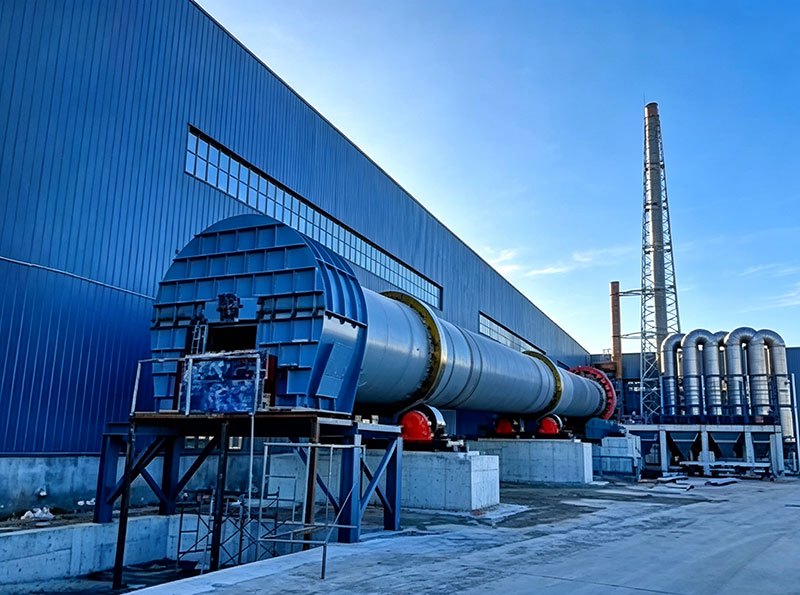
Taking magnesium hydroxide calcination as an example, the rotary kiln preheating section temperature is 850-900°C, the heating section 900-960°C, material residence time 30-40 minutes, feed rate 17-20 mm/min, and speed 20-25 r/min. Only under this parameter combination can ultrafine flake magnesium oxide with stable crystal form and uniform particle size be obtained. Deviation from this range causes significant changes in product activity and particle size distribution.
Downtime control and purity assurance in chemical rotary kilns are essentially the pursuit of process stability. Downtime control focuses on the stability of equipment condition, while purity assurance focuses on the isolation between materials and the environment. Both point to the same goal: allowing the kiln to operate continuously, stably, and predictably within the set parameter window.
Henan Hongke Heavy Industry's mineral processing equipment enjoys significant competitive advantages in the industry. We provide one-stop full-chain services covering pre-sales consultation, in-process follow-up, and after-sales support, ensuring every customer buys with confidence and uses with peace of mind. Click Customer Service Consultation to leave us a message. You are welcome to visit Henan Hongke for on-site inspection and business negotiation. We will provide you with professional solutions and quotations!