

Guide to Preventing Kiln Shell Axial Movement and Controlling Roasting Time in Laterite Nickel Ore Rotary Kilns
In the reduction roasting production of laterite nickel ore, kiln shell axial movement and roasting time are two core issues that directly affect equipment safety and product quality. Improper control of kiln shell axial movement can lead to uneven wear between support rollers and tires in mild cases, or cracked thrust plates and equipment damage in severe cases. Unreasonable roasting time settings directly affect the reduction degree of nickel and iron oxides and the metallization rate. The following sections analyze these two issues separately.
I. How to Prevent Kiln Shell Axial Movement in Laterite Nickel Ore Rotary Kilns
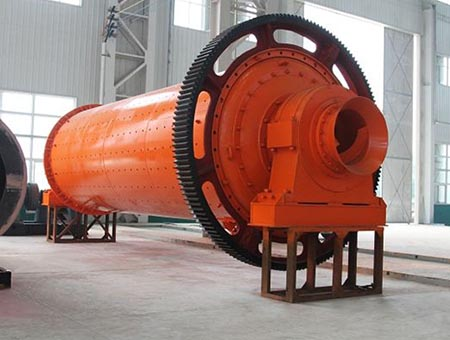
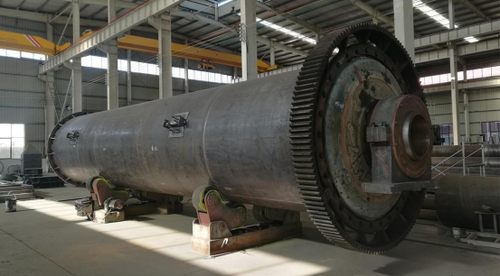
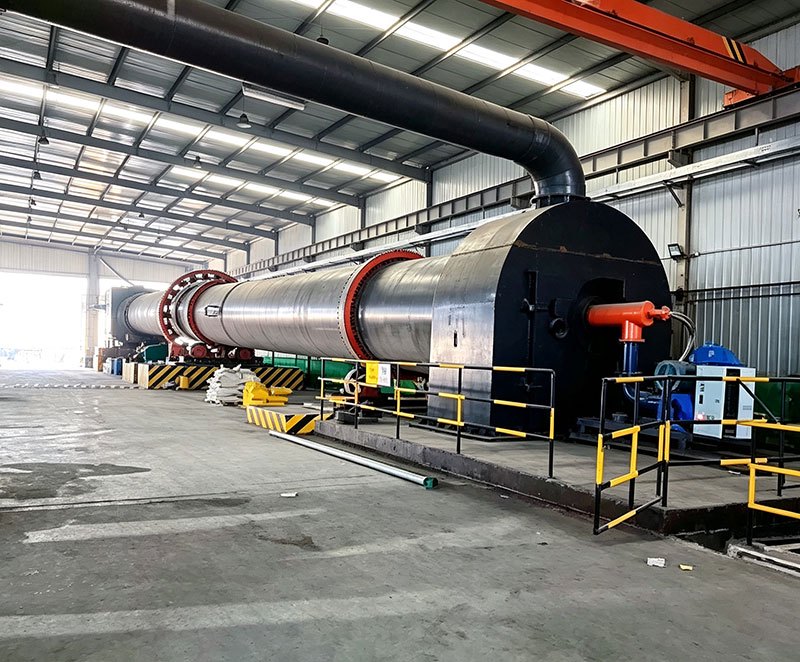
During operation of a laterite nickel ore rotary kiln, ore enters the kiln after drying and is heated to around 800°C, removing surface moisture and crystal water, and partially reducing iron, nickel, and cobalt oxides. In this process, axial movement of the kiln shell is unavoidable—because the kiln shell is installed at a slope of 3% to 5%, gravity sliding force and rotational circumferential force exist at the contact between the tire and support rollers. The combined effect of these forces creates a tendency for the shell to move downward. Normal axial movement should be reciprocating up and down, with a movement cycle generally once or twice per shift. However, if the kiln shell moves in only one direction for an extended period, it is a mechanical fault requiring timely adjustment.
1. Causes of Kiln Shell Axial Movement
When the centerline of the support rollers is parallel to the centerline of the shell, theoretically the shell will not move downward. However, elastic deformation at the contact between the tire and support rollers produces elastic sliding, causing the shell to slowly slide down. To control this downward sliding, the support roller centerline is adjusted to a certain angle in production, giving the support rollers an upward component force on the tire to balance the downward sliding force of the shell. If this tilt angle is adjusted too large, the kiln shell will move upward; if too small, the kiln shell will continue to move downward.
2. Specific Measures to Prevent Kiln Shell Axial Movement
Measure 1: Adjust the tilt angle of the support roller centerline
This is the most fundamental method for controlling kiln shell axial movement. By adjusting the centerline of the support rollers to produce a certain tilt angle, the direction of the support force on the shell is changed, thereby controlling the axial displacement of the shell. According to the rotation direction of the kiln, appropriately increase or decrease the skew angle of one or several pairs of support rollers: increasing the skew angle makes the kiln shell move upward, while decreasing the skew angle allows the kiln shell to slowly move downward under its own weight.
During adjustment, note that the deflection angle formed by the support roller axis and the kiln centerline should be controlled within a reasonable range. At 5°, the contact compressive stress already exceeds the allowable value; at 10°, it significantly exceeds the standard. The tilt angle is usually adjusted within the range of 0° to 0.5°, and each 0.1° of tilt angle generates an axial component force of approximately 1.7% to 1.8% of the normal pressure. Adjustment should be completed in multiple steps, with each adjustment not exceeding 0.5 mm or 0.1°.
Measure 2: Change the friction coefficient between the tire and support roller surfaces
Applying lubricating oil of different viscosities to the support roller surfaces can change the friction coefficient between the tire and support rollers. When the shell moves upward beyond the limit, apply oil with higher viscosity to reduce the friction coefficient; when the shell moves downward beyond the limit, apply oil with lower viscosity to increase the friction coefficient. This method is simple to operate but can only temporarily solve the problem and cannot fundamentally eliminate the cause of axial movement.
Measure 3: Use hydraulic thrust rollers for active control
Advanced laterite nickel ore rotary kilns are equipped with hydraulic thrust rollers, which adjust the pressure of the thrust roller on the shell in real time through a hydraulic system, effectively controlling the axial movement of the kiln shell. The working principle of the hydraulic thrust roller is: when the shell slides down to a certain position, a limit switch starts the hydraulic pump, and hydraulic oil pressure pushes the thrust roller and shell upward; after moving up to a certain position, it triggers the limit switch, the oil pump is powered off, and the shell slides down again under its own weight, repeating this cycle. In a nickel-iron production line with a φ4.85m × 75m rotary kiln, the hydraulic system working pressure is 4 to 10 MPa, the hydraulic cylinder stroke is 200 mm, and the thrust force at 8 MPa can reach 1,226 kN.
Measure 4: Regular inspection and optimized design
Regularly inspect the wear condition of support rollers and tires, replacing or repairing them as necessary. Frequently check and adjust the position of the support rollers to ensure they are always in the correct supporting position. During the design stage, full consideration should be given to the axial positioning of the shell, reducing the possibility of kiln shell axial movement by optimizing the design of support rollers and thrust rollers.
3. Precautions When Adjusting Support Rollers
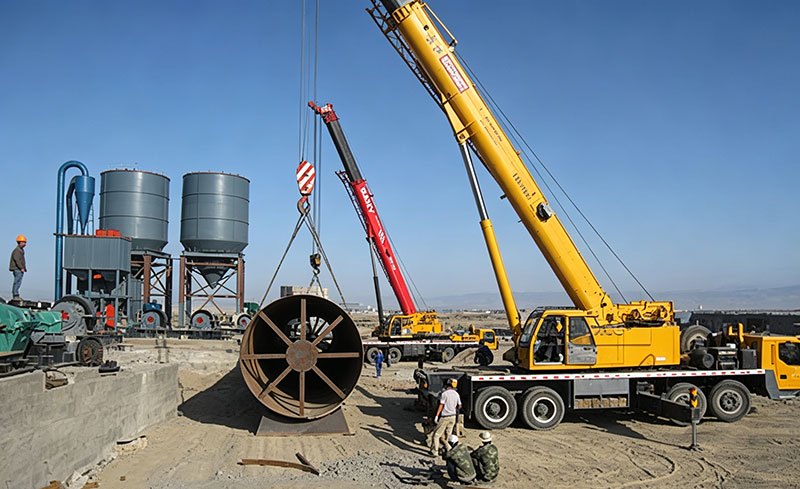
Before adjustment, first check whether the support rollers have a "splayed" shape, and correct it immediately if found. Adjustment of support rollers should follow the principle of "adjust the heavily loaded ones first, then the lightly loaded ones." Support rollers near the kiln shell girth gear should not be adjusted frequently. If the adjustment amount exceeds 5 mm, the kiln shell should be jacked up; forced jacking can easily cause support roller shaft breakage or screw skew. Strictly prohibit the formation of "large splayed" or "small splayed" arrangements—the former causes the forces of two stations of support rollers on the shell to cancel each other out, while the latter causes the force directions of two support rollers in the same station to be inconsistent, both accelerating wear and potentially causing accidents.
II. What Is the Typical Roasting Time for Nickel Ore Rotary Kilns?
The roasting time of laterite nickel ore rotary kilns is closely related to the process route, target product, and roasting temperature. According to different process schemes, roasting times vary considerably.
1. Roasting Time Under Different Process Routes
Two-stage roasting process: The first stage rotary kiln performs drying roasting at 870-900°C for 2 hours; the second stage rotary kiln performs reduction roasting at 1,350-1,380°C for 1 hour. This staged approach separates drying and preheating from high-temperature reduction, facilitating separate optimization of process parameters for each stage.
Single-stage direct reduction roasting: After crushing, laterite nickel ore is mixed with reducing agent and pelletized, then fed into a rotary kiln for reduction roasting at 1,000-1,300°C, with a roasting time of 0.5 to 2 hours. Another process uses a temperature range of 380-1,350°C, with a reduction roasting time of 3 to 5 hours.
Metallization reduction roasting: Materials are reduction roasted at 850-1,250°C for 1 to 4 hours. In specific embodiments, roasting at 1,250°C for 1 hour, or at 900°C for 4 hours, both achieve reduction-roasted products.
Magnetization roasting reduction: The roasting stage temperature is between 1,150-1,250°C, with a roasting time of 40 to 60 minutes, while the total time from entering to exiting the rotary kiln is controlled at about 5 hours. Here, "roasting time" specifically refers to the effective reaction time in the high-temperature reduction zone, which is different from the total residence time.
Segregation roasting: Segregation roasting is carried out at 500-600°C, with a rotary kiln speed of 2 rpm and a roasting time of 1 to 1.5 hours.
2. Key Factors Affecting Roasting Time
The setting of roasting time is not a fixed value and must be comprehensively determined based on the following factors:
Target metallization rate: The reduction degree of nickel and iron directly depends on the time the material stays in the high-temperature zone. Insufficient time results in incomplete reduction and low metallization rate; excessive time may cause over-reduction or increased energy consumption.
Roasting temperature: The higher the temperature, the faster the reduction reaction rate and the shorter the required roasting time. For example, at 1,250°C, roasting for 40-60 minutes is sufficient, while at 900°C, 4 hours are required.
Material particle size and pellet quality: The particle size, density, and permeability of pellets affect the speed of heat transfer into the pellet interior. Pellets with larger particle size or higher density require longer roasting time for sufficient internal reduction.
Reducing agent ratio: The amount and mixing uniformity of carbonaceous reducing agent affect the efficiency of the reduction reaction. Improper ratio will extend the required roasting time.
3. Principles for Controlling Roasting Time
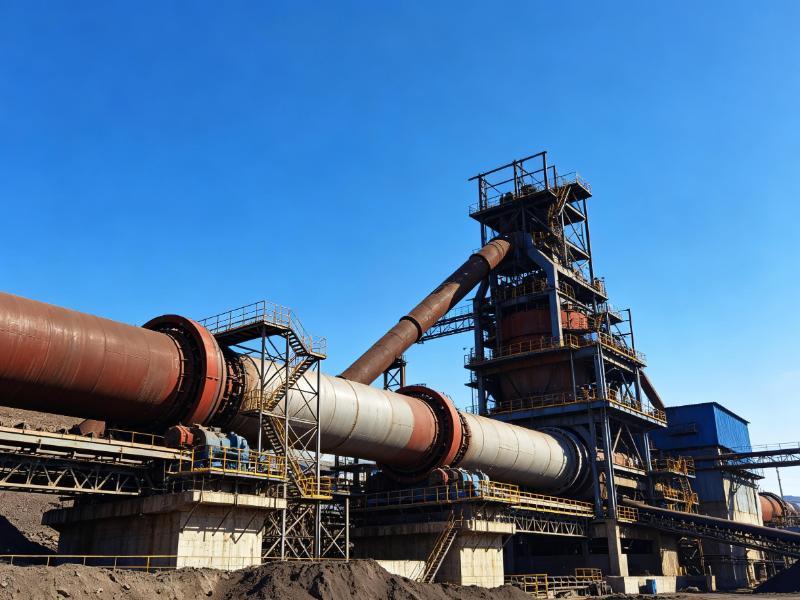
In actual production, roasting time control should follow the principle of "taking the target metallization rate as the criterion, while balancing energy consumption and capacity." It is recommended to determine the optimal roasting time for specific laterite nickel ore raw materials through testing, and to precisely control the material residence time in the high-temperature zone through kiln speed adjustment during production. Higher kiln speed shortens material residence time; lower kiln speed extends residence time. At the same time, close attention should be paid to changes in kiln temperature and atmosphere to ensure the reduction reaction is fully completed within the set time range.
Henan Hongke Heavy Industry's mineral processing equipment enjoys significant competitive advantages in the industry. We provide one-stop full-chain services covering pre-sales consultation, in-process follow-up, and after-sales support, ensuring every customer buys with confidence and uses with peace of mind. Click Customer Service Consultation to leave us a message. You are welcome to visit Henan Hongke for on-site inspection and business negotiation. We will provide you with professional solutions and quotations!