

Guide to Ventilation System Design and Refractory Lining Replacement Assessment for Laterite Nickel Ore Rotary Kilns
In the reduction roasting production of laterite nickel ore, the ventilation system and refractory lining are two fundamental elements that ensure safe kiln operation and product quality. The ventilation system determines the controllability of the kiln atmosphere and directly affects the selective reduction of nickel and iron oxides. The refractory lining serves as the kiln shell's barrier against high temperature, chemical erosion, and mechanical wear, and its condition directly determines whether production can continue. The following sections analyze these two issues separately.
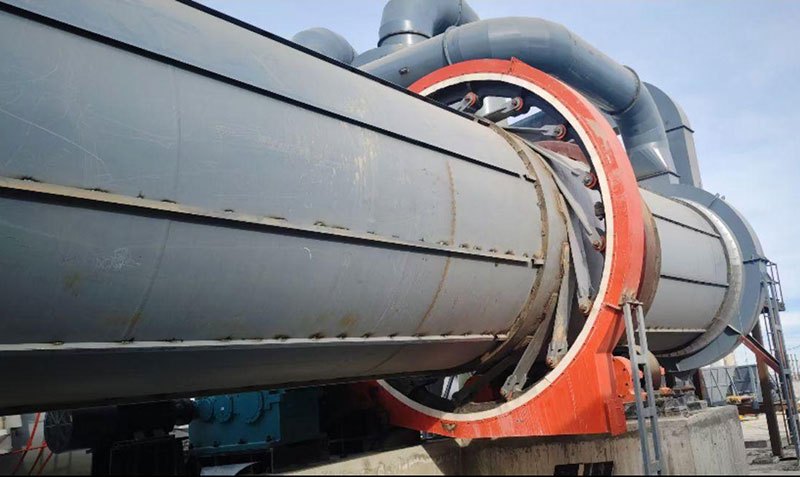
I. How to Design the Ventilation System for a Laterite Nickel Ore Rotary Kiln
Laterite nickel ore rotary kilns typically use direct flame heating. The core task of the ventilation system is to control the kiln atmosphere, maintain a reasonable temperature distribution, and ensure that the reduction reaction is fully completed under the set conditions. The ventilation system works closely with the combustion system, controlling the oxygen concentration and temperature inside the kiln by adjusting the air intake, so that the selective reduction of nickel and cobalt is maintained at optimal conditions.
1. Air Inlet Design
The position of air inlets should be reasonably arranged, usually at both ends or on the sides of the kiln, to ensure uniform air distribution. The number and size of air inlets should be determined according to the kiln specifications and processing capacity to ensure sufficient fresh air supply. In the reduction roasting process, controlling the air intake is particularly critical—excessive air will破坏 the reducing atmosphere inside the kiln, causing iron oxides to be over-reduced and affecting the selectivity of subsequent leaching operations. Generally, sub-stoichiometric combustion is used to produce a reducing atmosphere rich in hydrogen and carbon monoxide.
2. Exhaust System
The exhaust port is generally located at the tail of the kiln to discharge waste gas from the kiln. The exhaust system needs to be equipped with dust collection devices to reduce pollutant emissions while collecting recoverable dust. In the laterite nickel ore RKEF smelting process, the rotary kiln flue gas temperature is approximately 400°C, and the dust concentration can reach 70 g/Nm³. After pre-dedusting through a cyclone dust collector, it enters the subsequent treatment system. The negative pressure inside the rotary kiln is usually controlled by a high-temperature fan, maintained at a slight negative pressure of -10 Pa to 0 Pa to prevent flue gas leakage.
3. Fan Selection and Control
Select a suitable fan according to the required ventilation volume and pressure loss. The fan should have sufficient air volume and pressure to maintain the kiln's ventilation requirements. Fan control should be flexible and adjustable according to changes in kiln temperature and pressure. In the RKEF process system, the negative pressure of the rotary kiln is adjusted by a high-temperature fan and is not affected by external factors. For processes using sealed electric furnaces, the electric furnace flue gas is cooled through a water-cooled flue, and the negative pressure inside the electric furnace is controlled by a pressure-regulating fan to ensure stable system operation.
4. Air Duct Design
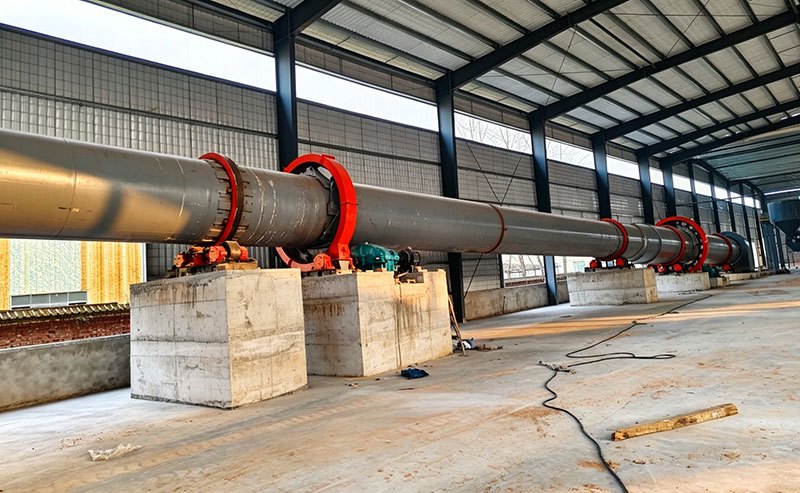
The air duct design should ensure smooth air flow, avoid dead corners and vortices, and reduce resistance losses. Air duct materials should be high-temperature resistant, not easily deformed, and easy to clean and maintain. In direct reduction processes, the airflow distribution inside the kiln directly affects the contact efficiency between materials and reducing gas. Studies have shown that the rotary motion of the kiln improves contact between particles and the gas phase, but also increases the importance of sealing, gas distribution, and residence time consistency.
5. Temperature Control and Atmosphere Regulation
The ventilation system should work in coordination with the combustion system, controlling the temperature distribution inside the kiln by adjusting the air intake. Temperature sensors should be installed to monitor temperatures at different parts of the kiln and adjust ventilation volume as needed. For selective reduction of laterite nickel ore, the temperature is usually controlled between 600°C and 850°C, preferably 700°C to 810°C. The reducing atmosphere inside the kiln is maintained by controlling hydrogen and carbon monoxide levels to ensure selective reduction of nickel and cobalt while minimizing the reduction of iron oxides.
6. Sealing and Air Leakage Control
The sealing condition of the kiln shell directly affects the efficiency of the ventilation system. A negative-pressure smoke and dust return system can be installed between the rotary kiln shell and the connecting chamber, using a small negative-pressure fan to collect smoke and dust from the gap between the rotating shell and the connecting chamber, and circulating them back into the connecting chamber for utilization, reducing air leakage. Good sealing not only helps maintain the stability of the kiln atmosphere but also reduces energy consumption.
II. How to Determine Whether the Kiln Lining Material Needs Replacement
The lining of a laterite nickel ore rotary kiln gradually deteriorates under the combined effects of high temperature, chemical erosion, and mechanical wear. Premature replacement wastes funds, while delayed replacement may cause kiln shell damage or even forced shutdown. Determining whether the lining needs replacement requires comprehensive evaluation combining service time, kiln shell temperature monitoring, remaining thickness measurement, and visual inspection.
1. Differences in Service Life Across Different Zones
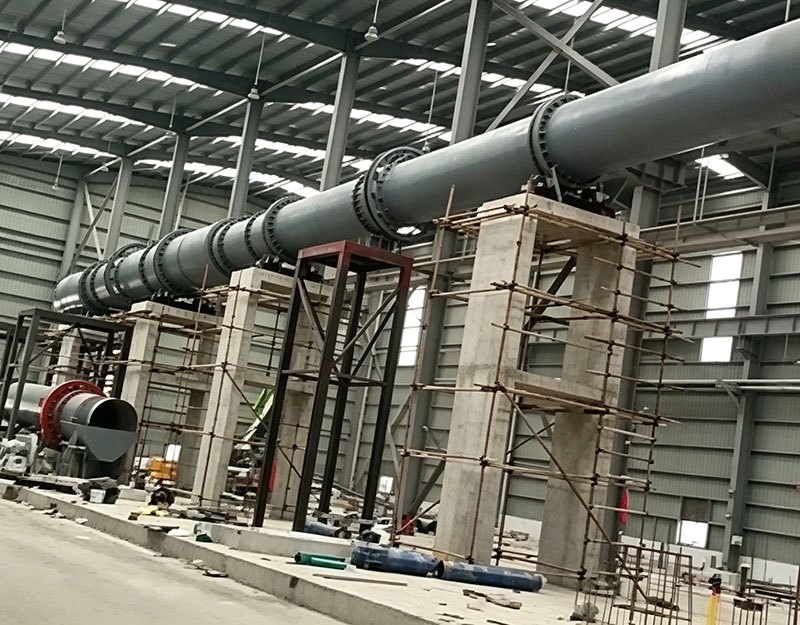
The service life of the lining varies significantly across different parts of the rotary kiln. The high-temperature zone (approximately 30 meters from the kiln head discharge end backward) has a relatively short lining service life, with continuous full-load service periods without maintenance possibly ranging from 10 days to 360 days. The medium and low-temperature zone (from the high-temperature zone backward to the kiln tail feed end) can have a service life of 60 days to 1,500 days. For cement rotary kilns, the service life in the burning zone is typically about one year, about two years in the transition zone, and about three to four years in the preheating zone. The specific service life of laterite nickel ore rotary kilns is greatly affected by raw material characteristics, operating conditions, and kiln atmosphere, and experience data from other kiln types cannot be simply applied.
2. Kiln Shell Temperature Monitoring
Using an infrared thermometer to measure kiln shell temperature is a key method for assessing lining condition. When the lining becomes thin or spalls, insulation performance decreases, and the kiln shell surface temperature rises accordingly. Different warning values can be set for different kiln zones:
High-temperature burning zone: When the kiln shell surface temperature continuously reaches ≥380°C, or the average temperature ≥350°C, or a single reading at a local measurement point increases by ≥50°C, it indicates that the kiln lining has spalled and the refractory bricks have become thin.
Transition/preheating zone: When the kiln shell surface temperature continuously reaches ≥330°C, it indicates that the bricks have worn or cracked, and heat has penetrated.
Kiln tail outlet area: When the castable area temperature continuously reaches ≥300°C, it indicates that the castable has spalled or the reinforcement is exposed.
3. Remaining Thickness Measurement
Manual measurement of remaining brick thickness is the core standard for quantifying replacement needs. When the remaining thickness of refractory bricks in different zones reaches certain values, the kiln must be stopped for replacement:
Burning zone: When the remaining brick thickness is ≤80 mm, plan a kiln shutdown for replacement.
Transition zone: When the remaining brick thickness is ≤70 mm, plan a kiln shutdown for replacement.
Preheating zone: When the remaining brick thickness is ≤60 mm, plan a kiln shutdown for replacement.
4. Visual Inspection and Local Defect Assessment
During shutdown maintenance, detailed visual inspection of the lining should be conducted. The following conditions are signals requiring repair or replacement:
Refractory bricks: Edge or corner loss of a single brick exceeding one-third, or edge damage; groove wear depth ≥20 mm; circumferential crack length exceeding 500 mm; radial crack width ≥2 mm.
Castables: When the local spalling area is less than 1 square meter, surface crack width is less than 3 mm, or anchor damage does not exceed 10%, local repair can be performed.
Kiln coating: In the burning zone, if the local coating spalling area exceeds one-quarter and cannot be repaired within 7 days after adjusting kiln conditions, the exposed brick surface will be subjected to direct high-temperature erosion, and replacement should be considered.
5. Special Considerations for Laterite Nickel Ore Rotary Kilns
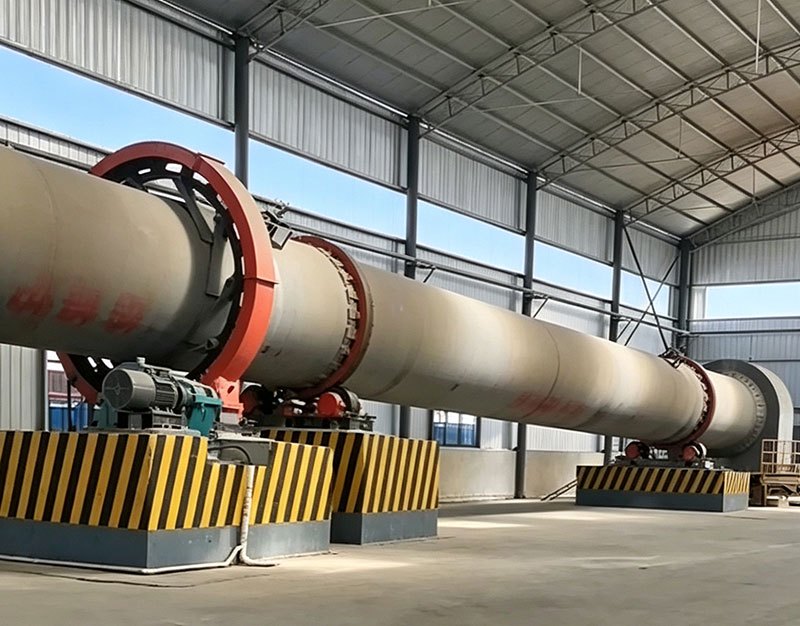
The lining deterioration of laterite nickel ore rotary kilns has its own particularities. Nickel, iron, and other metals in the raw material may exist in vapor or fly ash form at high temperatures, reacting chemically with refractory materials to form low-melting-point compounds, weakening material strength and causing local spalling and erosion pits in the refractory layer. In addition, slag formed by the bonding of impurities and molten slag materials with the refractory surface can aggravate local thermal damage. Therefore, in addition to the general assessment criteria above, attention should also be paid to whether there are abnormal slag bonding, erosion pits, or chemical erosion traces on the lining surface.
For the high-temperature zone of laterite nickel ore rotary kilns, practice has shown that special phosphate bricks and other materials can be used, and their service cycle is significantly affected by raw material type and kiln washing frequency. If impurities and reduced metals in the raw material are highly corrosive, the kiln interior is prone to agglomeration or slag buildup, and kiln washing operations will accelerate lining erosion, potentially shortening service life to several months.
6. Establish a Regular Inspection System
It is recommended to establish a regular inspection system, using infrared thermal imaging, ultrasonic testing, and other methods to monitor kiln lining condition, repairing problems promptly to prevent local damage from expanding. At the same time, record the service time, kiln shell temperature change trends, and remaining thickness data of each lining zone to form a lining life file, providing a basis for developing scientific maintenance plans.
Henan Hongke Heavy Industry's mineral processing equipment enjoys significant competitive advantages in the industry. We provide one-stop full-chain services covering pre-sales consultation, in-process follow-up, and after-sales support, ensuring every customer buys with confidence and uses with peace of mind. Click Customer Service Consultation to leave us a message. You are welcome to visit Henan Hongke for on-site inspection and business negotiation. We will provide you with professional solutions and quotations!