

Unstable Pressure Inside the Metallurgical Rotary Kiln and Frequent Temperature Rise of Support Roller Bearings? Two Core Operations That Must Not Be Neglected
In the daily operation of metallurgical rotary kilns, operators often face two types of thorny problems that appear independent but are actually interrelated: frequent fluctuations in kiln pressure, leading to loss of control over the calcination atmosphere and fluctuating product quality; and continuously rising temperatures of the support roller bearings, which in severe cases force a kiln shutdown. Many enterprises treat these two issues separately—adjusting the fan when pressure is unstable, changing the oil when bearings overheat—but the problems often recur.
In-depth analysis reveals that whether the kiln pressure is stable directly affects the uniformity of the kiln's thermal regime. Fluctuations in the thermal regime, in turn, are transmitted through shell thermal expansion and force changes to the support roller bearings, causing abnormal temperature rises. There is a transmission chain from "gas" to "mechanics" between the two. Therefore, incorporating pressure regulation and bearing maintenance into a single operational logic is the key to solving the problem.
I. Kiln Pressure Regulation: First Understand Why "Negative Pressure" Is So Important
The normal operation of a metallurgical rotary kiln depends on maintaining a stable, slightly negative pressure inside the kiln. The kiln head negative pressure is typically controlled at around -0.04 kPa. Although this value is small, it determines the stability of the entire calcination system.
When positive pressure occurs inside the kiln, high-temperature flue gas is ejected outward through the sealing gaps at the kiln head and kiln tail. This not only deteriorates the operating environment but also burns sealing components and kiln head equipment. The causes of positive pressure are usually related to insufficient fan capacity, increased system resistance, or imbalance in the thermal regime. To address this issue, the direction of operational adjustment is clear: increase the static blade opening of the desulfurization tower and the main exhaust fan air volume to restore the kiln head pressure to the slightly negative pressure range of -50 to -70 Pa, thereby stabilizing the pellet production process.
In terms of adjustment methods, modern metallurgical rotary kilns have generally adopted a strategy of separate temperature and pressure control. Temperature is adjusted through the linkage of gas and primary air, while pressure is independently adjusted by a regulator with a microcomputer, which drives the exhaust fan inlet damper through an actuator motor. This division of labor avoids the confusion of "one adjustment affecting everything," allowing operators to separately lock onto the two core variables of temperature and pressure.
At the operational level, pressure control mainly involves four paths:
Fan adjustment. Adjusting the speed of the kiln head hood exhaust fan is the most direct means. Increasing fan speed increases exhaust volume and lowers kiln pressure; decreasing speed raises kiln pressure.
Combustion control. By adjusting the air supply and fuel supply of the combustion system, the amount of gas generated inside the kiln is indirectly affected, providing auxiliary pressure regulation.
Sealing assurance. The sealing condition at the kiln head, kiln tail, and various interfaces is the physical foundation for pressure stability. Air leakage caused by sealing failure greatly reduces the effectiveness of fan adjustment. For metallurgical processes requiring strict atmosphere control, nitrogen sealing can be adopted, using solenoid valves on the inlet and exhaust pipes to control nitrogen flow and actively intervene in kiln pressure.
Automatic control. Using PLC or DCS systems, pressure sensors monitor kiln pressure in real time, and PID algorithms automatically adjust fan speed or valve opening to maintain pressure near the set value.
II. Support Roller Bearing Maintenance: From "Passive Cooling" to "Active Management"
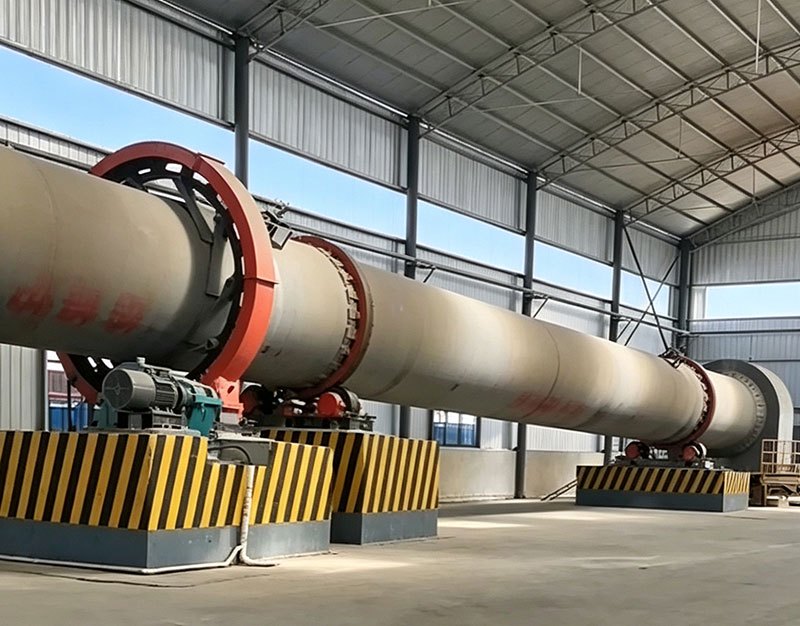
If pressure is the balance of "gas" inside the kiln, the support roller bearings are the foundation of the kiln's "mechanics." The total weight of a metallurgical rotary kiln shell can reach hundreds of tons, supported by multiple support roller stations. On average, a single bearing bush can bear loads of tens of tons and is subject to long-term impact loads and adjustment stresses. Under such operating conditions, bearing heating is almost an inevitable normal problem. The key lies in how to control the temperature within a safe range.
The root causes of bearing temperature rise usually point in four directions: lubricating oil failure, cooling water interruption, improper bearing clearance, and imbalanced kiln shell forces. The corresponding maintenance strategy must also address these four dimensions simultaneously.
Lubrication management is the first line of defense for bearing maintenance. Support roller bearings should use high-viscosity synthetic lubricating oil, with a recommended viscosity range of 460 to 1,000 mm²/s, with the specific value determined by kiln shell specifications and operating conditions. In daily maintenance, the oil station operating status should be inspected daily, filters should be cleaned regularly, oil quality should be tested, and bearing temperature changes should be monitored. Once oil emulsification or excessive impurities are found, it should be replaced immediately. In emergency situations, rapid cooling can be achieved by pouring new oil and draining old oil, but this is only a temporary measure and cannot replace systematic lubrication management.
The smooth flow of the cooling water system is equally critical. Sliding bearings typically use a spherical seat with internal cooling water. Scaling or blockage in the circulating water pipeline causes a sharp drop in cooling efficiency, and bearing temperature rises rapidly in a short time. Therefore, circulating water pipes should be regularly acid-cleaned or replaced to ensure stable cooling water flow and temperature.
Regular inspection and correction of bearing clearance cannot be neglected. If the bearing clearance is too small, the oil film between the journal and bearing bush cannot form, friction increases, and temperature rises. If the clearance is too large, the bearing bush wobbles on the journal, causing impact loads and abnormal wear. During maintenance, the clearance should be measured using feeler gauges or lead wire methods, adjusted according to design values, and scraped for correction if necessary.
Monitoring the kiln shell force state is the core of shifting bearing maintenance from "passive" to "active." Bearing heating is often not a problem of the bearing itself, but a "signal light" of imbalanced kiln shell forces. The following indicators should be regularly monitored: the changing trend of kiln shell surface temperature, the contact and force conditions between support rollers and tires, the operating status of the hydraulic thrust roller, the clearance between the tire and shell backing plate, and the relative parallelism between the kiln centerline and support roller axis. Any abnormal change in any indicator may ultimately be reflected as bearing temperature rise through mechanical transmission.

III. The Synergistic Logic of the Two Operations: Pressure Stability Is the "Upstream Guarantee" for Bearing Safety
The reason pressure regulation and bearing maintenance should be treated as a coordinated whole is that there is a clear causal chain between them.
Kiln pressure fluctuations, especially positive pressure conditions, disrupt the balance of the kiln's thermal regime. Changes in the kiln temperature field cause uneven thermal expansion of the shell along the axial and radial directions. Uneven shell thermal expansion, in turn, changes the contact state between tires and support rollers—what was originally a uniform load distribution may become locally concentrated, and the load borne by a certain support roller bearing suddenly increases, followed by temperature rise.
Conversely, deterioration of bearing condition and increased kiln rotation resistance also affect the normal rotation of the kiln, thereby interfering with material movement and airflow distribution inside the kiln, making pressure control more difficult.
Therefore, in operational practice, kiln pressure should be treated as an "upstream indicator" for bearing maintenance. Maintaining kiln head negative pressure within a reasonable range and reducing frequent pressure fluctuations is itself a form of protection for support roller bearings. Similarly, regularly monitoring bearing temperature and kiln shell force state can also provide feedback for pressure regulation—when abnormal temperature rise is found in a certain bearing, operators should simultaneously check whether the sealing condition and thermal regime in that area have deviated.
IV. Systematic Operational Recommendations
Integrating the two dimensions of pressure regulation and bearing maintenance, it is recommended to establish operational specifications from the following levels:
In terms of pressure control, take kiln head negative pressure of around -0.04 kPa as the daily control target, and establish an adjustment system of "fan as primary, combustion as auxiliary, sealing as foundation, automatic control as guarantee." Each adjustment should be small, observing the trend of working condition changes before deciding the next step, avoiding frequent large adjustments.
In terms of bearing maintenance, establish a four-level maintenance system of "temperature monitoring—lubrication management—clearance inspection—force analysis." Bearing temperature should be one of the key monitoring parameters in the central control room. When temperature rises abnormally, immediately initiate the troubleshooting process: first check lubricating oil quantity and quality, then check cooling water, and finally check the kiln shell force state.
In terms of coordinated management, incorporate the frequency and amplitude of kiln pressure fluctuations into equipment health management indicators. Kilns with frequent pressure fluctuations generally have a higher probability of bearing temperature rise. Pressure parameters and bearing temperatures should be recorded simultaneously in operation records to facilitate analysis of correlation trends between the two and provide a basis for predictive maintenance.
The stable operation of a metallurgical rotary kiln has never been achieved through the optimization of a single operational link. Pressure regulation and bearing maintenance—one manages "gas," the other manages "mechanics"—converge on the physical carrier of the kiln shell. Only by examining both operations on the same working condition chart can unplanned kiln shutdowns be reduced at the root, allowing the kiln to remain stable over long-term operation.
If you encounter specific problems in pressure control or support roller bearing maintenance of your metallurgical rotary kiln, welcome to contact us through the online customer service on our official website. Our technical team can provide targeted recommendations for pressure regulation schemes and bearing maintenance strategies based on your kiln type, material characteristics, and operating conditions.