

Guide to Sealing Performance Assurance and Preheater Material Collapse Treatment for Active Lime Rotary Kilns
In the daily operation of active lime rotary kilns, sealing performance and preheater material collapse are two core issues that directly affect the thermal efficiency and operational stability of the kiln system. Sealing failure causes large amounts of cold air to infiltrate, disrupting the kiln's thermal regime and increasing fuel consumption. Preheater material collapse causes raw meal to surge into the burning zone, which in mild cases affects clinker quality and in severe cases causes blockage or even kiln head backfire and other safety accidents. There is a connection between the two: air leakage in the preheater system deteriorates the suspension state of materials in the cyclone, potentially inducing material collapse. The following sections analyze these two issues separately.
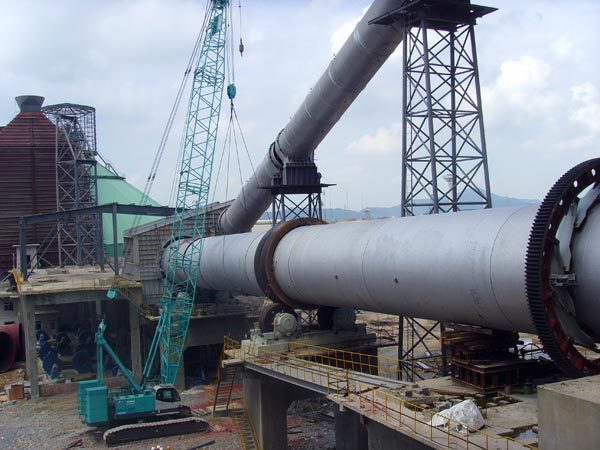
I. How to Ensure Sealing Performance in Active Lime Rotary Kilns
1. Correct Selection of Sealing Type
Common sealing types for active lime rotary kilns include labyrinth (tortuous path), contact (friction), and air seal types. The kiln head typically uses a shell-type sealing system, while the kiln tail is equipped with an axial contact sealing device. Actual selection should be comprehensively determined based on kiln specifications, operating temperature, and shell operation characteristics. Multiple types can also be combined to improve sealing reliability.
2. Adopt Composite Flexible Sealing Structures
Modern active lime rotary kilns generally adopt composite leaf seals, with the kiln head and kiln tail using sealing structures combining metal leaf springs and flexible materials, keeping the air leakage coefficient below 10%. The three-layer flexible seal (stainless steel sealing leaf + carbon-silicon-aluminum fiber composite plate + stainless steel sealing leaf) combined with a labyrinth structure offers excellent sealing performance, high reliability, long service life, and easy replacement, significantly reducing maintenance costs.
3. Reasonable Sealing Structure Design to Adapt to Dynamic Conditions
The rotary kiln shell undergoes runout, oscillation, and axial movement during operation, and the sealing structure design must adapt to these dynamic deviations. An effective solution is to use a flexible connecting body (high-temperature resistant rubber products or other materials with good dimensional compensation performance) to connect the sealing assembly to the fixed body, providing both reliable sealing and displacement compensation. The sealing ring can adopt a J-shape or Y-shape design, with the sealing lip having a large width in the diameter direction (up to 10-20 mm), with single-side compensation capability reaching 5-10 mm. Materials can be silicone rubber, fluororubber, or hydrogenated nitrile rubber, with temperature resistance up to 250°C.
4. Regular Inspection and Maintenance
During installation of sealing devices, check whether all components are loose and whether there is friction between the sealing device and the shell. During daily operation, regularly inspect the wear condition of sealing components and replace damaged ones in time. The installation quality of sealing components greatly affects their performance; during installation, ensure the roundness and support strength of the fixed flange and skeleton sealing ring.
5. Optimize Operating Parameters
By controlling operating parameters such as feed rate and kiln speed, maintaining a stable production state helps maintain good sealing conditions. Appropriately adjusting the kiln shell inclination angle can improve material flow and indirectly enhance sealing effectiveness.
6. Sealing Treatment for the Preheater System
Air leakage in the preheater system not only disrupts the stability of the kiln's thermal regime but also affects energy consumption levels. When the preheater system air leakage reaches 2.5% of the air intake volume, the preheater separation efficiency drops by approximately 20%-40% year-on-year. Therefore, sealing of manholes, poking holes, observation ports, and thermocouple insertion points cannot be ignored, and leakage points should be regularly inspected and repaired.
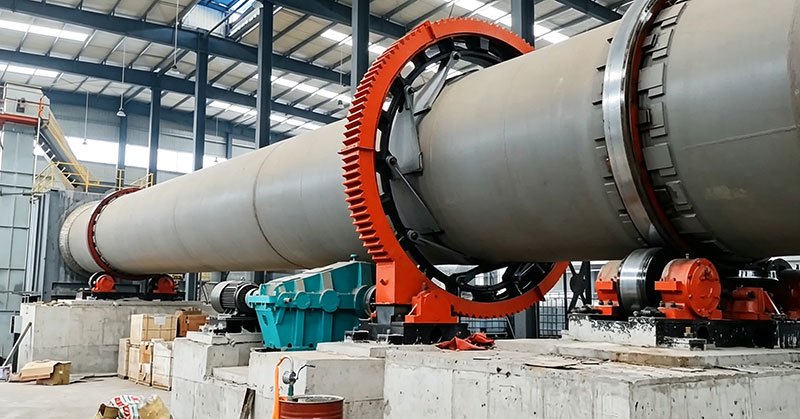
II. How to Solve Preheater Material Collapse in Rotary Kilns
1. Fault Diagnosis of Material Collapse
When preheater material collapse occurs, it is usually accompanied by the following abnormal signals: sudden drop in total exhaust volume, sudden decrease in cone negative pressure, large drop in kiln tail temperature, and reduced kiln head negative pressure turning positive. Once these signals appear, the severity of the material collapse should be immediately assessed.
2. Emergency Handling Measures
Large material collapse should be treated as a raw material running fault—immediately stop feeding, stop coal in the calciner, and significantly reduce kiln speed and coal usage. Small material collapse can be handled by appropriately increasing kiln head coal feed, or by taking no action.
3. Key Points for Poking and Unblocking Operations
After appropriately increasing exhaust, open the ash cleaning hole or manhole for exploratory inspection and cleaning. During poking and unblocking, there should be a designated person in charge to coordinate the operation, avoiding the front of the poking hole, to prevent high-temperature raw meal from suddenly collapsing and rushing out of the poking hole causing burns. Compressed air can be used for blowing. After completing poking and unblocking, close all doors and holes, and use the cyclone cone blowing device for a longer period of blowing to clean remaining accumulated or adhered raw meal on the inner wall. It is strictly prohibited to stand or perform maintenance at the kiln head, cooler sight glass, and other places where ash is emitted, to prevent sudden collapse of preheater blockage causing injury.
4. Eliminate Root Causes of Material Collapse
Control kiln feed raw meal moisture: Raw meal moisture from the mill should be strictly controlled at ≤0.5%. High-moisture raw meal easily arches in the kiln tail feed silo, causing uneven raw meal fall or collapse, resulting in fluctuating material amounts entering the precalciner system, easily causing material collapse.
Stabilize feed rate: Uneven feed rate is an important cause of material collapse. Long raw meal storage time, high moisture, poor looseness, feed bin arching, and unstable screw feeder speed all cause uneven feeding, making it difficult to stabilize the system's thermal regime.
Optimize cyclone structure: Appropriately increase cyclone inlet air velocity, change the volute bottom inclination angle to ≥45°, and avoid material deposition in horizontal sections. Install a conical expansion chamber below the cyclone cone discharge port, enlarging the discharge port diameter, reducing the possibility of material accumulation and arching at the cone bottom, while also providing a buffering effect, helping to alleviate material collapse caused by internal and external air leakage.
Reasonably adjust discharge valves: Discharge valves serve both air locking and material discharge functions. Improper valve stem angle and counterweight can cause either material accumulation and blockage above the valve plate or significant internal air leakage due to improper valve plate positioning. The discharge valve balance rod position should be below the horizontal line with an angle less than 30° to the horizontal, preferably adjusted to around 15°. Counterweights should be initially adjusted in cold state, adjusted so that lifting the balance rod gently by hand raises it and releasing it resets it. In hot state, only minor adjustments to individual discharge valves are needed.
Control harmful components and raw meal composition fluctuations: When harmful components (K₂O, Na₂O, SO₃) in raw materials are excessive and the sulfur-alkali ratio deviates from the normal range, circulation and enrichment in the system are aggravated, and low-melting-point materials adhere to the preheater system forming crusts, causing paroxysmal material collapse. Frequent fluctuations in raw meal composition also disrupt the system's thermal balance. Raw meal homogenization should be strengthened to stabilize kiln feed raw meal composition.
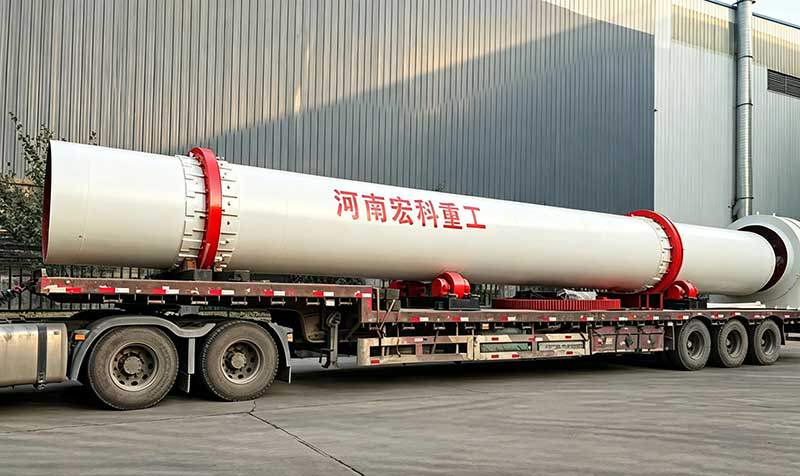
Sealing assurance and preheater material collapse prevention in active lime rotary kilns are essentially maintenance of system airtightness and material flow stability. Sealing is the foundation—without reliable sealing, the kiln's thermal regime cannot be stabilized, and the material suspension state in the preheater will also be disturbed. Material collapse prevention is the extension—under the premise of good sealing, through structural optimization and refined operational management, ensuring uniform material flow and smooth downward movement in the preheater system. Only when the two work together can long-term stable operation of the active lime rotary kiln be achieved.
Henan Hongke Heavy Industry's mineral processing equipment enjoys significant competitive advantages in the industry. We provide one-stop full-chain services covering pre-sales consultation, in-process follow-up, and after-sales support, ensuring every customer buys with confidence and uses with peace of mind. Click Customer Service Consultation to leave us a message. You are welcome to visit Henan Hongke for on-site inspection and business negotiation. We will provide you with professional solutions and quotations!