
When selecting a ball mill, most buyers ask the same questions: "What capacity do I need?" "What model should I choose?" "How much will it cost?" But these questions come too early in the decision process. The real starting point is simpler, and more often overlooked: What ore are you processing?
It sounds obvious, yet many buyers overlook this fundamental fact when choosing grinding equipment. A ball mill that works perfectly for processing magnetite may struggle with hematite or limonite. Different ores have different hardness, grindability, and moisture content—these differences determine the appropriate ball mill type, ball charge ratio, and even the lining material. Choosing equipment without understanding the ore is like prescribing medication without knowing the disease; it may work, but most likely it won't.
For mining investors, plant managers, and equipment procurement decision-makers, this article provides a complete reference framework: from the main types of iron ore and their grinding characteristics, to how ball mills work and their key operating parameters, to five proven pathways for improving grinding quality. Let's start with the most fundamental question—what ore are you processing?
Chapter 1: Know Your Ore – The Starting Point for Any Grinding Application
In nature, there are over 300 types of iron-bearing minerals, but only a handful have commercial mining value. Understanding the type of ore you are processing is not just a technical detail—it is the single most important factor in selecting the right ball mill and achieving optimal grinding performance. The following table summarizes the main types of iron ore with commercial significance:
Ore Type | Chemical Composition | Theoretical Iron Content | Magnetic Properties | Grinding & Beneficiation Characteristics |
|---|---|---|---|---|
Magnetite | Fe₃O₄ (compound of Fe₂O₃ and FeO) | 72.4% | Strong | Best grindability; low-intensity magnetic separation achieves efficient separation with short process and low cost; the most "friendly" ore type for ball mills |
Hematite | Fe₂O₃ | 70.0% | Weak | Most widely distributed iron ore; weak magnetism means magnetic separation alone is insufficient; typically requires high-intensity magnetic separation, gravity concentration, or flotation in combined circuits—longer process flows |
Limonite | 2Fe₂O₃·3H₂O (hydrated) | ~60.0% | Weak | Usually formed by weathering; hydrated composition causes variable hardness; often requires roasting before grinding, placing higher thermal demands on the ball mill system |
Siderite | FeCO₃ (carbonate type) | ~48.3% | Weak | Low iron content; carbonates tend to generate bubbles during beneficiation that interfere with separation; typically requires roasting pretreatment; grinding circuit must control over-grinding |
Beyond iron ore, ball mills are also widely used for processing copper ore, gold ore, lead-zinc ore, lithium ore, manganese ore, and various other metallic ores, as well as non-metallic minerals such as quartz sand and kaolin. Each mineral has different hardness, liberation size, and clay content, all of which demand different ball mill parameters. Therefore, ore type identification is the starting point of grinding circuit design and the first threshold in equipment selection.
Chapter 2: How Ball Mills "Handle" Ore – A Detailed Look at Grinding Principles
Once you understand the ore type, the next question is: how exactly does a ball mill crush hard ore down to the required fineness?
I. Core Working Mechanism: Impact + Attrition
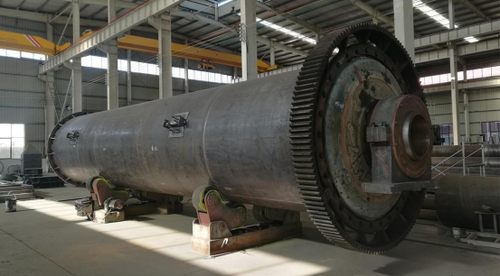
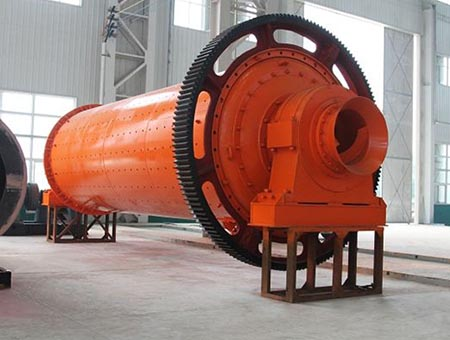
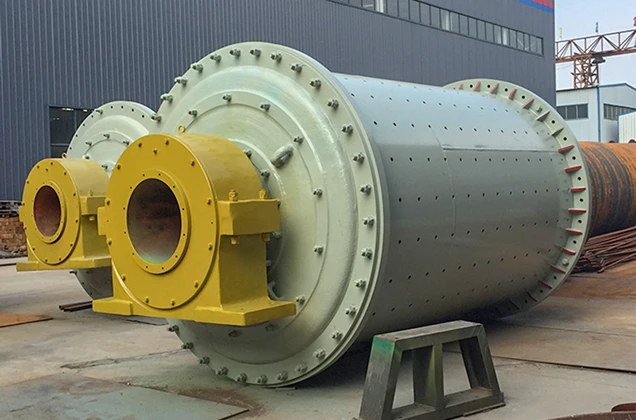
The ball mill's operation can be summarized as follows: material enters the shell through the feed hollow shaft. As the shell rotates, centrifugal and frictional forces cause the steel balls and ore to rise with the shell wall to a certain height, where they then fall in a parabolic trajectory or cascade under their own weight. Ore comminution is achieved through the combined action of impact force (from falling balls) and attrition force (from rolling and sliding balls).
More specifically, as the cylinder rotates around its horizontal axis at a certain speed, the grinding media and ore inside are carried upward by centrifugal and frictional forces. When the lifting height reaches a critical point where gravity exceeds centrifugal force, the balls detach from the shell wall and are projected downward, generating intense impact breakage on the ore at the bottom. Simultaneously, as the balls rotate around the cylinder axis and spin on their own axes, compression and abrasion forces are generated in the contact zones between balls and between balls and the lining. Impact forces "break" coarse particles, while attrition forces "grind" fine particles—both are indispensable.
In simple terms: impact forces "open the way"—breaking large chunks of ore; attrition forces "finish the job"—grinding fine particles to the target fineness. A well-performing ball mill is one that maintains the right balance between the two.
II. The Decisive Role of Rotational Speed
Shell rotational speed directly determines the motion state of the grinding media, which in turn affects the balance between impact and attrition:
Low speed: Balls mainly "cascade," with attrition dominant and impact insufficient—coarse particles are not adequately broken, resulting in low throughput.
Optimum speed (operating speed, generally 76%-88% of critical speed) : Balls "cascade and cataract" in a balanced manner—impact and attrition are properly proportioned, achieving the highest grinding efficiency.
Excessively high speed (approaching or exceeding critical speed) : Centrifugal force becomes too strong, balls cling to the shell wall and no longer fall—the grinding action essentially stops.
Therefore, higher speed is not always better—there is an optimal operating range for each mill. In practice, different mill sizes have corresponding recommended speed ranges (refer to the technical specification table in Chapter 6).
III. How Ore Properties Affect Grinding Performance
Different ores behave very differently in a ball mill, mainly in the following dimensions:
Ore Property | Impact on Grinding | Response Strategy |
|---|---|---|
High hardness (e.g., magnetite, quartzite) | Requires greater impact energy and longer grinding time; faster ball and liner wear | Increase ball diameter (especially in coarse grinding stage) to boost impact force; appropriately reduce feed rate |
High toughness (e.g., some manganese ores) | Resists fracture, difficult to crush; tends to result in "un-grindable" coarse particles | Slightly increase speed to raise impact frequency; use high-chromium alloy balls to improve crushing efficiency |
High clay/slime content (e.g., weathered limonite) | Prone to "pasting" and clogging of grate slots; grinding efficiency drops sharply | Strengthen pre-desliming; control feed moisture; increase ventilation or add grinding aids |
Fine liberation size (requires fine grinding, e.g., hematite) | Requires longer grinding time; prone to over-grinding and sliming | Use two-stage grinding circuits with classification equipment to promptly separate qualified fine products |
Understanding these differences explains why you cannot simply copy "someone else's ball mill parameters"—different ores require different approaches.
Chapter 3: Ball Charge and Size Distribution – The "Control Valve" of Grinding Efficiency
Steel balls are the grinding media that directly act on the ore. How many balls to add, what sizes to use, and how to proportion different sizes—these three questions directly determine grinding efficiency, product fineness, and energy consumption.
I. How Ball Charge Affects Throughput
Ball charge refers to the total mass of steel balls loaded into the mill shell. More is not always better—the charge must be scientifically proportioned based on the mill's capacity, feed particle size characteristics, and product fineness requirements.
When ball charge is too low: The effective contact area between balls and between balls and the lining is insufficient, so the material cannot be adequately ground. Observable signs: the mill sounds crisp (mostly balls hitting the lining), current is low, throughput drops, and product fineness is too coarse.
When ball charge is too high: The space for balls to move within the shell is restricted, the falling height is reduced, and impact force actually weakens. At the same time, excess balls increase the load on the shell, causing motor current to rise and energy consumption to increase—potentially even causing equipment overload. Observable signs: the mill sounds muffled, current is high but throughput does not increase or even decreases.
The optimal ball charge should keep the mill running at its best load condition while ensuring grinding performance. Generally, the ball charge should be controlled at 30%-45% of the mill's effective volume. The exact value should be calculated based on the bulk density of the balls and the mill volume.
II. The "Golden Rule" of Ball Size Distribution
Ball size distribution refers to the proportional mix of balls of different diameters. The core principle can be summed up in eight words: "Big balls break big chunks; small balls grind fine particles."
Feed material typically contains multiple size fractions. If you use only large balls, coarse particles can be broken, but the contact area between fine particles is insufficient and grinding is inadequate—product fineness remains coarse and energy consumption is high. If you use only small balls, fine particles can be ground, but coarse particles "won't break"—throughput suffers. Therefore, you must proportion large, medium, and small balls according to the feed particle size distribution.
Steps for determining the ball size distribution scheme:
Screen the feed: Perform particle size analysis on the mill feed to determine the distribution of each size fraction.
Determine maximum ball size: Based on the maximum feed particle size, calculate the required maximum ball diameter using empirical formulas.
Determine proportions for each size: Based on the yield of each size fraction, allocate the mass percentage of balls of different diameters proportionally.
Field validation and fine-tuning: After loading the calculated scheme, adjust based on indicators such as motor current, throughput, and product fineness.
Practical recommendations:
Regularly monitor ball wear and replenish new balls promptly to maintain stable size distribution.
Adjust the size distribution scheme promptly when feed particle size or hardness changes significantly.
Watch for changes in motor current—unusual increases or decreases often indicate that ball charge or size distribution needs adjustment.
III. Ball Wear Patterns and Replenishment Strategy
Steel balls continuously wear down during operation, gradually decreasing in diameter. Large balls wear into medium balls, medium balls into small balls, and small balls eventually wear down to fines and are discharged. Therefore, replenishing balls is not simply "adding back what was lost"—it requires following the principle of "regularly add large balls; medium balls are naturally replenished by wear; small balls are generated by wear."
In practice, the most common approach is periodic addition of large balls, relying on the natural wear of large balls into medium and small sizes to maintain the balance of the size distribution. The specific replenishment quantity and frequency should be calculated based on the unit consumption of balls (grams per ton of ore) and actual operating data.
Chapter 4: The Three Cost Components of Beneficiation and Optimization Directions
Beneficiation cost is a core economic indicator for plant operations. As one of the highest energy-consuming devices in a concentrator, the ball mill's cost control directly affects project profitability. Understanding the cost structure is the prerequisite for scientific cost reduction.
I. Equipment Investment
The purchase cost of the ball mill is a major part of the plant's equipment investment. Prices vary significantly between different specifications and configurations. Selection should comprehensively consider ore properties, target capacity, and product fineness requirements to choose the most suitable model.
Selection pitfalls to avoid:
"Big horse pulling a small cart" – oversizing wastes investment and actually increases unit energy consumption during low-load operation.
"Small horse pulling a big cart" – undersizing leads to insufficient capacity; forced overloading causes frequent breakdowns and skyrocketing maintenance costs.
The correct approach: based on ore grindability test data and target capacity, select the best-fitting model with a 10%-15% capacity margin—do not over-size unnecessarily.
II. Operating Costs
Operating costs mainly include electricity, water, and labor. Electricity accounts for the largest share—the ball mill is the single highest power-consuming device in a concentrator, typically accounting for 40%-60% of total plant power consumption. The inherently low energy utilization of ball mills (most energy is converted to heat and noise) means that optimizing grinding parameters to reduce unit power consumption is the core of operating cost control.
Key points for electricity cost control:
Control feed particle size reasonably—practice "more crushing, less grinding"
Optimize ball size distribution to keep the mill running at its best load
Avoid "idling" and "choking"; maintain continuous and stable feed
Use energy-saving liners (e.g., rubber liners) to reduce shell rotational inertia
While water and labor costs account for a relatively smaller share of total costs, they are still significant in water-scarce regions or countries with high labor costs.
III. Maintenance Costs
Maintenance costs include ball consumption, liner replacement, lubrication, and repair labor. Balls and liners are the main wear parts, and their consumption rate is closely related to ore hardness, ball quality, and operating parameters.
Key points for reducing maintenance costs:
Choose high-quality balls and liners—higher unit price, but longer service life and lower total cost
Regularly inspect liner wear to avoid the major failure of "wearing through the shell"
Establish a lubrication management system to reduce abnormal wear on bearings and gears
Keep records of wear part replacement cycles and establish a predictive maintenance plan
IV. Key Factors Affecting Beneficiation Costs
Factor | Impact Mechanism | Optimization Direction |
|---|---|---|
Ore hardness | Higher hardness = faster ball and liner consumption + higher power consumption | Conduct grindability tests in advance; select equipment accordingly |
Feed particle size | Coarser feed = higher mill load + higher power consumption | Strengthen upstream crushing to reduce feed size |
Ball quality | Low-quality balls wear faster and have higher breakage rates, increasing consumption | Choose high-chromium alloy balls—better cost-performance than standard balls |
Operator skill | Feed fluctuations and unstable density reduce efficiency | Standardize operations; introduce automation where possible |
Equipment maintenance | Delayed maintenance accelerates component wear and increases energy consumption | Establish a preventive maintenance system |
Chapter 5: Five Proven Pathways for Improving Grinding Quality
Grinding quality has two core evaluation indicators: fineness (percentage of qualified size fractions) and degree of over-grinding (the proportion of already-liberated minerals that are excessively ground). Good grinding quality achieves the required fineness while minimizing over-grinding. The following are five proven pathways for improvement.
Pathway 1: Modify the Grindability of the Material
When encountering hard, difficult-to-grind ores, or when product fineness requirements are very strict, consider pre-treatment measures before grinding to reduce the difficulty at the source:
Pre-crushing: Further reduce the feed particle size—push the crusher's work further upstream. For every 1mm reduction in feed size, ball mill capacity increases by approximately 3%-5%.
Pre-concentration (pre-discarding): Use magnetic or gravity separation to discard already-liberated gangue before grinding, reducing the tonnage entering the mill.
Stage grinding: Process coarse and fine particles separately to avoid the efficiency loss and over-grinding risk of "mixed-size grinding."
The core idea is simple: solve problems outside the mill—don't dump everything on the ball mill to handle alone.
Pathway 2: Practice "More Crushing, Less Grinding"
Since the unit energy consumption of crushing is much lower than that of grinding (approximately 12%-25% of grinding energy), crushing the ore as fine as possible in the crushing stage is the most effective strategy for reducing overall energy consumption. Generally, the feed size to the mill should be controlled at ≤20-25mm.
"More crushing, less grinding" not only reduces mill load but also decreases wear on balls and liners, extending wear part life. In practice, strengthening screening and using fine-crushing equipment (such as high-pressure grinding rolls) can effectively reduce feed particle size.
Pathway 3: Proper Ball Size and Distribution
This was covered in detail in Chapter 3, so it will not be repeated here—only one key point: never treat ball size distribution as "set and forget" —feed changes and ball wear are dynamic factors that require continuous monitoring and adjustment.
Additional empirical data on ball size selection:
Coarse grinding stage (feed >2mm): primarily Φ80-Φ100mm large balls, accounting for 60%-70%
Fine grinding stage (feed <0.5mm): primarily Φ40-Φ60mm small balls, accounting for 60%-70%
Intermediate grinding stage: properly proportioned large, medium, and small balls
Pathway 4: Optimize Grinding Density
Grinding density refers to the mass percentage of solids in the slurry. Density that is too high or too low affects grinding performance:
Too high (>85%) : Poor slurry fluidity; material stays too long in the shell, over-grinding, and increases the risk of "pasting." The ball surfaces become coated with viscous slurry, which buffers impact force and reduces grinding efficiency.
Too low (<65%) : Slurry flows too fast; material residence time is insufficient, product fineness is too coarse, and balls are excessively exposed, accelerating wear.
Generally, grinding density should be controlled within 65%-85%. The exact value should be determined through testing based on ore properties and process requirements. In operation, grinding density can be adjusted by controlling feed rate, water addition, and classifier return sand rate.
Pathway 5: Optimize the Grinding Circuit
"Discard as early as possible; recover as early as possible" —this is the core philosophy of grinding circuit optimization. Specific measures include:
Pre-classification: Separate qualified fines before grinding to prevent already-qualified material from entering the mill and being over-ground.
Pre-discarding: Use low-cost methods to discard some gangue before grinding, reducing the amount of material entering the mill.
Stage grinding – stage separation: Grind coarsely first, then separate; after recovering some concentrate, grind the middlings further. This prevents valuable minerals from being lost through over-grinding during fine grinding.
Closed-circuit grinding: Use classification equipment (spiral classifiers, hydrocyclones) to return coarse, unqualified particles to the mill for regrinding, while discharging qualified fines promptly. This ensures fineness while avoiding over-grinding.
The core of grinding circuit optimization is to intervene with separation at the particle size point that best matches the ore's liberation characteristics—too early and concentrate grade and recovery suffer; too late and over-grinding and metal losses increase.
Chapter 6: Ball Mill Equipment Selection and Technical Parameter Reference
Correct equipment selection is the first step in ensuring grinding efficiency and controlling operating costs. Below are key technical parameters for ball mill selection.
I. Main Types of Ball Mills
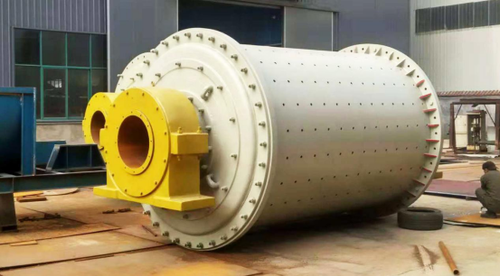
By discharge method: MQG series dry grate-type ball mill, MQS series wet grate-type ball mill, MQY series wet overflow-type ball mill, MQZ series peripheral discharge-type ball mill.
By liner type: Series A (high-manganese steel liner, magnetic liner) standard type, and Series B (rubber liner, high-alumina liner, silica liner, ceramic liner) energy-saving type. Series B saves 10%-20% energy compared to Series A.
By drive method: edge-drive ball mill and center-drive ball mill.
II. Ball Mill Technical Parameter Table
The following are technical parameters for some commonly used models:
Model | Shell Speed (r/min) | Ball Charge (t) | Feed Size (mm) | Product Size (mm) | Capacity (t/h) | Motor Power (kW) | Total Weight (t) |
|---|---|---|---|---|---|---|---|
Ф900×1800 | 36-38 | 1.5 | ≤20 | 0.075-0.89 | 0.65-2 | 18.5 | 5.5 |
Ф900×3000 | 36 | 2.7 | ≤20 | 0.075-0.89 | 1.1-3.5 | 22 | 6.7 |
Ф1200×2400 | 36 | 3 | ≤25 | 0.075-0.4 | 1.5-4.8 | 30 | 12 |
Ф1200×3000 | 36 | 3.5 | ≤25 | 0.074-0.4 | 1.6-5 | 37 | 12.8 |
Ф1200×4500 | 32.4 | 5 | ≤25 | 0.074-0.4 | 1.6-5.8 | 55 | 13.8 |
Ф1500×3000 | 29.7 | 7.5 | ≤25 | 0.074-0.4 | 2-5 | 75 | 16.8 |
Ф1500×4500 | 27 | 11 | ≤25 | 0.074-0.4 | 3-6 | 110 | — |
Ф1500×5700 | 28 | 12 | ≤25 | 0.074-0.4 | 3.5-6 | 130 | — |
Ф1830×3000 | 25.4 | 11 | ≤25 | 0.074-0.4 | 4-10 | 130 | — |
Ф1830×4500 | 25.4 | 15 | ≤25 | 0.074-0.4 | 4.5-12 | 155 | — |
Ф1830×6400 | 24.1 | 21 | ≤25 | 0.074-0.4 | 6.5-15 | 210 | — |
Ф1830×7000 | 24.1 | 23 | ≤25 | 0.074-0.4 | 7.5-17 | 245 | — |
Ф2100×3000 | 23.7 | 15 | ≤25 | 0.074-0.4 | 6.5-36 | 155 | — |
Ф2100×4500 | 23.7 | 24 | ≤25 | 0.074-0.4 | 8-43 | 245 | — |
Ф2100×7000 | 23.7 | 26 | ≤25 | 0.074-0.4 | 8-48 | 280 | — |
Ф2200×4500 | 21.5 | 35 | ≤25 | 0.074-0.4 | 9-45 | 280 | — |
Ф2200×6500 | 21.7 | 35 | ≤25 | 0.074-0.4 | 14-26 | 280 | — |
Ф2200×7000 | 21.7 | 35 | ≤25 | 0.074-0.4 | 15-28 | 380 | — |
Ф2200×7500 | 21.7 | 35 | ≤25 | 0.074-0.4 | 15-30 | 380 | — |
Ф2400×3000 | 21 | 23 | ≤25 | 0.074-0.4 | 7-50 | 245 | — |
Ф2400×4500 | 21 | 30 | ≤25 | 0.074-0.4 | 8.5-60 | 320 | — |
Ф2700×4000 | 20.7 | 40 | ≤25 | 0.074-0.4 | 12-80 | 380 | — |
Ф2700×4500 | 20.7 | 48 | ≤25 | 0.074-0.4 | 12-90 | 480 | — |
Note: Specific selection must be determined based on material characteristics, process requirements, etc.
III. Selection Recommendations by Capacity
Reference recommendations for matching ball mill specifications to throughput:
Annual Throughput | Required Hourly Capacity | Recommended Ball Mill Size | Reference Motor Power |
|---|---|---|---|
100,000 t/y | ~20 t/h | Ф1830×3000 ~ Ф2100×3000 | 130-155 kW |
300,000 t/y | ~60 t/h | Ф2700×4500 ~ Ф3200×4500 | 480-800 kW |
600,000 t/y | ~120 t/h | Ф3600×6000 or larger | ≥1250 kW |
≥1,000,000 t/y | ≥200 t/h | Ф4200×6500 or larger | ≥1500 kW |
Final selection must be based on ore grindability test data.
Customised Solution Services
Every ball mill project is unique—material properties, capacity scale, and process requirements all differ, and no standardised solution fits all needs. We offer professional one-on-one customised solution services:
Customised ball mill model and specification selection (grate/overflow type, wet/dry, etc.) based on material characteristics
Ball size distribution scheme design
Full production line equipment (mill, classifier, feed system, control system) selection and matching
Equipment layout and site planning recommendations
Investment estimation and economic analysis
Installation, commissioning guidance and operator training
Contact Us: No matter which stage your project is at, we welcome your enquiry.
The right way to contact a manufacturer: Please provide your material type, target capacity, and product fineness requirements—our engineers will precisely match the most suitable ball mill solution for you.