
When planning a new lime rotary kiln production line, most buyers first ask "How much does a lime rotary kiln cost?" or "What is the daily capacity?" However, in actual projects, the factors that determine whether the production line can operate stably over the long term and produce qualified active lime are not just the kiln price alone. They also include the grade, particle size, and impurity content of the limestone feed, fuel type and calorific value, calcination regime, and whether the upstream and downstream equipment are properly matched.
High-grade calcium carbonate limestone and magnesium-containing dolomitic limestone require different processing approaches. Similarly, calcination for ordinary building lime, active lime, or metallurgical lime each demands different temperatures, residence times, and cooling regimes.
Therefore, the selection of a lime rotary kiln cannot be based solely on planned capacity to determine shell dimensions. Rather, several questions should be answered first:
Is the raw material ordinary limestone or dolomitic limestone? What are the impurity contents such as MgO and SiO₂?
Is the target product ordinary quicklime or high-activity lime? What is the activity requirement?
What production scale is required? 150 tons per day or 1000 tons per day?
What are the fuel conditions? Is solid fuel (coal, coke), liquid fuel (heavy oil), or gaseous fuel (natural gas, producer gas) available?
Are preheater, cooler, dust collection, and finished product conveying systems required?
This article focuses on lime rotary kilns and complete calcination production lines, covering the basic principles of lime calcination, applicable raw materials, typical process flow, equipment configuration, selection factors, and the information needed before requesting a quotation.
I. What Is a Lime Rotary Kiln?
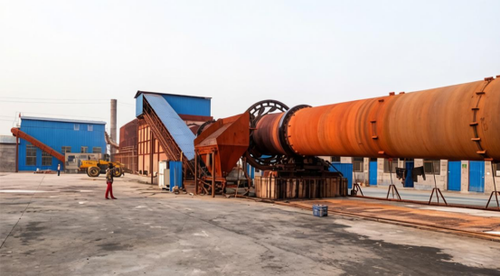
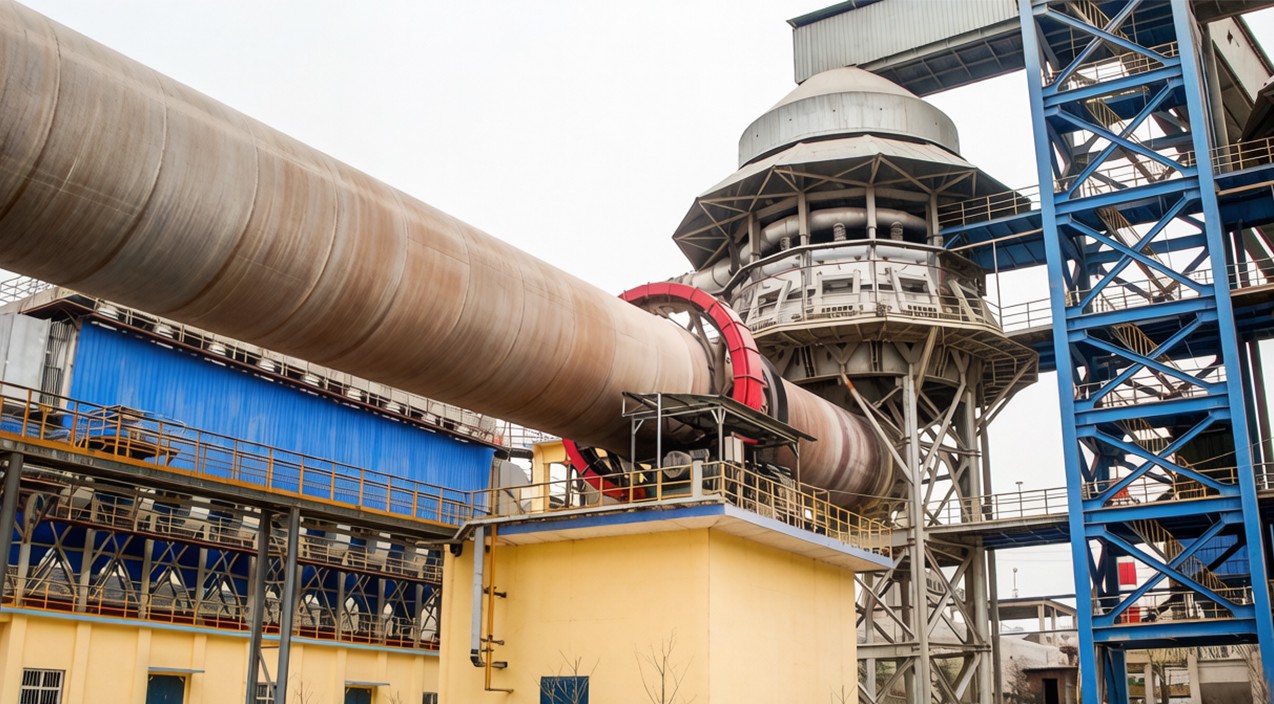
A lime rotary kiln is a rotating cylindrical device used for the continuous calcination of limestone. Material enters from the higher end of the kiln shell (the kiln tail), and as the inclined shell rotates, the material continuously tumbles and moves toward the discharge end (the kiln head), while exchanging heat in counter-current flow with the high-temperature flue gas. This causes the calcium carbonate (CaCO₃) in the limestone to decompose into calcium oxide (CaO) and carbon dioxide (CO₂).
Unlike ordinary drying equipment, the lime rotary kiln does not simply remove surface moisture—it must complete the chemical decomposition reaction of limestone at high temperature. Temperature, residence time, particle size, hot gas distribution, and discharge cooling rate all affect the final product's activity, free CaO content, and under-burning rate.
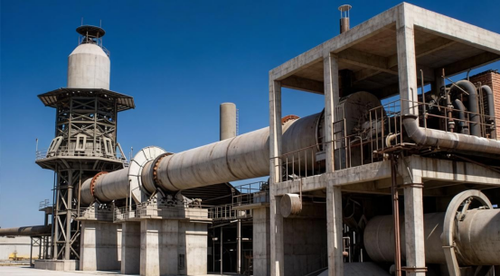
It should be noted that this article focuses on the shaft preheater + rotary kiln + shaft cooler complete calcination system—currently the most widely used continuous calcination process route in the lime industry.
It is also important to understand that a lime rotary kiln is not the same as a cement rotary kiln. Limestone calcination temperatures are generally 900-1200°C, while cement clinker calcination requires temperatures above 1450°C. The structures, preheating systems, cooling systems, and combustion systems of the two types of equipment must be designed separately according to their respective product requirements and cannot be used interchangeably.
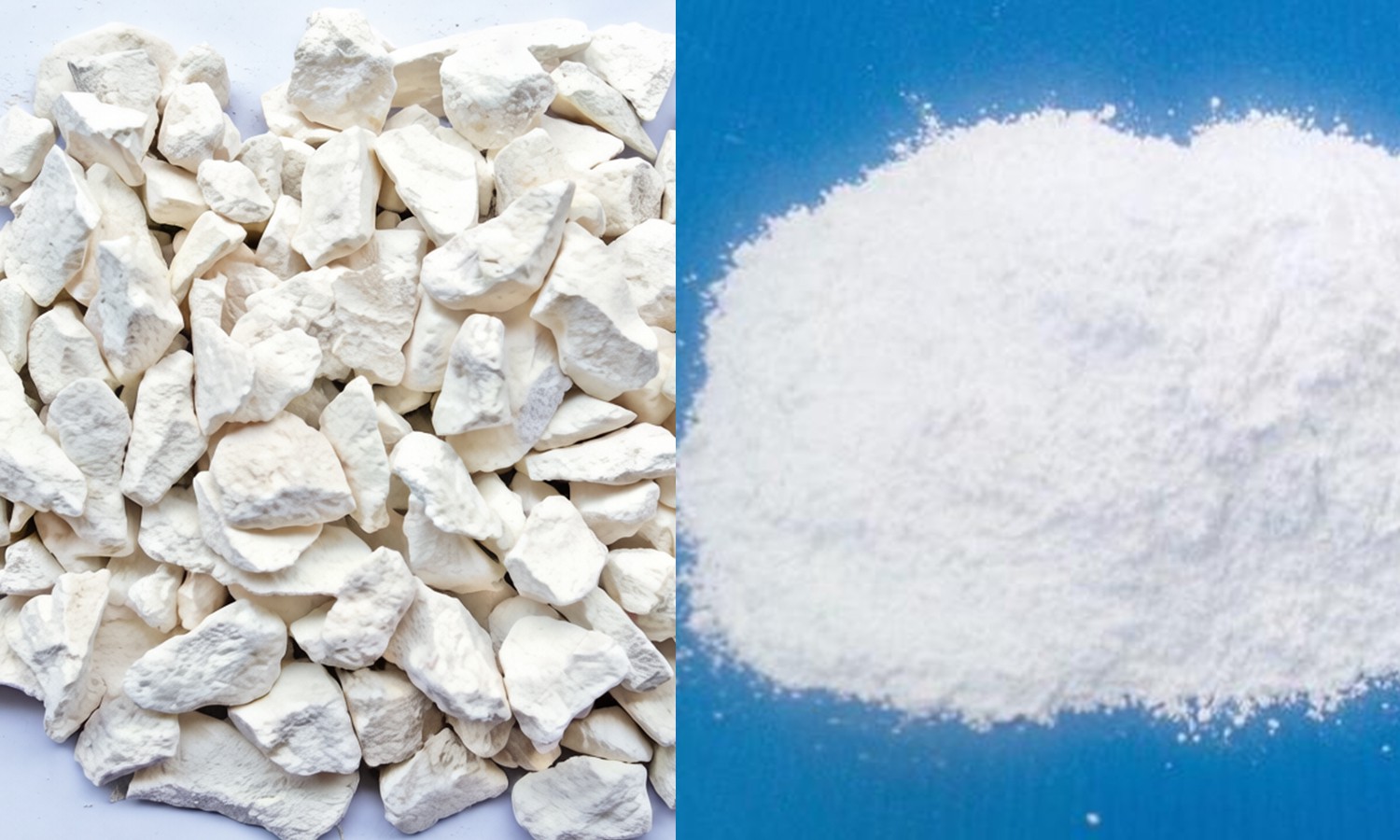
▲ limestone vs. quicklime
II. What Happens During Lime Calcination
1. Calcination Chemical Reaction
The main component of limestone is calcium carbonate (CaCO₃). When heated in the rotary kiln, the calcium carbonate undergoes a decomposition reaction:
CaCO₃ → CaO + CO₂↑
This reaction begins to proceed significantly at around 900°C and becomes essentially complete at 1100-1200°C. The resulting calcium oxide (CaO, quicklime) is discharged from the kiln head, while the CO₂ exits with the flue gas from the kiln tail.
Calcination temperature must be precisely controlled:
Temperature too low (<900°C) : Incomplete decomposition of limestone, resulting in "under-burning"—the finished product contains significant undecomposed CaCO₃, with low activity
Temperature too high (>1200°C) : Excessive sintering of calcium oxide crystals, resulting in "over-burning"—product activity decreases and slaking rate slows
Optimal temperature (900-1150°C) : Produces high-activity lime, widely used in steelmaking, calcium carbide production, flue gas desulfurization, and other applications
2. Key Factors Affecting Lime Quality
The quality of lime is determined by several factors:
Factor | Effect | Control Points |
|---|---|---|
Limestone particle size | Larger particles require longer calcination time | Generally controlled at 10-40mm; fine fractions (10-15mm) can be used directly |
Calcination temperature | Higher temperature reduces activity (over-burning) | Control within 900-1150°C range |
Calcination time | Longer time reduces activity | Adjust residence time via kiln speed |
Fuel calorific value | Higher value means lower consumption | Select appropriate fuel to improve combustion efficiency |
III. Typical Process Flow of a Lime Rotary Kiln
A complete lime rotary kiln production line typically consists of the following core sections:
Stage 1: Raw Material Preparation & Storage
Qualified limestone (generally 10-40mm) that has been crushed and screened is stored in the feed bin. The bin is equipped with upper and lower level indicators to control the feed rate.
Stage 2: Preheating
The limestone is lifted by bucket elevator and transported to the top bin of the preheater, then evenly distributed into each chamber of the preheater through feed pipes. In the preheater, the limestone is heated to about 900°C by the 1150°C kiln flue gas from the rotary kiln, with approximately 20-25% of the limestone completing pre-decomposition at this stage.
Key functions of the preheater:
Improved thermal efficiency: Uses kiln tail waste heat to preheat raw material, significantly reducing fuel consumption
Increased output: Pre-decomposition rate of 20-25% upon entering the kiln shortens the calcination time inside the kiln
Low pressure drop design: Simple structure and stable operation
Stage 3: Calcination
The preheated limestone is pushed into the lime rotary kiln by hydraulic pushers. Inside the rotary kiln, the limestone further decomposes into CaO and CO₂ at 900-1150°C. The material continuously tumbles forward inside the kiln, with a residence time generally controlled at 2-4 hours.
The rotary kiln shell is the core of the calcination equipment, and its specifications directly determine the production line capacity:
Design Capacity | Reference Kiln Shell Size |
|---|---|
150-200 t/d | Φ2.5×40m |
300-400 t/d | Φ3.0×48m |
500-600 t/d | Φ3.6×56m |
800-1000 t/d | Φ4.0×60m ~ Φ4.8×68m |
Stage 4: Cooling
The high-temperature lime (approx. 1000-1100°C) generated after decomposition enters the cooler. Inside the cooler, it is cooled by forced cold air to below 100°C for discharge.
Additional value of the cooler:
Cools the product: Lowers lime temperature to ambient +80°C, facilitating conveying and storage
Preheats combustion air: The 600-700°C hot air after heat exchange enters the kiln head and mixes with fuel for combustion, significantly improving thermal efficiency
Zoned ventilation: Filled-type, zoned-ventilation circular or square shaft coolers provide good cooling effect and reliable operation
Stage 5: Finished Product Conveying & Storage
The lime discharged from the cooler is conveyed via vibrating feeder, chain bucket conveyor, bucket elevator, and belt conveyor to the finished lime storage silo. Screening can be added per customer requirements to store different particle sizes separately.
Stage 6: Flue Gas Treatment
After tempering with cold air, the kiln tail exhaust gas is drawn by an induced draft fan into a baghouse dust collector for treatment, then discharged through the stack via the exhaust fan. The rotary kiln ends are sealed with combined leaf-spring seals, achieving an air leakage coefficient of less than 10%, effectively reducing cold air infiltration and dust-laden flue gas leakage.
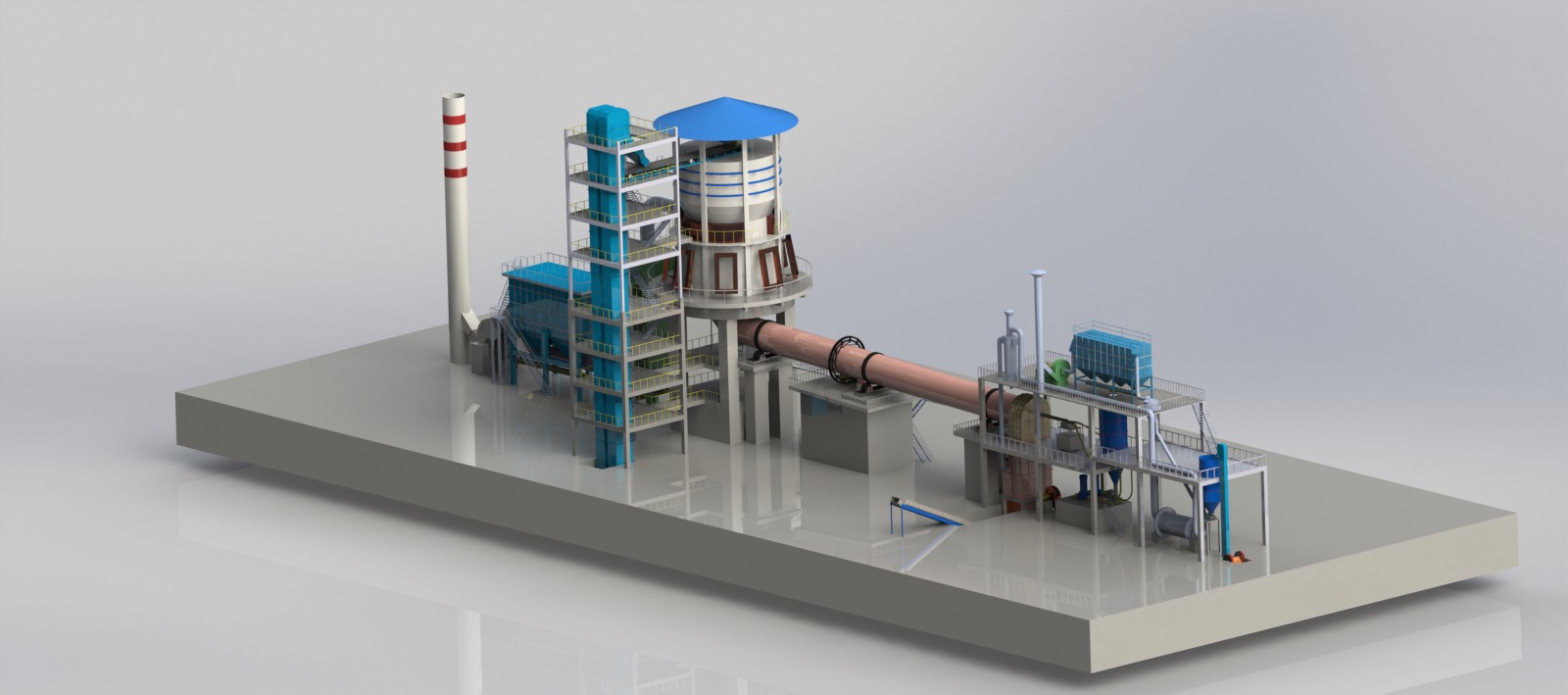
IV. Core Equipment Configuration of a Lime Rotary Kiln
1. Rotary Kiln Shell
The rotary kiln shell is the core calcination equipment, consisting of a rotating inclined cylindrical structure. Its main advantages include:
Large production capacity: Single production line from 150-1000 t/d
Smooth operation: No noise and low vibration during operation
Low comprehensive energy consumption: With preheater and cooler, thermal efficiency is significantly improved
2. Shaft Preheater
The shaft preheater is a key energy-saving component of the lime rotary kiln system:
Effectively improves preheating efficiency, achieving 20-25% pre-decomposition rate upon kiln entry
Can directly utilize 10-15mm fine limestone, broadening the range of applicable raw materials
Low pressure drop design, low power consumption
3. Shaft Cooler
The shaft cooler features a filled-type, zoned-ventilation design:
Lime discharge temperature: ambient +80°C
Secondary air entering the kiln can be preheated to above 700°C
Reduced moving parts and special materials, simple maintenance
4. Combustion System
Fuel types available for lime calcination in rotary kilns:
Solid fuels: Coal, coke, etc.
Liquid fuels: Heavy oil, kerosene, diesel, etc.
Gaseous fuels: LPG, producer gas, natural gas, etc.
Fuel selection should consider local resource availability, calorific value requirements, and operating costs.
5. Sealing System
The rotary kiln ends are sealed with combined leaf-spring seals, achieving an air leakage coefficient of less than 10%. Combined with composite refractory materials, radiant heat loss is effectively reduced.
6. Dust Collection System
A baghouse dust collector is used to treat kiln tail exhaust gas, with high collection efficiency and emissions meeting environmental requirements.
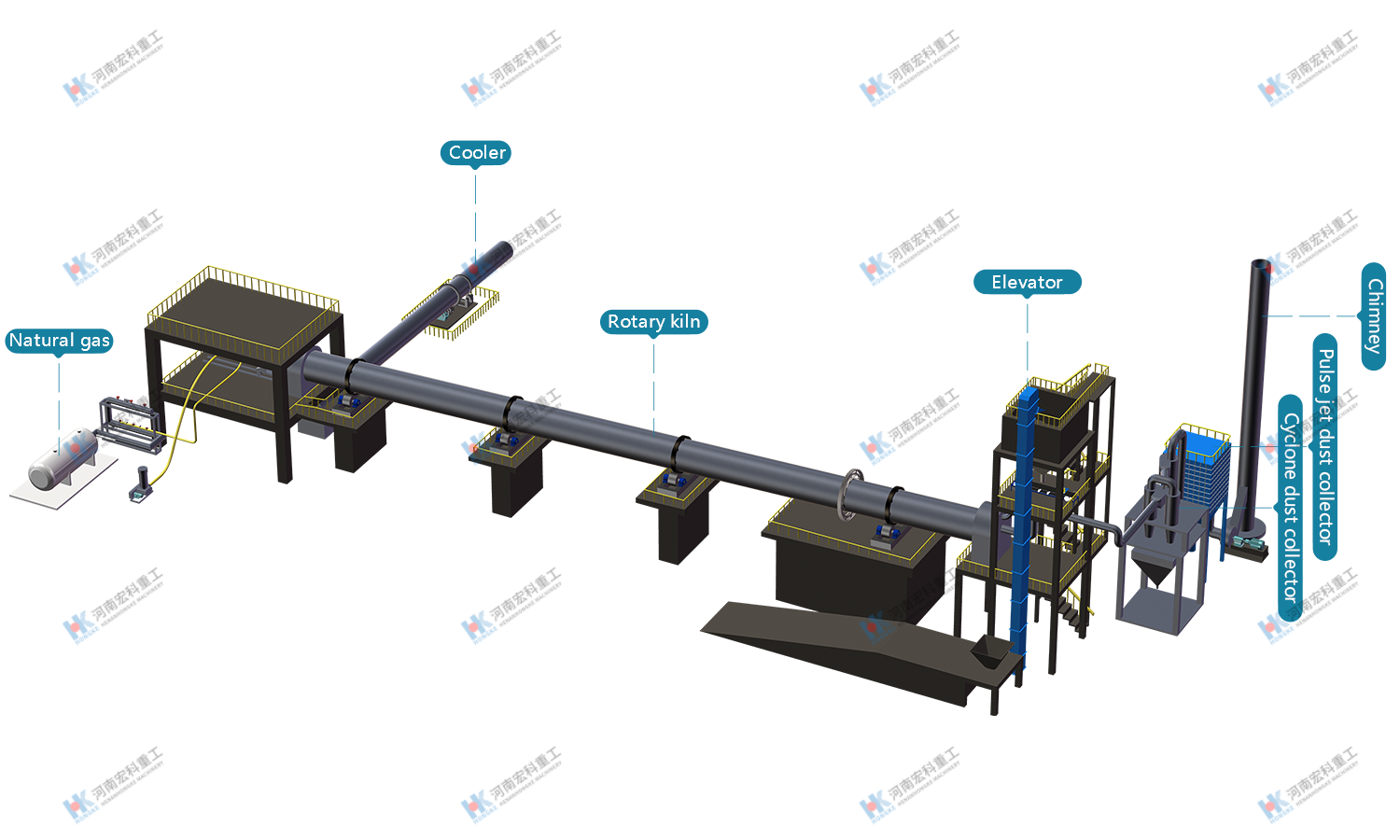
V. How to Select a Lime Rotary Kiln – Selection Decision Guide
Rational selection of a lime rotary kiln is the key to saving investment, reducing operating costs, ensuring product quality, and maximizing economic returns. The following is a systematic guide for selection decisions.
1. Preparation Before Selection
Define Raw Material Characteristics
Raw material characteristics are the primary consideration when selecting calcination equipment. The following key parameters should be determined:
CaCO₃ content (grade) of the limestone
Impurity contents such as MgO, SiO₂, Al₂O₃
Limestone particle size distribution
Loss on ignition of the raw material
Determine Capacity Requirements
Determine the required design capacity (tons/day) based on production scale. Hongke Heavy Industry's lime rotary kilns have a design capacity range of 150-1000 t/d.
Identify Fuel Conditions
Determine the available fuel types (coal, natural gas, heavy oil, etc.) and local energy prices, as these directly affect operating costs.
Define Product Quality Targets
Different applications have different lime quality requirements:
Steelmaking lime: Requires high activity (>360ml), low sulfur and phosphorus
Calcium carbide lime: Requires high CaO content (>92%), low loss on ignition
Construction lime: Requires stable slaking performance
2. Key Selection Parameter Reference
Design Capacity (t/d) | Reference Kiln Shell Size | Preheater Type | Cooler Type |
|---|---|---|---|
150-200 | Φ2.5×40m | Shaft Preheater | Shaft Cooler |
300-400 | Φ3.0×48m | Shaft Preheater | Shaft Cooler |
500-600 | Φ3.6×56m | Shaft Preheater | Shaft Cooler |
800-1000 | Φ4.0×60m ~ Φ4.8×68m | Shaft Preheater | Shaft Cooler |
Note: Specific selection must be determined based on raw material characteristics, fuel conditions, site conditions, etc.
3. Basic Selection Principles
Prioritize Applicability
The ideal selection must be based on the user's raw material conditions, fuel conditions, and product targets, with appropriate emphasis to find the most suitable solution. Before selection, it is advisable to study calcination equipment already used for similar raw materials.
Capacity Matching
Select a rotary kiln with design capacity appropriate to the production scale. Equipment that is too large or too small will affect both production efficiency and product quality.
Energy Efficiency & Environmental Protection
Prioritize systems with high thermal efficiency and low emissions. Rotary kiln systems equipped with preheater and cooler have far higher thermal efficiency than ordinary rotary kilns.
Comprehensive Evaluation of Operating Costs
Do not focus solely on equipment price; comprehensively evaluate:
Energy consumption: Fuel type and consumption rate
Maintenance costs: Equipment failure rate, refractory service life
Labor costs: Level of automation
4. Common Selection Misconceptions
Misconception 1: Focusing only on kiln shell price while ignoring auxiliary equipment
The quality of auxiliary equipment such as preheater, cooler, and dust collection system directly affects the performance of the entire production line. Focusing only on the kiln shell price may lead to improper selection of auxiliary equipment.
Misconception 2: Ignoring differences in raw material characteristics
Limestone from different sources and of different grades has different calcination characteristics and equipment requirements. Using the wrong design may result in product quality failing to meet standards or output falling short of expectations.
Misconception 3: Overlooking fuel costs
Fuel is the main cost component of lime rotary kiln operation. The calorific value, price, and availability of different fuels vary greatly. Selection should consider local energy conditions for comprehensive comparison.
VI. Comparison of Lime Rotary Kiln with Other Calcination Equipment
In lime production, in addition to rotary kilns, there are also shaft kilns, annular shaft kilns, twin-shaft kilns, and other calcination equipment. The following is a comparison of the rotary kiln with other major calcination methods:
Comparison Dimension | Lime Rotary Kiln | Traditional Shaft Kiln | Annular/Twin-Shaft Kiln |
|---|---|---|---|
Single-line capacity | 150-1000 t/d, suitable for large scale | Generally 100-300 t/d | 300-600 t/d |
Raw material adaptability | Good, can use 10-15mm fine fractions | Requires uniform particle size | Requires uniform particle size |
Product quality | High activity, stable quality | Quality fluctuates significantly | Good quality |
Thermal efficiency | High (with preheater and cooler) | Medium | Relatively high |
Automation level | High | Low | Medium |
Investment | Higher | Low | Medium |
Best suited for | Large scale, high quality requirements | Small scale, low investment | Medium scale |
VII. Application Case Studies
The following are actual application examples of Hongke Heavy Industry's lime rotary kiln equipment in domestic and international projects:
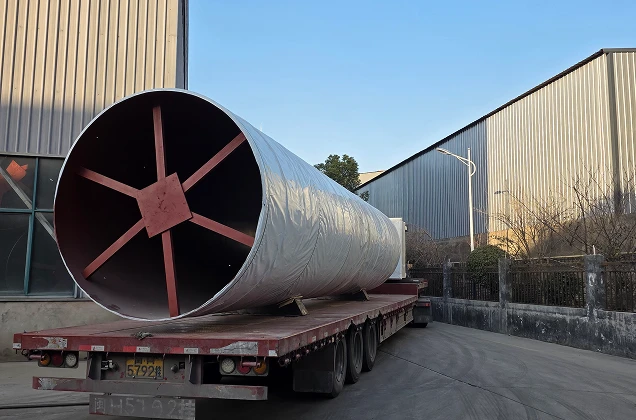
Case 1: Active Lime Rotary Kiln Shipment to Egypt
Project Overview: The complete active lime rotary kiln equipment ordered by an Egyptian client was manufactured and shipped overseas. The active lime rotary kiln is used to calcine limestone to produce high-activity lime products, widely used in steelmaking, alumina production, power plant desulfurization, and other fields.
Equipment Configuration: Includes shaft preheater, rotary kiln shell, shaft cooler, combustion system, and full electrical control equipment.
Customer Value: The client received a complete active lime production line, meeting local demand for high-quality active lime from the steel and chemical industries.
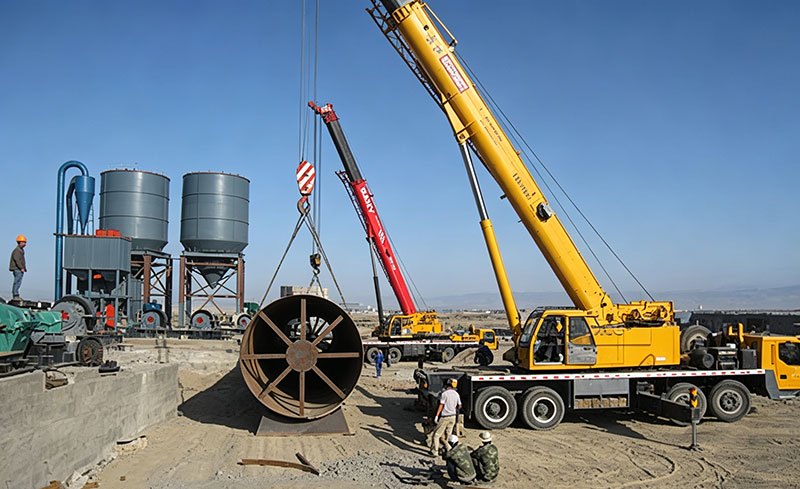
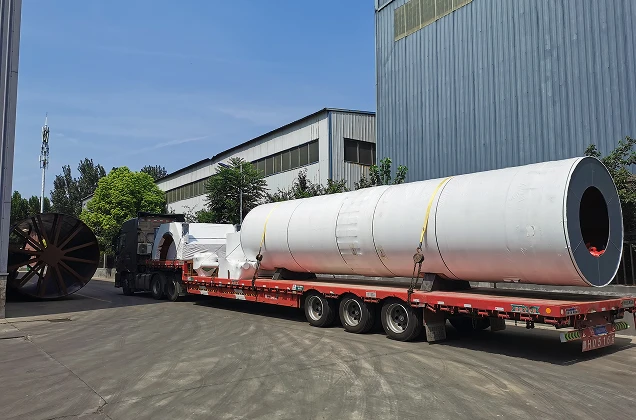
Case 2: Φ2.2×60m Lime Rotary Kiln Shipment to Mongolia
Project Overview: The Φ2.2×60m lime rotary kiln complete equipment ordered by a Mongolian client was manufactured and shipped. The equipment is used for deep processing of local limestone resources in Mongolia, serving surrounding mining and construction markets.
Equipment Features: The Φ2.2×60m configuration provides a daily capacity of approximately 150-200 tons, suitable for medium-scale production needs.
Customer Value: After commissioning, the equipment significantly improved the customer's production efficiency and product quality, enabling the transition from direct ore sales to value-added processed products.
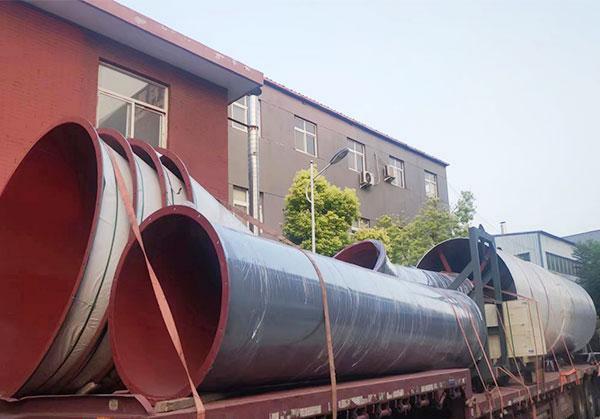
Case 3: Φ3×60m Environmental Lime Rotary Kiln in Korla, Xinjiang
Project Overview: The Φ3×60m environmental lime rotary kiln production line purchased by a customer in Korla, Xinjiang, was installed and commissioned. The production line is equipped with advanced shaft preheater, shaft cooler, and baghouse dust collection system, meeting the strict environmental requirements of the Xinjiang region.
Equipment Features: Φ3×60m configuration, daily capacity of approximately 300-400 tons, equipped with complete environmental facilities and compliant emissions.
Customer Value: After project commissioning, the customer gained stable high-quality lime production capacity, effectively meeting local demand for lime from the calcium carbide and metallurgical industries, achieving both economic and environmental benefits.
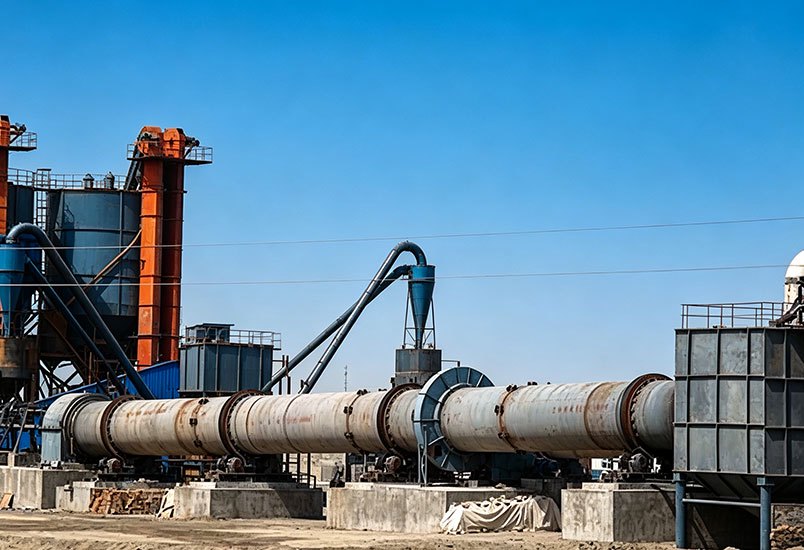
Customised Solution Services
Every lime rotary kiln project is unique—raw material properties, capacity scale, fuel conditions, and product targets all differ, and no standardised solution fits all needs. That is why we offer professional one-on-one customised solution services:
If you already have raw material analysis data: Please provide us with your limestone grade (CaCO₃ content, MgO impurities, etc.), target capacity, available fuel conditions, and target product quality requirements. Our professional engineering team will tailor a complete solution from equipment selection to system configuration based on your actual data.
If you have not yet conducted raw material analysis: We recommend completing a basic raw material analysis first. You can also contact us; we will provide consulting services and technical support for raw material analysis.
Our services include:
Customised lime rotary kiln model and specification selection based on raw material characteristics
Full production line equipment (preheater, rotary kiln, cooler, combustion system, dust collection system, conveying system) selection and matching
Equipment layout and site planning recommendations
Investment estimation and economic analysis
Installation, commissioning guidance, and operator training
Contact Us: No matter which stage your project is at—whether you are at the process scheme evaluation stage, equipment selection stage, or already in production and needing optimization upgrades—we welcome your enquiry.
The right way to contact a manufacturer: Please provide your limestone type, target capacity, available fuel conditions, and target product activity requirements—our engineers will precisely match the most suitable lime rotary kiln solution for you.