
When planning a new zinc oxide (crude zinc oxide) rotary kiln production line, most buyers first ask "How much does a zinc oxide rotary kiln cost?" or "What is the daily capacity?" However, in actual projects, the factors that determine whether the production line can operate stably over the long term and produce qualified products are not just the kiln price alone. They also include the zinc content of the raw material, impurity composition, moisture, particle size, target product grade, calcination regime, fuel conditions, and whether the upstream and downstream equipment are properly matched.
Different zinc-bearing materials—steel plant dust, medium-frequency furnace ash, zinc ore, and imported flue dust—require different processing approaches. Similarly, calcination for producing high-purity zinc oxide, crude zinc oxide, or zinc oxide for chemical applications each demands different temperature, atmosphere control, residence time, and cooling conditions.
Therefore, the selection of a zinc oxide rotary kiln cannot be based solely on planned capacity to determine shell dimensions. Rather, several questions should be answered first:
Is the raw material zinc ore or industrial zinc-bearing waste? What is the zinc content? What are the impurity levels of lead, iron, chlorine, etc.?
Is the target product crude zinc oxide or high-purity zinc oxide? What is the product grade requirement (crude zinc oxide typically 45%-65%, high-purity zinc oxide can reach above 90%)?
What production scale is required? 180 tons per day or 10,000 tons per day?
What are the fuel conditions? Is solid fuel (coal, coke), liquid fuel, or gaseous fuel available?
What are the moisture content and particle size of the raw material? Are drying and grinding systems required?
This article focuses on zinc oxide (crude zinc oxide) rotary kilns and complete calcination production lines, covering the basic principles of zinc oxide calcination, applicable raw materials, typical process flow, equipment configuration, selection factors, and the information needed before requesting a quotation.
I. What Is a Zinc Oxide Rotary Kiln
A zinc oxide rotary kiln is a rotating cylindrical device used for the continuous high-temperature calcination of zinc-bearing materials. Material enters from the higher end of the kiln shell (the kiln tail), and as the inclined shell rotates, the material continuously tumbles and moves toward the discharge end (the kiln head), while exchanging heat in counter-current flow with the high-temperature flue gas. Under high-temperature conditions, the zinc compounds in the raw material are reduced, volatilized, and oxidized, ultimately being collected as zinc oxide (crude zinc oxide) product in the flue gas cooling system.
Unlike ordinary drying equipment, the zinc oxide rotary kiln does not simply remove surface moisture—it must complete the reduction, volatilization, and oxidation reactions of zinc-bearing materials at high temperature. Temperature, residence time, particle size, kiln atmosphere (reducing/oxidizing atmosphere control), and discharge cooling rate all affect the final product's grade, recovery rate, and impurity content.
It should be noted that this article focuses on the rotary kiln calcination + flue gas cooling + baghouse dust collection complete system—currently the most widely used process route in the zinc-bearing waste treatment and crude zinc oxide production field. Zinc oxide rotary kiln calcination temperatures are generally 900-1300°C, which is completely different from gypsum calcination (120-180°C) or cement clinker calcination (above 1450°C). The equipment structure must be specifically designed for the particular requirements of zinc oxide production and cannot be directly adapted from other applications.
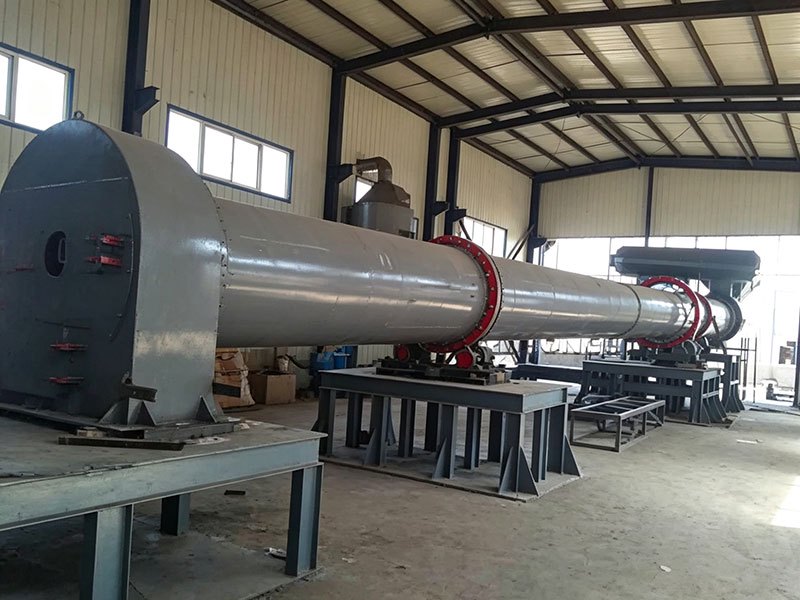
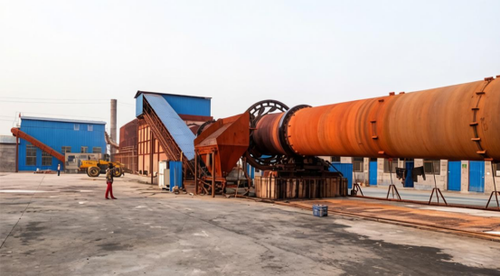
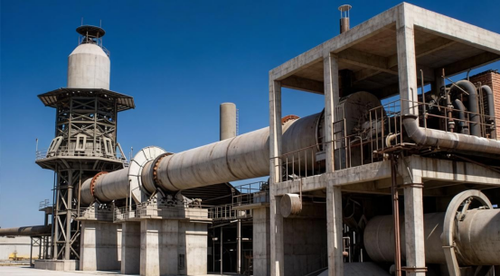
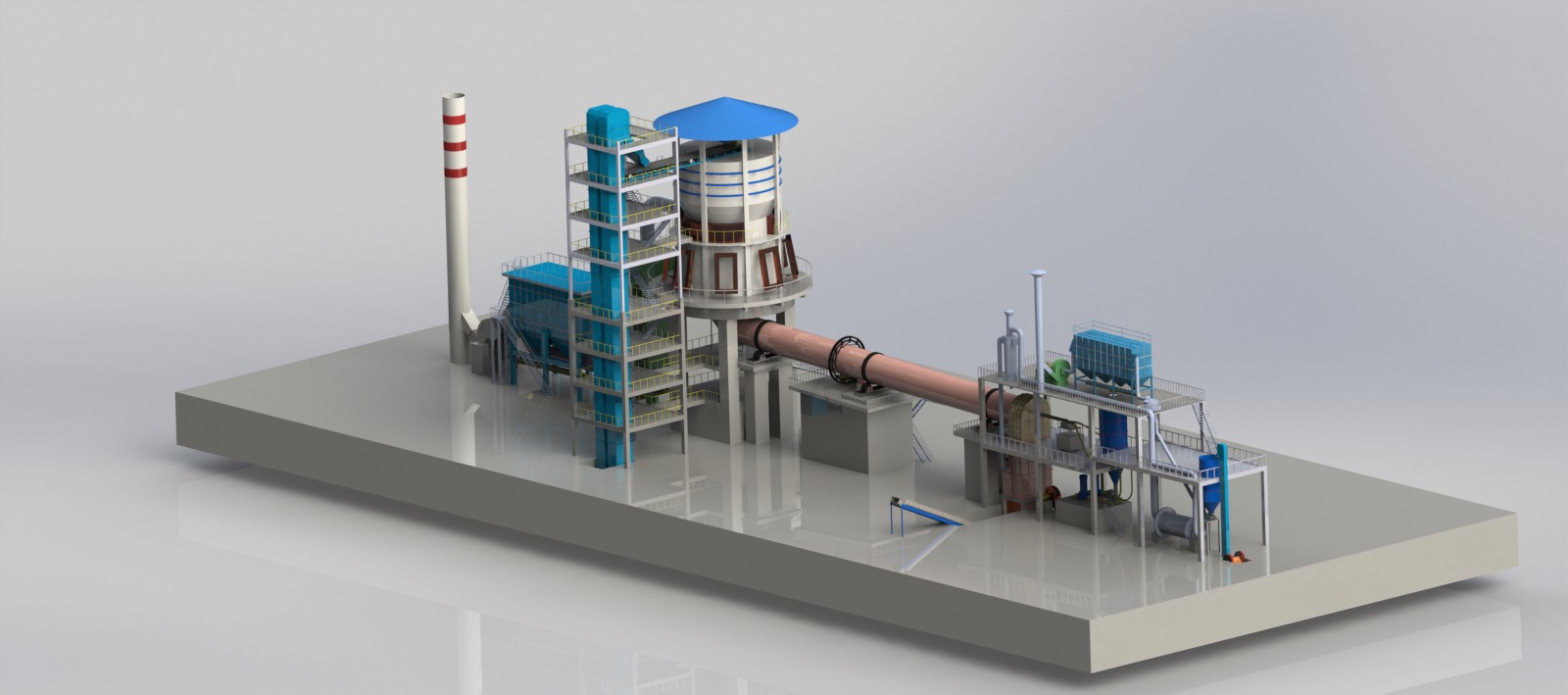
▲ Overall appearance of a zinc oxide rotary kiln production line
II. What Happens During Zinc Oxide Calcination
1. Calcination Chemical Principles
The basic principle of zinc oxide rotary kiln treatment of zinc-bearing materials is: under high-temperature reducing atmosphere, the zinc compounds in the material are reduced to zinc vapor, which then enters the oxidation section with the flue gas and is oxidized to zinc oxide (ZnO) particles, ultimately collected as product through the dust collection system.
Taking zinc-bearing dust (gas ash, gas mud) as an example, the main reaction processes are:
Reduction stage (inside kiln) : Carbon (C) in the raw material acts as a reducing agent, reducing zinc oxide (ZnO) to zinc vapor (Zn↑)
ZnO + C → Zn↑ + CO↑
Oxidation stage (kiln tail flue gas system) : Zinc vapor reacts with oxygen in the air to form zinc oxide particles
2Zn↑ + O₂ → 2ZnO (crude zinc oxide product)
Inside the rotary kiln, this process is influenced by multiple factors including temperature, reducing atmosphere, and material residence time:
Temperature too low or insufficient reduction: Zinc volatilization rate decreases, product recovery drops, and significant zinc remains in the kiln slag
Temperature too high or excessive residence time: Energy consumption increases, kiln lining life shortens, and impurity content in the product may rise
Improper atmosphere control: Excessive oxidizing atmosphere causes premature oxidation of zinc vapor, making collection difficult; insufficient reducing atmosphere prevents effective zinc volatilization
2. Key Factors Affecting Product Grade and Recovery Rate
Factor | Effect | Control Points |
|---|---|---|
Raw material zinc content | Higher zinc content results in higher product grade and recovery | Kiln feed zinc content generally required above 15% |
Raw material carbon content | Carbon acts as reducing agent; insufficient carbon leads to incomplete zinc volatilization | Supplement reducing agents (coke, pulverized coal) based on raw material carbon content |
Calcination temperature | Higher temperature increases zinc volatilization rate, but also increases energy consumption and lining wear | Generally controlled within 900-1300°C range |
Kiln atmosphere | Reducing atmosphere favors zinc volatilization; oxidizing atmosphere causes premature oxidation | Controlled through air-to-fuel ratio adjustment |
Material residence time | Longer time allows more complete zinc volatilization, but reduces capacity | Adjusted by kiln speed |
Flue gas cooling rate | Faster cooling yields finer and higher-quality zinc oxide particles | Controlled through cooling system design |
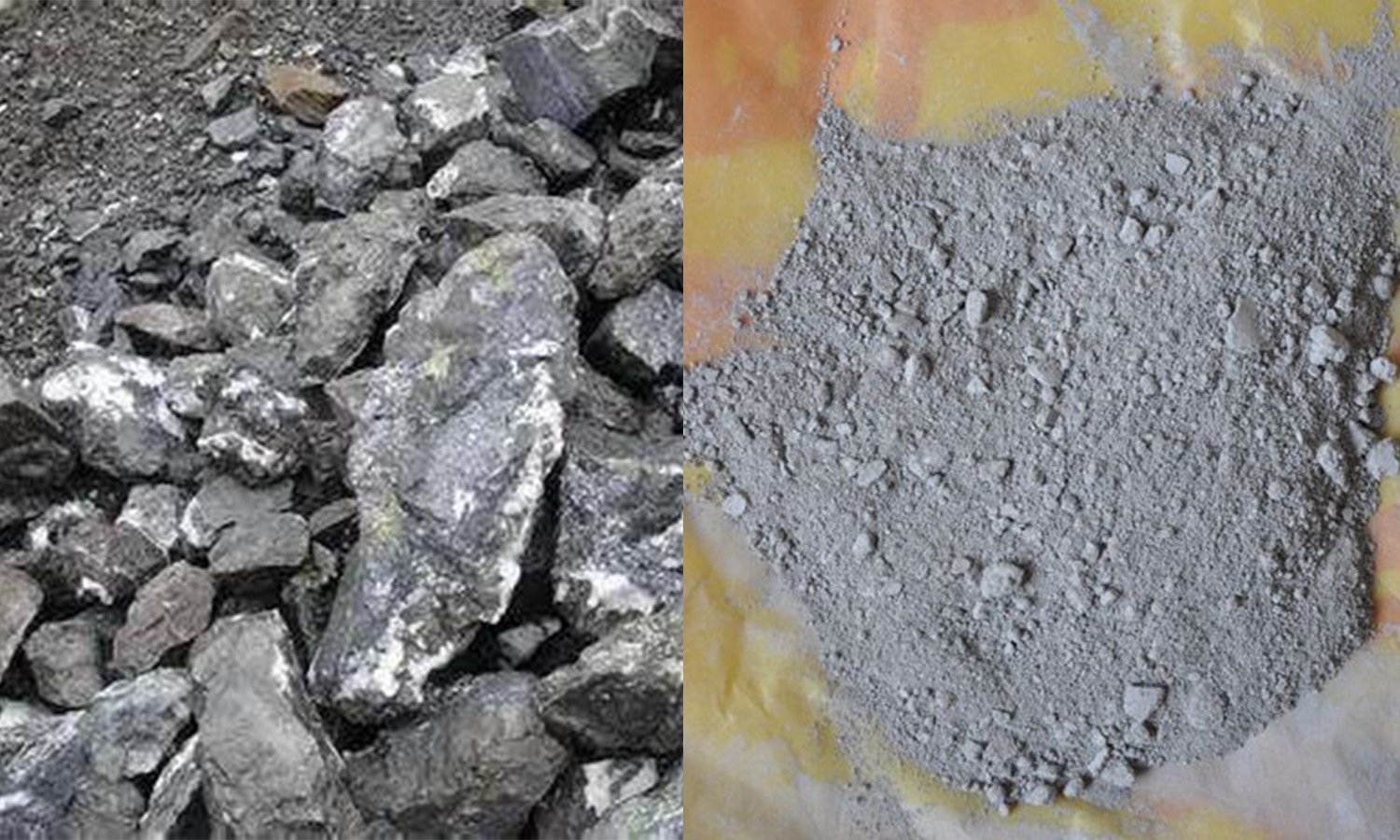
▲ Comparison of zinc-bearing dust, zinc ore raw material, and crude zinc oxide product
III. Typical Process Flow of a Zinc Oxide Rotary Kiln
A complete zinc oxide (crude zinc oxide) rotary kiln production line typically consists of the following core sections:
Stage 1: Raw Material Preparation & Batching
Zinc-bearing materials (steel plant dust, medium-frequency furnace ash, zinc ore, etc.) are mixed with reducing agents (coke, pulverized coal) in a certain proportion. The raw material moisture and particle size need to be controlled—excessive moisture affects the kiln's heat balance and calcination effectiveness, while overly large particles result in incomplete reaction.
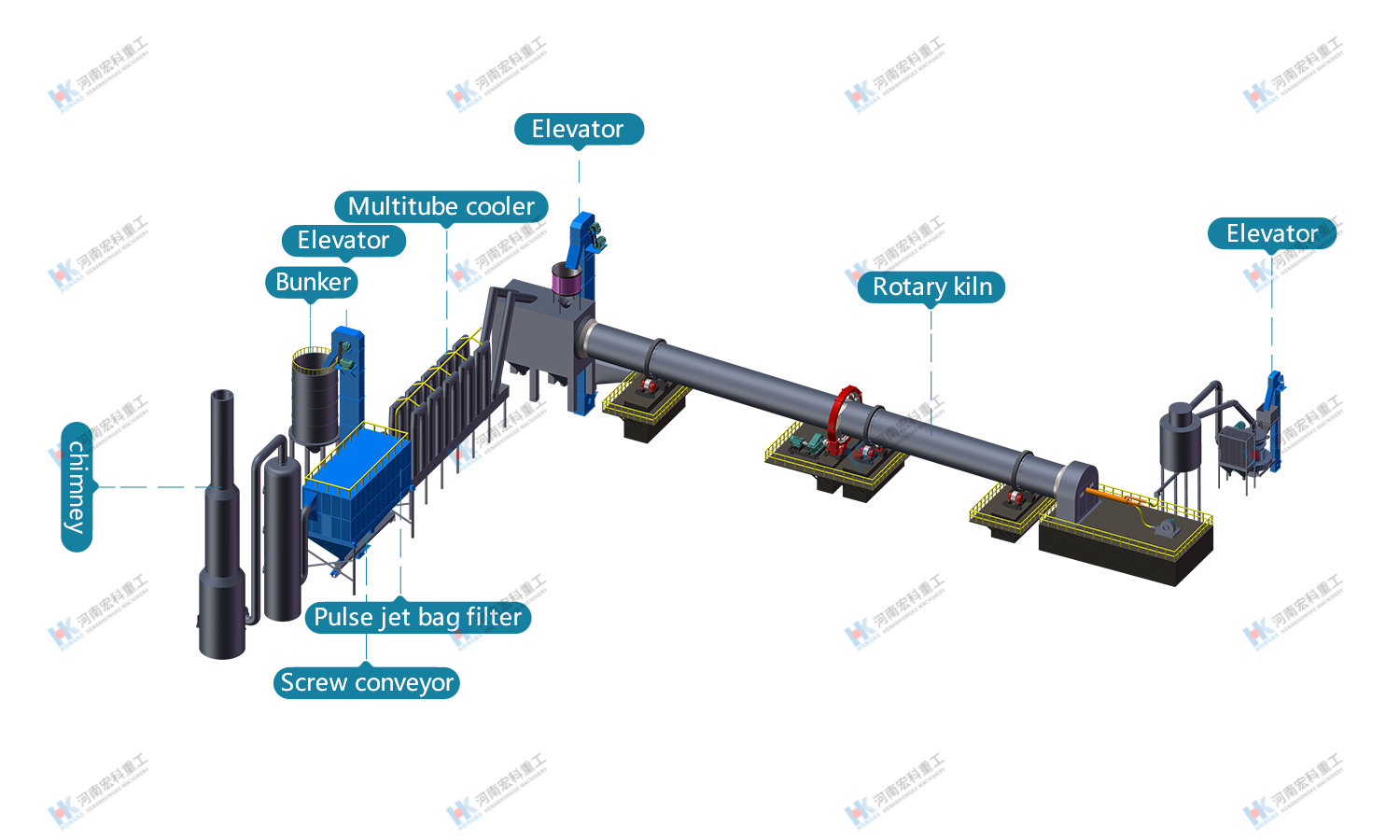
▲Showing the complete flow from raw material to finished product
Stage 2: Rotary Kiln Calcination
The mixed material enters the zinc oxide rotary kiln from the kiln tail. Inside the kiln, the material continuously tumbles forward as the shell rotates, moving in counter-current with the hot gas injected from the kiln head. At high temperatures of 900-1300°C, the zinc compounds are reduced to zinc vapor and volatilize into the flue gas.
The rotary kiln shell is the core of the calcination equipment, and its specifications directly determine the production line capacity:
Design Capacity | Reference Kiln Shell Size | Motor Power | Total Weight |
|---|---|---|---|
180 t/d | Φ2.5×40m | 55 kW | 149.61 t |
200 t/d | Φ2.5×50m | 55 kW | 187.37 t |
280 t/d | Φ2.5×54m | 55 kW | 196.29 t |
320 t/d | Φ2.7×42m | 55 kW | 198.5 t |
450 t/d | Φ2.8×44m | 55 kW | 201.58 t |
500 t/d | Φ3.0×45m | 75 kW | 201.94 t |
700 t/d | Φ3.0×48m | 100 kW | 237 t |
Note: Specific selection must be determined based on raw material characteristics, fuel conditions, site conditions, etc.
Stage 3: Flue Gas Cooling & Oxidation
The high-temperature zinc-bearing flue gas (approx. 900-1100°C) volatilized from the kiln is discharged from the kiln tail and enters the flue gas cooling system. During cooling, the zinc vapor contacts oxygen in the air and is oxidized to fine zinc oxide (crude zinc oxide) particles.
Stage 4: Product Collection
The cooled dust-laden flue gas enters the baghouse dust collector, where the zinc oxide particles are collected as product. The collected crude zinc oxide product is packaged and sent to storage or sold. Collection efficiency directly affects product recovery rate and whether exhaust emissions meet standards.
Stage 5: Kiln Slag Treatment
The solid residue (kiln slag) after calcination is discharged from the kiln head. The kiln slag may still contain small amounts of zinc and other valuable metals, and can be either further processed for secondary recovery or used as building material feedstock, depending on economic viability.
IV. Core Equipment Configuration of a Zinc Oxide Rotary Kiln
1. Rotary Kiln Shell
The zinc oxide rotary kiln shell is the core calcination equipment, consisting of a rotating inclined cylindrical structure. Its main advantages include:
Large production capacity: Single production line from 180-10,000 t/d
Strong raw material adaptability: Capable of processing zinc soil, zinc ore, steel plant dust, medium-frequency furnace ash, gas ash, gas mud, imported flue dust, zinc oxide, lead smelter slag, zinc sulfate mud, leach mud, and all other zinc-bearing waste materials
Thorough calcination: Material undergoes both static and dynamic motion inside the kiln; the greater the specific surface area, the faster the heat transfer rate and the shorter the calcination time
High product quality: Rotary dynamic calcination mixes powdered material with heated hot air in co-current flow, achieving maximum specific surface area for mass-heat exchange, enabling instant calcination and ensuring complete heat exchange and decomposition
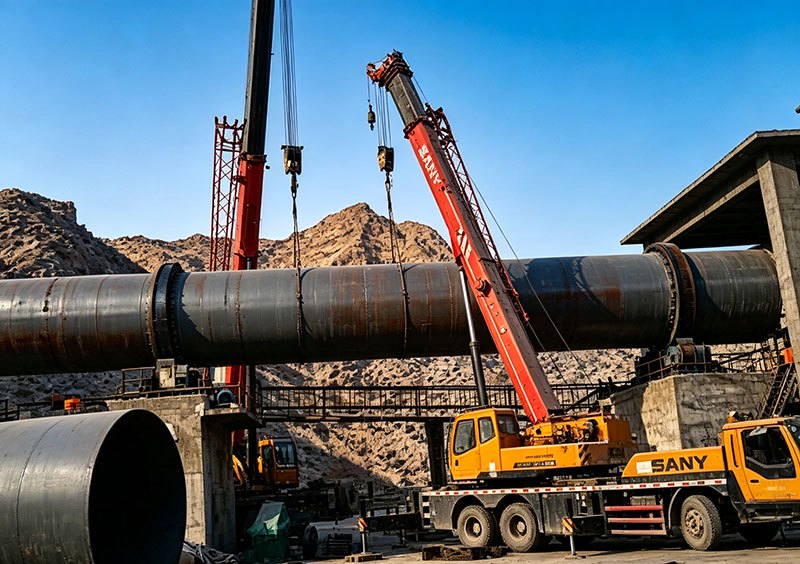
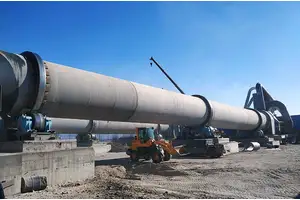
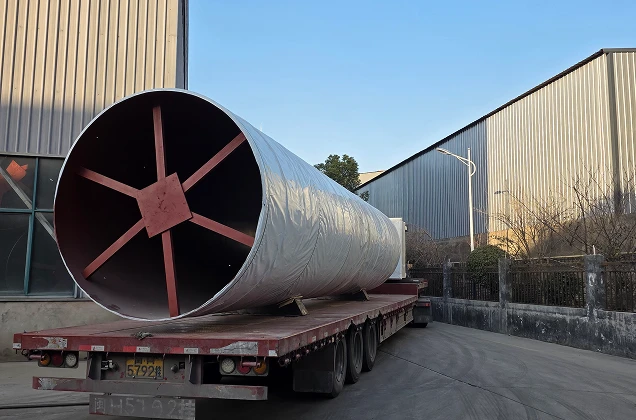
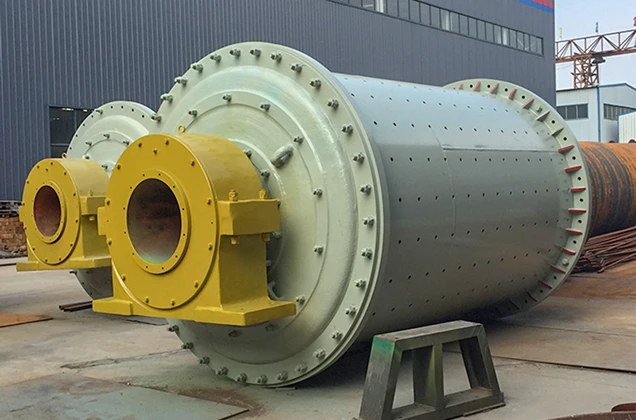
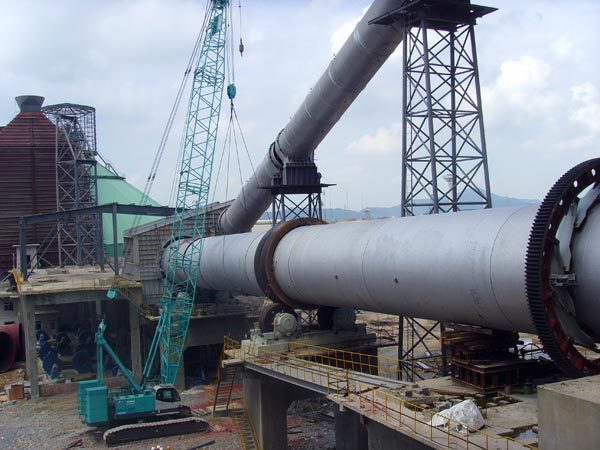
▲ Actual photo of zinc oxide rotary kiln shell, showing kiln structure and site installation status
2. Gas Heater
The gas heater is used to heat combustion air, providing high-temperature hot air for the rotary kiln. It is an important piece of equipment for ensuring stable kiln temperature and calcination effectiveness.
3. Gas-Solid Mixer
The gas-solid mixer is located at the feed end of the rotary kiln. It feeds pre-calcined material into the rotary kiln and mixes it with the air heated by the gas heater, causing the material to move in a swirling fluidized state to achieve efficient heat exchange.
4. Gas-Solid Separation Collector
The gas-solid separation collector is located at the outlet of the rotary kiln. It separates the solid and gas after calcination—the solid is discharged from the discharge port, while the gas is exhausted from the exhaust port.
5. Flue Gas Cooling System
The high-temperature zinc-bearing flue gas from the kiln tail must pass through the cooling system to reduce temperature, allowing the zinc vapor to oxidize into zinc oxide particles at the appropriate temperature while also protecting downstream collection equipment.
6. Baghouse Dust Collection System
The baghouse dust collector is the core equipment for collecting zinc oxide product. Collection efficiency directly affects product recovery rate, generally required to be above 99%.
V. Main Application Areas and Suitable Materials for Zinc Oxide Rotary Kilns
1. Main Application Areas
Zinc oxide rotary kilns have wide applications in the following fields:
Metallurgical industry: Treating zinc-bearing dust from steel plants, medium-frequency furnaces, and blast furnaces to recover crude zinc oxide
Chemical industry: Producing zinc oxide products for rubber, coatings, ceramics, electronics, and other industries
Environmental protection: Treating zinc-bearing industrial waste (lead smelter slag, zinc sulfate mud, leach mud, etc.) for resource recovery
Building materials: Using zinc-bearing waste to produce crude zinc oxide, with kiln slag usable as building material feedstock
2. Suitable Materials
Zinc oxide rotary kilns can process a wide range of materials:
Material Category | Specific Sources |
|---|---|
Zinc-bearing ores | Zinc soil, zinc ore |
Steel industry zinc-bearing waste | Steel plant dust, medium-frequency furnace ash, blast furnace zinc-bearing dust, gas ash, gas mud |
Imported zinc-bearing materials | Imported flue dust |
Non-ferrous metal industry waste | Lead smelter slag, zinc sulfate mud, leach mud |
Other zinc-bearing waste | All zinc-bearing waste materials |
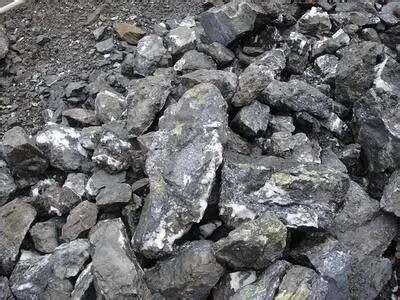
▲ Zinc ore
VI. How to Select a Zinc Oxide Rotary Kiln – Selection Decision Guide
Rational selection of a zinc oxide rotary kiln is the key to saving investment, reducing operating costs, ensuring product quality, and maximizing economic returns. The following is a systematic guide for selection decisions.
1. Preparation Before Selection
Define Raw Material Characteristics
Raw material characteristics are the primary consideration when selecting calcination equipment. The following key parameters should be determined:
Raw material type (zinc ore, dust, flue dust, etc.)
Raw material zinc content (determines potential product grade and recovery rate)
Impurity content (lead, iron, chlorine, etc.—affects product quality and environmental requirements)
Raw material moisture and particle size
Carbon content in raw material (affects amount of reducing agent addition)
Determine Capacity Requirements
Determine the required design capacity (tons/day) based on production scale. Hongke Heavy Industry's zinc oxide rotary kilns have a design capacity range of 180-10,000 t/d.
Identify Fuel Conditions
Determine the available fuel types (coal, coke, natural gas, etc.) and local energy prices, as these directly affect operating costs.
Define Product Quality Targets
Different applications have different zinc oxide product requirements:
Crude zinc oxide (grade 45%-65%): Used as zinc smelting feedstock, chemical intermediate products
High-purity zinc oxide (grade above 90%): Used in rubber, coatings, ceramics, electronics, and other industries
2. Key Selection Parameter Reference
Design Capacity (t/d) | Reference Kiln Shell Size | Motor Power (kW) | Total Weight (t) | Remarks |
|---|---|---|---|---|
180 | Φ2.5×40m | 55 | 149.61 | — |
200 | Φ2.5×50m | 55 | 187.37 | — |
280 | Φ2.5×54m | 55 | 196.29 | Precalciner kiln |
320 | Φ2.7×42m | 55 | 198.5 | — |
450 | Φ2.8×44m | 55 | 201.58 | Precalciner kiln |
500 | Φ3.0×45m | 75 | 201.94 | — |
700 | Φ3.0×48m | 100 | 237 | Precalciner kiln |
— | Φ3.0×60m | — | — | — |
Note: Specific selection must be determined based on raw material characteristics, fuel conditions, site conditions, etc.
3. Basic Selection Principles
Prioritize Applicability
The ideal selection must be based on the user's raw material conditions, fuel conditions, and product targets, with appropriate emphasis to find the most suitable solution. Before selection, it is advisable to study calcination equipment already used for similar raw materials.
Capacity Matching
Select a rotary kiln with design capacity appropriate to the production scale. Equipment that is too large or too small will affect both production efficiency and product quality.
Energy Efficiency & Environmental Protection
Prioritize systems with high thermal efficiency and low emissions. Systems equipped with flue gas cooling and baghouse dust collection not only improve product recovery but also meet environmental requirements.
Comprehensive Evaluation of Operating Costs
Do not focus solely on equipment price; comprehensively evaluate:
Energy consumption: Fuel type and consumption rate
Maintenance costs: Equipment failure rate, refractory service life
Collection efficiency: Directly affects product recovery rate and economic returns
4. Common Selection Misconceptions
Misconception 1: Focusing only on kiln shell price while ignoring auxiliary equipment
The quality of auxiliary equipment such as gas heaters, gas-solid mixers, flue gas cooling systems, and baghouse dust collectors directly affects the performance of the entire production line and product recovery rate. Focusing only on the kiln shell price may lead to improper selection of auxiliary equipment.
Misconception 2: Ignoring differences in raw material characteristics
Zinc-bearing raw materials from different sources have vastly different zinc content, impurity composition, particle size, and moisture. Using the wrong design may result in product grade failing to meet standards or recovery rate falling short of expectations.
Misconception 3: Overlooking the importance of the dust collection system
Zinc oxide product collection relies entirely on the flue gas cooling and dust collection system. Low collection efficiency means a significant portion of the product is discharged with the flue gas, causing both economic loss and environmental pollution.
VII. Comparison of Zinc Oxide Rotary Kiln with Other Calcination Equipment
In the field of zinc-bearing waste treatment, in addition to rotary kilns, there are also rotary hearth furnaces, fuming furnaces, electric furnaces, and other treatment methods. The following is a comparison of the rotary kiln with other major treatment methods:
Comparison Dimension | Zinc Oxide Rotary Kiln | Rotary Hearth Furnace | Fuming/Electric Furnace |
|---|---|---|---|
Raw material adaptability | Good, can handle various zinc-bearing waste | Higher requirements for raw materials | Moderate |
Product grade | Crude zinc oxide 45%-65% | Higher | Moderate |
Zinc recovery rate | 85%-92% | Higher | Moderate |
Investment | Medium | High | High |
Operating cost | Medium | Relatively high | High |
Scale flexibility | Good | Poor | Moderate |
Best suited for | Large-scale zinc-bearing waste treatment | High-quality products | Specific raw materials |
VIII. Application Case Studies
The following are actual application examples of Hongke Heavy Industry's zinc oxide rotary kiln equipment in domestic and international projects:
Case 1: Zinc Oxide Rotary Kiln Installation in Baiyin, Gansu
Project Overview: The complete zinc oxide rotary kiln equipment purchased by a customer in Baiyin, Gansu, was installed on site. The project uses zinc-bearing waste from local non-ferrous metal smelting to produce crude zinc oxide products, serving the surrounding zinc smelting and chemical markets.
Equipment Configuration: Includes rotary kiln shell, gas heater, gas-solid mixer, flue gas cooling system, baghouse dust collector, and full electrical control equipment.
Customer Value: The customer received a complete crude zinc oxide production line, effectively solving the environmental disposal problem of local zinc-bearing waste while creating significant economic benefits.
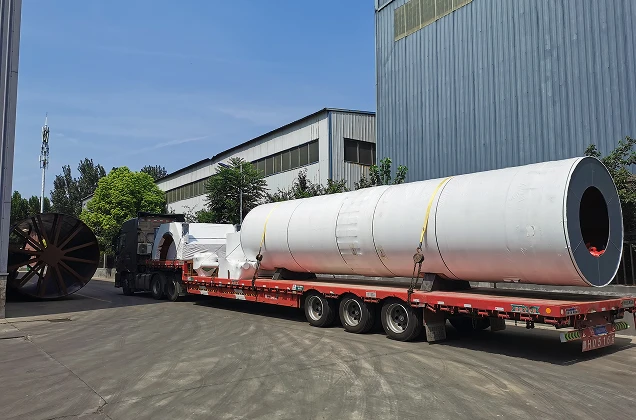
Case 2: Φ3.2×60m Crude Zinc Oxide Rotary Kiln in Tianjin
Project Overview: The Φ3.2×60m crude zinc oxide rotary kiln complete equipment ordered by a customer in Tianjin was manufactured and shipped. The equipment is used to process steel plant zinc-bearing dust to produce crude zinc oxide products.
Equipment Features: The Φ3.2×60m configuration provides a daily capacity of approximately 700-900 tons, suitable for large-scale crude zinc oxide production needs.
Customer Value: After commissioning, the equipment helped the customer achieve resource recovery from steel plant dust, turning waste into treasure while meeting environmental authority emission requirements.
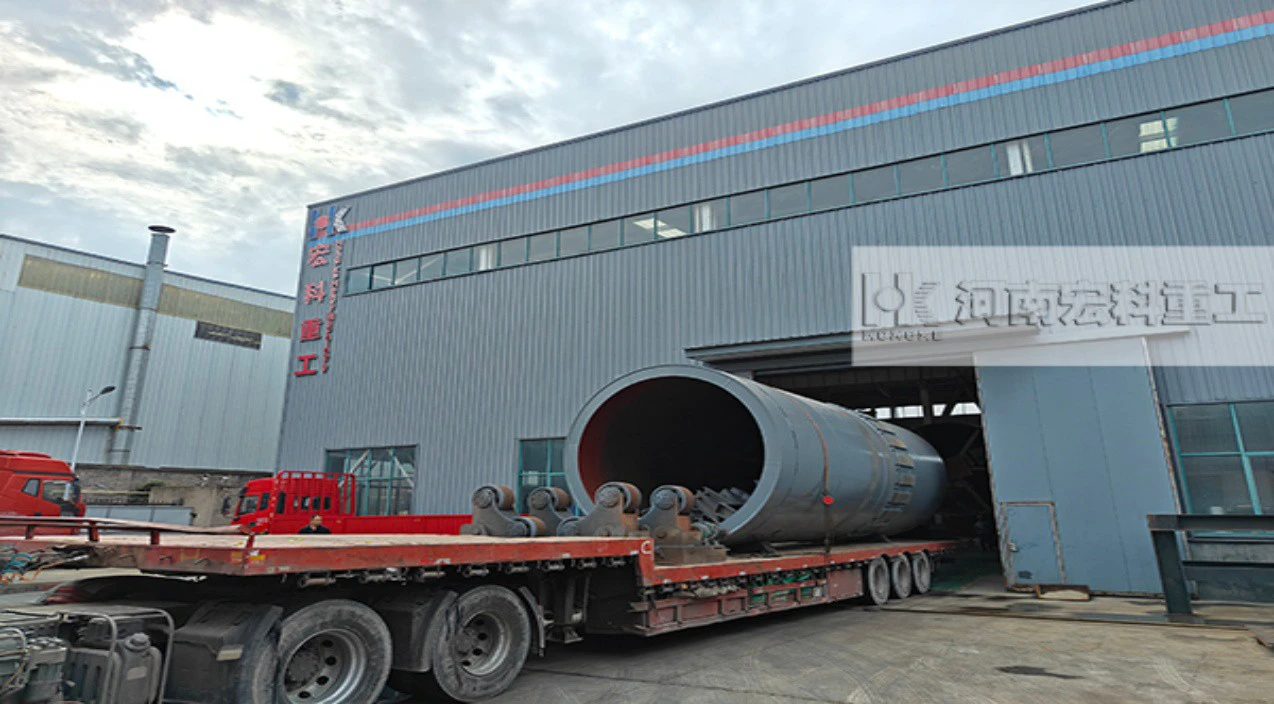
Case 3: Φ2.5×45m Crude Zinc Oxide Rotary Kiln Shipment
Project Overview: The Φ2.5×45m crude zinc oxide rotary kiln complete equipment ordered by a customer was manufactured and shipped. The equipment is used to process zinc ore and zinc-bearing waste to produce crude zinc oxide products.
Equipment Features: The Φ2.5×45m configuration provides a daily capacity of approximately 200-280 tons, suitable for medium-scale production needs.
Customer Value: After project commissioning, the customer gained stable crude zinc oxide production capacity, effectively expanding the company's product line and profit channels.
Customised Solution Services
Every zinc oxide rotary kiln project is unique—raw material properties, capacity scale, fuel conditions, and product targets all differ, and no standardised solution fits all needs. That is why we offer professional one-on-one customised solution services:
If you already have raw material analysis data: Please provide us with your raw material type, zinc content, impurity composition, target capacity, and product quality requirements. Our professional engineering team will tailor a complete solution from equipment selection to system configuration based on your actual data.
If you have not yet conducted raw material analysis: We recommend completing a basic raw material analysis first. You can also contact us; we will provide consulting services and technical support for raw material analysis.
Our services include:
Customised zinc oxide rotary kiln model and specification selection based on raw material characteristics
Full production line equipment (rotary kiln, gas heater, gas-solid mixer, flue gas cooling system, dust collection system) selection and matching
Equipment layout and site planning recommendations
Investment estimation and economic analysis
Installation, commissioning guidance, and operator training
Contact Us: No matter which stage your project is at—whether you are at the process scheme evaluation stage, equipment selection stage, or already in production and needing optimization upgrades—we welcome your enquiry.
The right way to contact a manufacturer: Please provide your raw material type, zinc content, target capacity, and product grade requirements—our engineers will precisely match the most suitable zinc oxide rotary kiln solution for you.