

There is a common yet rarely discussed phenomenon when it comes to purchasing rotary kilns: most buyers devote the bulk of their effort to comparing prices, while spending very little time evaluating the supplier's process capabilities and project experience.
This is understandable—price is upfront, visible, and easy to compare. Process capabilities and project experience, on the other hand, are hidden behind the scenes—difficult to quantify and not easily verified. But it is precisely these "invisible" factors that ultimately determine whether the equipment, once commissioned, will deliver stable profits or become a constant source of headaches.
If you are preparing to purchase a rotary kiln, or are already in discussions with several suppliers, it is worth pausing to ask yourself: Are the criteria I am using to evaluate suppliers really going to help me choose the right partner?
This article starts from the basic knowledge of rotary kilns, combines Hongke Heavy Industry's many years of industry experience and project practice, and provides you with a complete reference framework for selection.
I. What Is a Rotary Kiln and What Is Its Core Function?
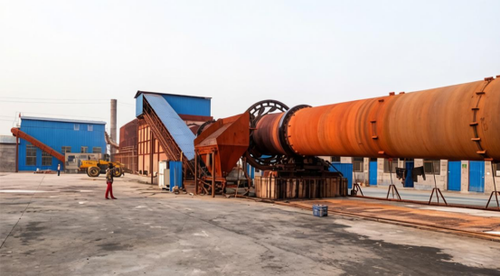
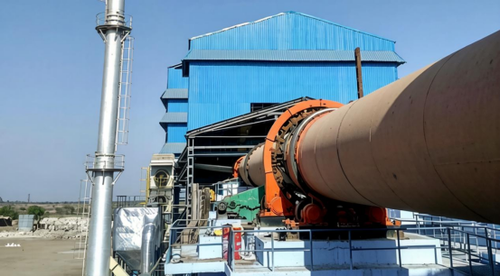
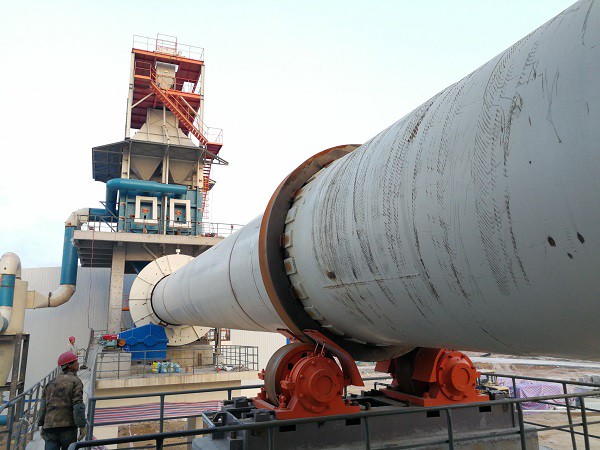
A rotary kiln is a slightly inclined rotating cylindrical thermal device, widely used in building materials, metallurgy, chemical engineering, environmental protection, and other industries. Its working principle is based on the physical and chemical changes of materials within the rotating shell: material enters from the kiln tail (the higher end), moves toward the kiln head (the lower end) driven by the shell rotation, and simultaneously exchanges heat in counter-current with the high-temperature flue gas injected from the kiln head, completing the processes of drying, preheating, decomposition, calcination, and cooling. The material undergoes three modes of heat transfer—convection, radiation, and conduction—with temperatures reaching 1450-1800°C and residence times ranging from a few minutes to several hours.
Core Application Areas of Rotary Kilns
Application Field | Typical Uses | Materials Processed |
|---|---|---|
Building Materials | Cement clinker calcination, active lime production, ceramsite preparation | Cement raw meal, limestone, shale, fly ash |
Metallurgy | Metal ore roasting, reduction, calcination | Iron ore, nickel ore, chrome ore, dolomite, magnesite, bauxite |
Chemical Industry | Chemical raw material roasting and purification | Zinc oxide, titanium dioxide, lithium carbonate, catalysts, activated carbon |
Environmental Protection | Solid waste incineration, sludge treatment, soil remediation | Municipal waste, industrial sludge, contaminated soil |
Hongke Heavy Industry's rotary kiln products have been widely used in the calcination and heating processes for medium and small-scale lime, aluminum powder, magnesium metal, ceramsite sand, bauxite, zinc oxide, alumina, kaolin, cement, and various other materials. They are also applicable to emerging fields such as medical waste treatment, chemical fertilizers, and soil improvement. The products cover carbon, fly ash, chromite sand, calcium aluminate powder, gypsum, bentonite, titanium dioxide, and many other materials.
Main Structural Components of a Rotary Kiln
A complete rotary kiln consists of six major systems:
Shell System: The shell is rolled and welded from steel plates, serving as the chamber for material processing and heat exchange; the interior is lined with refractory material to protect the shell and reduce heat loss.
Tires (Riding Rings): Fixed on the shell, they transfer the weight of the shell and lining to the support devices while increasing shell rigidity. Large rotary kilns are generally supported by three tires on each support station.
Support Devices (Roller Assemblies): Comprising rollers and bearing assemblies, they bear the full weight of the rotating kiln parts.
Drive System: Consisting of the main motor, auxiliary motor, reducer, and girth/pinion gears. The main drive rotates the shell, while the auxiliary drive is used for inspection and slow rotation during power outages.
Sealing Devices: Divided into kiln head seal and kiln tail seal, preventing cold air infiltration and flue gas leakage.
Combustion System and Auxiliary Equipment: Burners, air supply system, feeding device, discharge cooler, dust collection system, monitoring and control system, etc.
II. What Core Dimensions Should You Evaluate When Choosing a Rotary Kiln Manufacturer?
As a major industrial investment, the selection of a rotary kiln requires comprehensive consideration of technical, economic, service, and other factors. It is recommended that purchasing enterprises evaluate potential suppliers through site visits, technical exchanges, case studies, and other methods.
1. Technical Capability – The Most Fundamental Guarantee
Design and R&D capability is the primary indicator for evaluating manufacturers. Excellent manufacturers all have an experienced R&D team capable of providing customized solutions for specific customer needs. The technical parameter requirements for rotary kilns vary greatly across different industries—cement rotary kilns require extremely high temperature uniformity and energy consumption control; metallurgical rotary kilns have stricter requirements for refractory material selection and kiln sealing; hazardous waste treatment rotary kilns must meet stringent environmental standards.
Key technical indicators should be verified item by item: Core indicators such as capacity, thermal efficiency, energy consumption levels, and service life should be supported by actual measured data from operating projects, with on-site verification recommended. When purchasing a rotary kiln for alumina calcination in the aluminum industry, special attention should be paid to whether the manufacturer has relevant cases serving large aluminum enterprises—the project's capacity, operational stability, and energy consumption data are all solid references.
2. Manufacturing Qualifications and Production Capacity – A Lesson Learned from Hard Experience
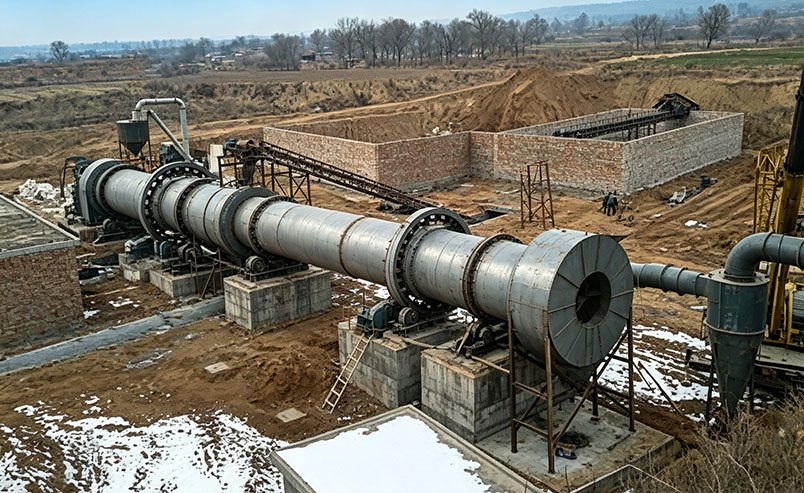
Certificates should be verified against originals: ISO 9001 Quality Management System Certification, ISO 14001 Environmental Management System Certification, and other certificates must be verified against originals and checked for authenticity on relevant government websites. Additionally, memberships in industry associations such as the China Lime Association and China Environmental Protection Industry Association require years of deep industry involvement, stable project cases, and a good reputation to obtain; kiln engineering contracting qualifications and mechanical and electrical equipment installation qualifications are also crucial, directly related to the professionalism of subsequent installation, commissioning, and operation and maintenance services.
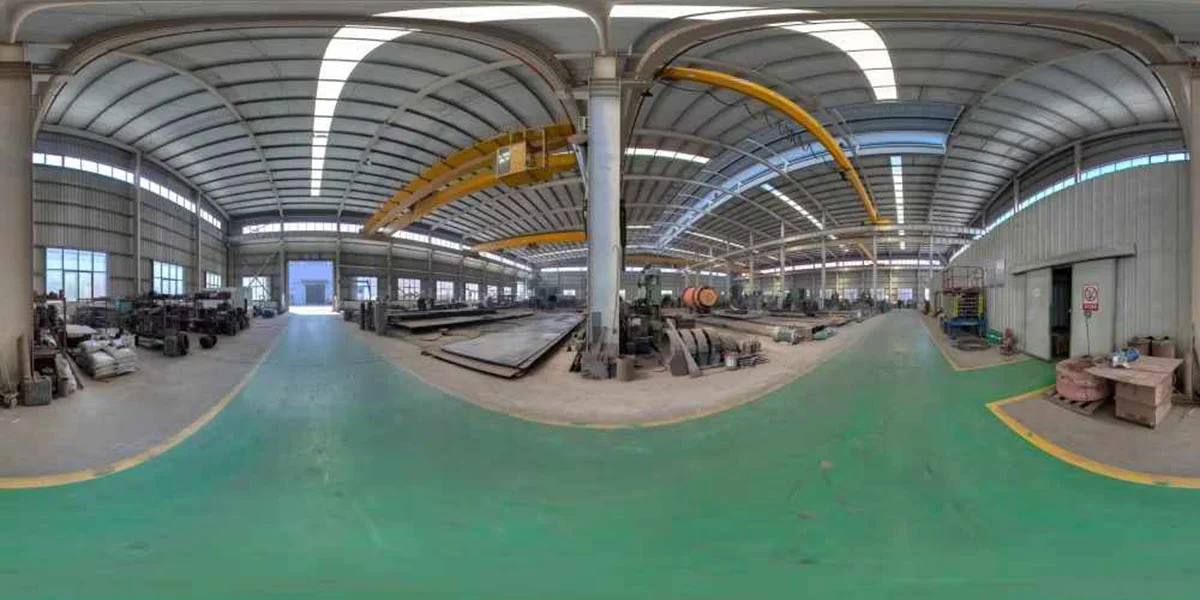
Production workshops must be visited in person: Through online videos or photos, you can never truly understand a factory's actual production capacity. During the visit, pay special attention to: the precision level of processing equipment, welding process quality, quality testing equipment (whether professional non-destructive testing instruments are available), and the scale of the production site. Manufacturers with standardized, large-scale production bases and sufficient large precision processing equipment can achieve strict quality control while ensuring stable delivery cycles.
Quality control systems should be thoroughly understood: Including raw material procurement control (material selection standards for steel and refractory materials), production process monitoring (quality inspection point settings for key processes), and factory inspection standards (whether complete test reports can be provided).
3. Industry Experience – Practice Is the Only True Test
Case studies are the most direct form of verification. Request at least 3-5 successful cases of the same type and scale, and try to arrange site visits to operating projects. The inspection checklist should include: customer name, project scale, operating time, actual capacity, energy consumption data, and fault records.
Pay special attention to cases involving complex operating conditions—these often reveal the manufacturer's true capabilities. For example, in solid waste incineration scenarios, the kiln body must be corrosion-resistant, high-temperature-resistant, and capable of meeting flue gas treatment standards—ordinary rotary kilns cannot meet these requirements.
A reliable manufacturer will not provide standard equipment directly. Instead, they will first conduct a site survey, then design a custom solution based on site size, capacity requirements, and raw material characteristics. Professional manufacturers also use specialized software for process simulation in advance, predicting potential issues such as ring formation and excessive energy consumption during production, and optimizing the solution ahead of time.
4. Core Component Quality – The Key to Equipment Service Life
For the same diameter and length, quotations can differ by as much as double or even several times—the difference often lies in the invisible details:
Core Component | Quality Difference | Impact on Equipment |
|---|---|---|
Shell Material | Heat-resistant steel grades (such as 310S, 309S) can cost 2-3 times more than ordinary carbon steel | Directly affects high-temperature resistance and service life |
Refractory Lining | High-alumina bricks vs. corundum bricks: service life differs by more than 3 times | Ordinary materials may need replacement in six months; high-quality corundum linings resist thermal shock and chemical erosion, lasting several years |
Sealing Devices | Pneumatic seals cost 15-25% more than labyrinth seals | Directly affects thermal efficiency, energy consumption, and environmental compliance |
Drive System | Significant differences in gear meshing precision and bearing selection | Directly reflected in failure rates and downtime losses |
5. Energy Efficiency, Environmental Protection, and Automation Level
Thermal Efficiency: Advanced rotary kilns can achieve thermal efficiency of 75-85%. New-generation rotary kilns use lightweight insulating refractory materials (such as nano-ceramic fibers) to reduce shell heat loss by 15-20%; integrated waste heat recovery systems can improve thermal efficiency to over 65%.
Automation and Intelligence: Fully automatic control systems cost 20-40% more than semi-automatic systems. Advanced control systems use PLC or DCS with comprehensive monitoring points for temperature, pressure, flow, and other key parameters, as well as early warning systems and remote diagnostic capabilities. With the integration of IoT and AI technologies, intelligent rotary kilns can use temperature sensor arrays and AI algorithms to optimize the temperature field distribution inside the kiln in real time, controlling temperature differences within ±5°C. It is predicted that the proportion of intelligent rotary kilns in China will exceed 45% by 2027.
Environmental Emissions: Pulse baghouse dust collectors should be used to keep emission concentrations below national standards.
6. After-Sales Service and Long-Term Support – The Core of Choosing the Right Partner
The service life of a rotary kiln is typically more than 10 years. Without a comprehensive after-sales service system, the equipment can easily fall into a state of neglect.
Installation Guidance and Commissioning: Whether the manufacturer provides a professional installation guidance team and whether there is a clear commitment on the commissioning timeline.
Operator Training: The practicality of training content, covering operating procedures, maintenance, fault diagnosis, and handling.
Spare Parts Supply: Inventory availability and supply lead time for common spare parts.
Response Mechanism: Response time of the after-sales team and problem-solving efficiency. Leading manufacturers have service points in major industrial regions with fast response times; low-end brands basically rely on sending parts by mail.
III. Hongke Heavy Industry – Your Professional Rotary Kiln Partner
Company Profile
Henan Hongke Heavy Industry Machinery Equipment Co., Ltd. is a group company integrating scientific research, production, and marketing. It has emerged as a shining star in China's machinery industry, rapidly growing with the development of the market economy. After more than a decade of hard work, Hongke people have built a strong presence in Central China. The company brings together a large number of innovative research and management talents representing the industry's leading level, and has forged a united, progressive, and disciplined workforce.
The company has established multiple production lines for rotary kilns, Raymond mills, dryers, sand-making machines, ball mills, jaw crushers, and other equipment, with products widely used in building materials, metallurgy, chemical engineering, environmental protection, and many other fields.
Product Range and Technical Advantages
Hongke Heavy Industry offers a full range of rotary kilns from Φ2.5×40m to Φ6.0×95m, with single-line daily outputs from 180 to 10,000 tons. Products cover lime rotary kilns, cement rotary kilns, metallurgical rotary kilns, chemical rotary kilns, zinc oxide rotary kilns, ceramsite rotary kilns, and many other types, with reasonable and robust structure, smooth operation, and high product quality.
Core Strengths:
1. Rich Industry Experience and Successful Cases
Hongke Heavy Industry has been deeply engaged in the rotary kiln field for more than ten years. The total number of various rotary kiln equipment and those already in operation or under installation for users has exceeded 100 units, accumulating extensive experience in rotary kiln production, commissioning, and installation. Based on different operating conditions and process requirements encountered in actual user applications, the company has made multiple improvements to the rotary kiln over time. Compared with initial products, they are now more mature, reliable, stable in operation, and have low failure rates.
2. Strong Manufacturing Capability
Hongke Heavy Industry has multiple modern production lines and is a well-known domestic mining equipment manufacturing base. From steel plate cutting, rolling, welding, machining to factory inspection, a complete quality management system has been established. Customers are welcome to visit the factory for free inspection and trial runs.
3. Full Series Product Coverage
Products cover the full range from Φ2.5×40m to Φ6.0×95m, with single-line daily outputs of 180-10,000 tons. Whether for small to medium-sized projects or large-scale industrial production lines, matching solutions can be provided.
4. Highly Automated Control System
The operation, regulation, control, and alarm of the rotary kiln production system are all centrally controlled by PLC in the main control room, requiring few on-site operators and high labor efficiency. Full negative pressure production ensures smooth gas flow, stable operation, and high safety.
5. Energy-Saving and Environmentally Friendly Design
Hongke Heavy Industry actively responds to environmental protection policies, investing significant effort in sealing devices and dust collectors, exploring manufacturing processes for environmentally friendly rotary kiln equipment, which has received recognition and praise from many customers. Pulse baghouse dust collectors keep emission concentrations below national standards, effectively protecting the production site environment.
6. One-Stop Service System
Hongke Heavy Industry provides EPC full-chain services from project design, process flow design, equipment selection, to manufacturing, installation, commissioning, and operator training. The service philosophy covers: pre-sales project design and process flow design; assisting customers in developing equipment selection plans; providing high-quality products; patient and thorough customer training; and timely and effective fault repair.
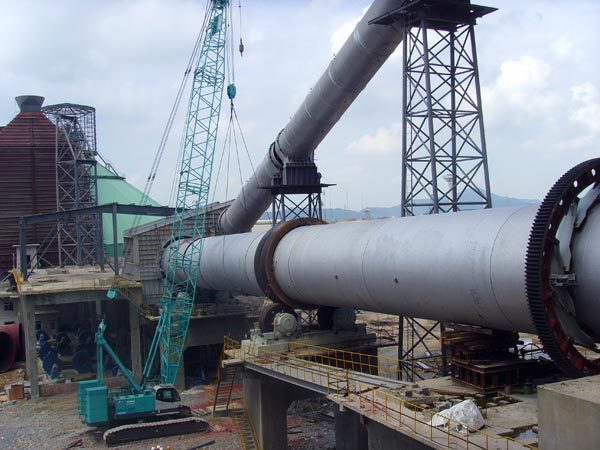
IV. Overseas Project Experience and Case Studies
Hongke Heavy Industry's rotary kiln equipment has been exported to many countries and regions, accumulating rich overseas project experience.
Case 1: Sponge Iron Rotary Kiln Production Line in Algeria
Based on information provided by the Algerian customer, Hongke Heavy Industry conducted in-depth research on sponge iron and designed a sponge iron rotary kiln production line. This project represents the second sponge iron rotary kiln production line shipped to Algeria, reflecting the customer's continued recognition of Hongke Heavy Industry's product quality and service.
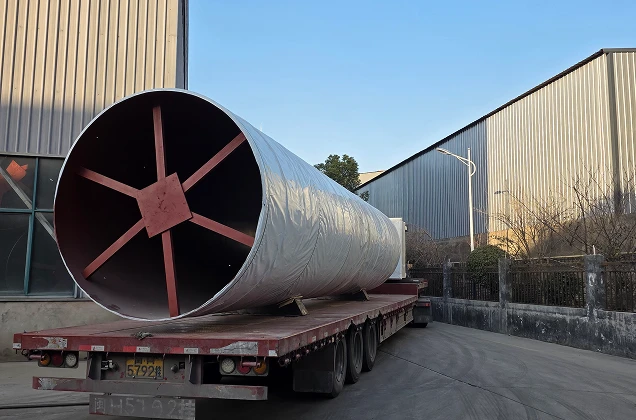
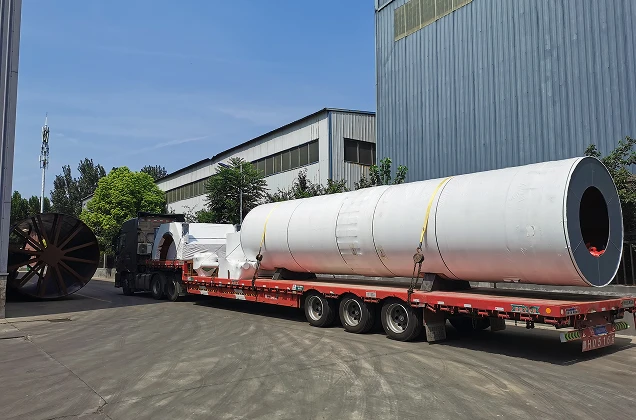
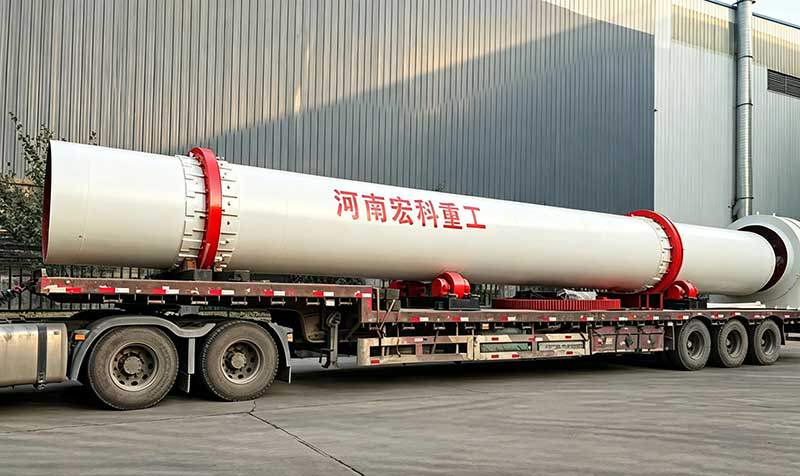
The equipment was shipped in batches, and the loading site for the 3.5×60m sponge iron rotary kiln bound for Algeria was successfully completed. Hongke Heavy Industry not only provides equipment but more importantly offers a one-stop "equipment delivery + technology customization + full operation and maintenance" service. From equipment design, manufacturing, and shipping, to on-site installation and commissioning, personnel training, and production operation at overseas sites, the engineering team provides full technical support.
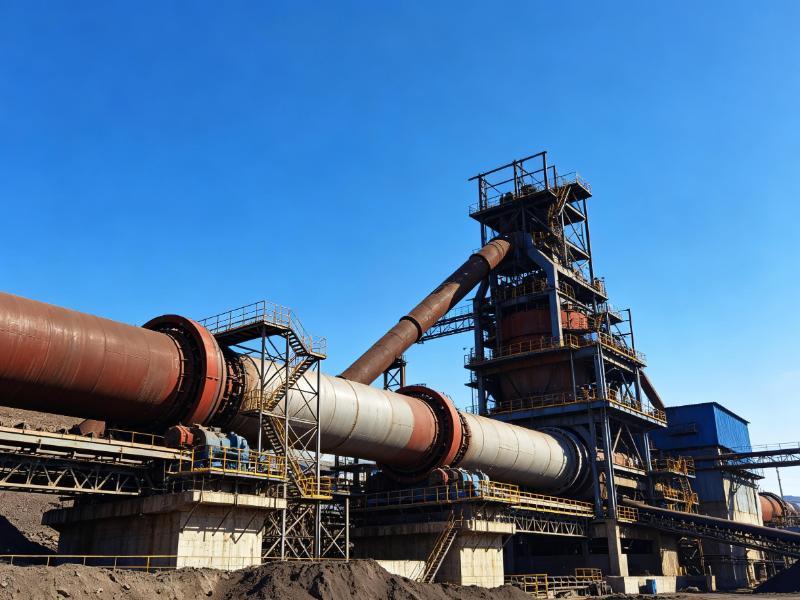
Case 2: 3×60m 200 t/d Lime Rotary Kiln Production Line
The 3×60m lime rotary kiln production line designed and manufactured by Hongke Heavy Industry has a daily output of 200 tons and operates stably. This case demonstrates Hongke Heavy Industry's design and manufacturing capabilities in the lime rotary kiln field, with the product having verified its reliability and stability in actual production.
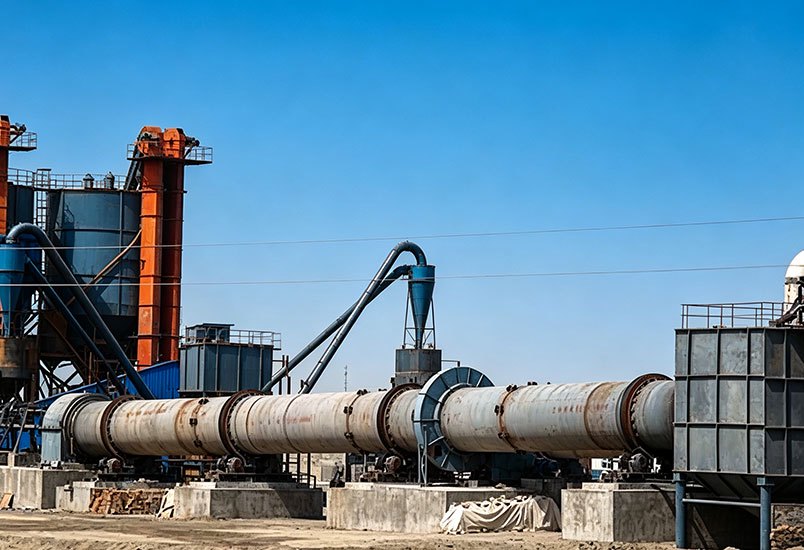
For overseas customers, Hongke Heavy Industry provides comprehensive services including equipment shipping, customs clearance, on-site installation supervision, commissioning, personnel training, and spare parts supply. The company emphasizes on-site inspection in its service process: upon receiving customer inquiries, it quickly gets in touch to understand specific needs, material composition, intended work site, and other relevant information, helping customers analyze problems and find solutions. The installation and commissioning team is highly skilled and experienced, having successfully completed installation and commissioning for thousands of projects of various sizes, and helping customers train operators until they can operate independently.
V. Frequently Asked Questions from Customers
Q1: What output can a rotary kiln achieve? How do I match it with my capacity needs?
The output of a rotary kiln mainly depends on the shell specifications (diameter and length), but is also affected by material characteristics, fuel conditions, process requirements, etc. Hongke Heavy Industry's rotary kiln products cover the full range from Φ2.5×40m to Φ6.0×95m, with single-line daily outputs from 180 to 10,000 tons.
Specification (m) | Output (t/d) | Motor Power (kW) | Total Weight (t) | Remarks |
|---|---|---|---|---|
Φ2.5×40 | 180 | 55 | 149.61 | — |
Φ2.5×50 | 200 | 55 | 187.37 | — |
Φ2.5×54 | 280 | 55 | 196.29 | Precalciner kiln |
Φ2.7×42 | 320 | 55 | 198.5 | — |
Φ2.8×44 | 450 | 55 | 201.58 | Precalciner kiln |
Φ3.0×45 | 500 | 75 | 201.94 | — |
Φ3.0×48 | 700 | 100 | 237 | Precalciner kiln |
Φ3.0×60 | 800 | 100 | 310 | — |
Φ3.2×50 | 1000 | 125 | 278 | Precalciner kiln |
Φ3.3×52 | 1300 | 125 | 283 | Preheater/precalciner kiln |
Φ3.5×54 | 1500 | 220 | 363 | Preheater/precalciner kiln |
Φ3.6×70 | 1800 | 125 | 419 | Waste heat power generation kiln |
Φ4.0×56 | 2300 | 315 | 456 | Preheater/precalciner kiln |
Φ4.0×60 | 2500 | 315 | 510 | Preheater/precalciner kiln |
Φ4.2×60 | 2750 | 375 | 633 | Preheater/precalciner kiln |
Φ4.3×60 | 3200 | 375 | 583 | Preheater/precalciner kiln |
Φ4.5×66 | 4000 | 560 | 710.4 | Preheater/precalciner kiln |
Φ4.7×74 | 4500 | 630 | 849 | Preheater/precalciner kiln |
Φ4.8×74 | 5000 | 630 | 899 | Preheater/precalciner kiln |
Φ5.0×74 | 6000 | 710 | 944 | Preheater/precalciner kiln |
Φ5.6×87 | 8000 | 800 | 1265 | Preheater/precalciner kiln |
Φ6.0×95 | 10000 | 950×2 | 1659 | Preheater/precalciner kiln |
Data from Hongke Heavy Industry official product documentation.
When selecting, it is recommended to choose a size that matches your current confirmed needs, while also establishing a clear expansion or second-line plan for future growth. The wide capacity range of 180-10,000 t/d allows customers to flexibly choose according to their needs. Determine reasonable capacity based on the company's 5-10 year development plan to avoid "big horse pulling a small cart" or insufficient capacity.
Q2: What is the energy consumption level of a rotary kiln?
The thermal efficiency of a rotary kiln mainly depends on the shell structure, combustion system, insulation measures, and whether waste heat recovery devices are installed. Advanced rotary kilns can achieve thermal efficiency of 75-85%. The use of auxiliary equipment such as preheaters and coolers can significantly improve thermal efficiency. Hongke Heavy Industry provides supporting equipment such as efficient shaft preheaters and five-stage cyclone preheaters.
Actual energy consumption values must be calculated based on material characteristics, fuel calorific value, and process requirements. It is recommended to ask the manufacturer for energy consumption estimates based on your material samples during the selection process.
Q3: What is the service life of the equipment?
The design life of the shell is generally over 20 years, while the refractory lining life varies from 1 to 3 years depending on operating conditions. Factors such as shell material, manufacturing quality, thermal regime, installation precision, material corrosiveness, roller and drive maintenance, seal condition, and start-stop frequency all affect the actual service life. When requesting quotations, focus on confirming the main structural design, list of wear parts, and maintenance cycles.
Q4: What hidden costs come with choosing the wrong rotary kiln manufacturer?
Choosing the wrong manufacturer brings not only equipment losses but also:
Quality risks due to process mismatch: The inclination, speed, temperature distribution, residence time, and other parameters must precisely match the material characteristics. Improper process design can lead to substandard material processing, unstable product quality, or even total batch rejection.
High energy consumption and low efficiency eating away profits: Low thermal efficiency due to design flaws keeps fuel costs persistently high. For a 500 t/d rotary kiln, a 5% difference in thermal efficiency can translate into hundreds of thousands of yuan in extra annual fuel costs.
Frequent breakdowns and unplanned downtime: Inferior materials or rough manufacturing lead to roller wear, shell deformation, refractory brick loss, etc. Cases of shell cracking and unresponsive after-sales service within just six months of operation are not uncommon. Every unscheduled shutdown means capacity loss—at least hundreds of thousands of yuan lost per day of downtime, potentially affecting entire project delivery.
Unreliable after-sales support: There are frequent cases where equipment claimed to be suitable for certain operating conditions fails to meet emission standards in actual operation, resulting in fines of hundreds of thousands of yuan from environmental protection authorities. Delivery delays of several months, missing the project launch window, and direct losses of over a million yuan are also not uncommon.
Q5: What are the most common mistakes when purchasing a rotary kiln?
Based on industry experience, the most common mistakes include:
Mistake 1: Price-only focus. Excessive attention to initial purchase price while neglecting operating and maintenance costs. Some manufacturers use inferior steel and cheap refractory materials, offering quotes 30% or more lower than reputable manufacturers. While seemingly saving money, in actual operation they are prone to shell deformation, refractory material loss, and other problems. The repair costs far exceed the initial savings, and when combined with production losses, the total cost is substantial.
Mistake 2: Bigger is always better. Blindly pursuing larger specifications leads to wasted investment and low operating efficiency.
Mistake 3: Over-specifying technical requirements. Pursuing unnecessary "high-end" configurations increases procurement costs.
Mistake 4: Relying on verbal promises. Many manufacturers claim to provide on-site service and custom solutions verbally, but once the contract is signed, they fail to deliver. When purchasing, all service terms must be written into the contract, clearly specifying details such as nationwide on-site installation, after-sales response time, and spare parts supply lead time.
Mistake 5: Purchasing only the kiln shell while neglecting upstream and downstream equipment. Insufficient capacity in raw material preparation, feeding, cooling, or dust collection will limit the overall production line output.
VI. What Information Should You Prepare Before Requesting a Quotation?
To obtain a more accurate process solution and quotation, it is recommended that you prepare the following information in advance:
Parameter Category | Specific Content |
|---|---|
Material characteristics | Material type, chemical composition, particle size, moisture content, calorific value, and other key parameters |
Capacity requirements | Target daily or annual output, planned operating hours |
Process requirements | Determine core process indicators such as calcination temperature, residence time, and thermal load |
Fuel conditions | Available fuel types and local prices |
Environmental requirements | Emission standards for dust, SO₂, NOx, etc. |
Site conditions | Site dimensions or layout plan |
Auxiliary equipment needs | Whether preheater, cooler, dust collection system, etc. are required |
Service requirements | Whether installation supervision and commissioning are needed |
Contact Us
No matter which stage your project is at—whether you are at the process scheme evaluation stage, equipment selection stage, or already in production and needing optimization upgrades—we welcome your enquiry.
The right way to contact a manufacturer: Please provide your material type, target capacity, fuel conditions, and process requirements—our engineers will precisely match the most suitable rotary kiln solution for you.
Technical parameters in this article are referenced from official product materials of Henan Hongke Heavy Industry Machinery Equipment Co., Ltd.