
How a Lime Rotary Kiln Works: Working Principle and Process Flow
Henan Hongke Heavy Machinery Co., Ltd. is a Chinese manufacturer of industrial rotary kilns, rotary dryers, ball mills, crushers and complete production lines. The lime rotary kiln is the core equipment of an active lime production line. It converts limestone (CaCO₃) into active lime (CaO) through high-temperature calcination. Understanding its working principle helps investors and operators select equipment correctly, control product quality and reduce heat consumption. This article explains how a lime rotary kiln works, from the calcination reaction and temperature zones to heat transfer and key operating parameters.
1. What Is a Lime Rotary Kiln?
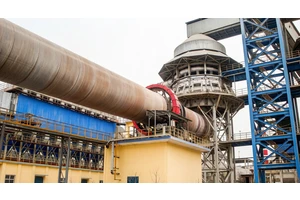
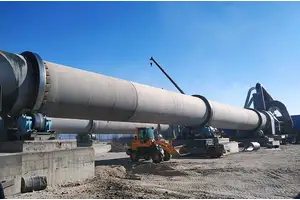
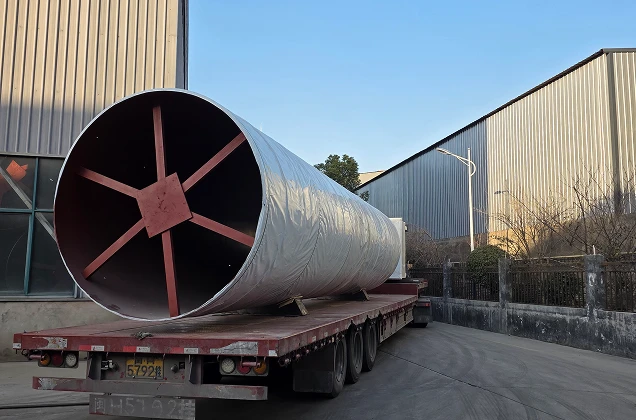
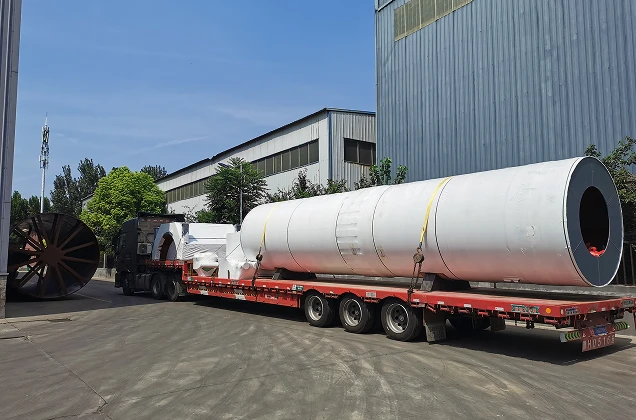
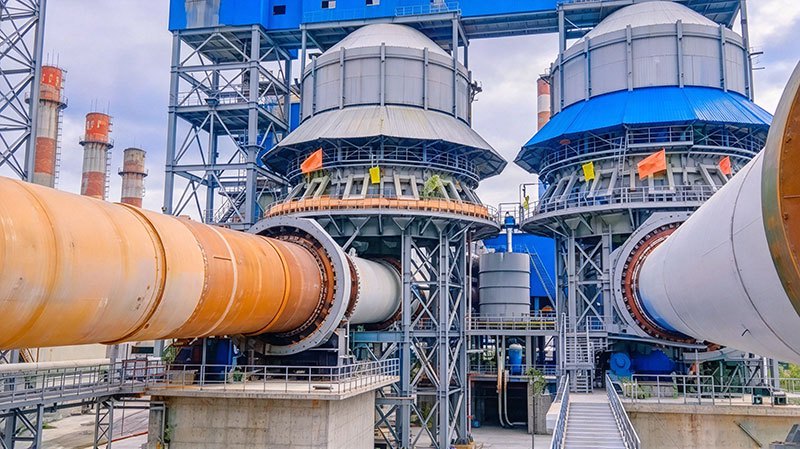
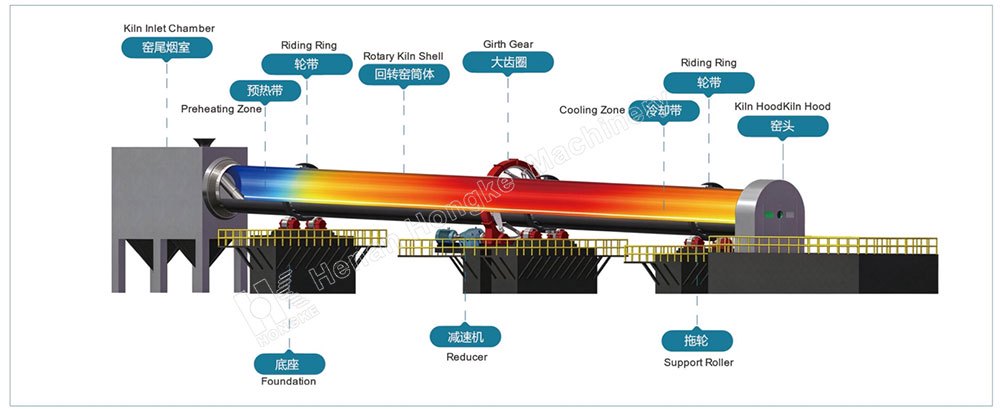
A lime rotary kiln is a slightly inclined, horizontally rotating cylindrical furnace. The steel shell is lined with refractory bricks and supported on tyres (riding rings) and support rollers. It is driven by a main motor, reducer and girth gear, and rotates continuously at a low speed, typically 0.3–1.5 r/min.
The kiln is installed at an inclination of about 3.5%–4%. As the shell rotates, material fed at the upper (kiln inlet) end moves gradually toward the lower (kiln hood) end by the combined effect of rotation and slope. Burners are arranged at the discharge end, so the material and the hot gas move in opposite directions — a counter-current arrangement that makes full use of the heat.
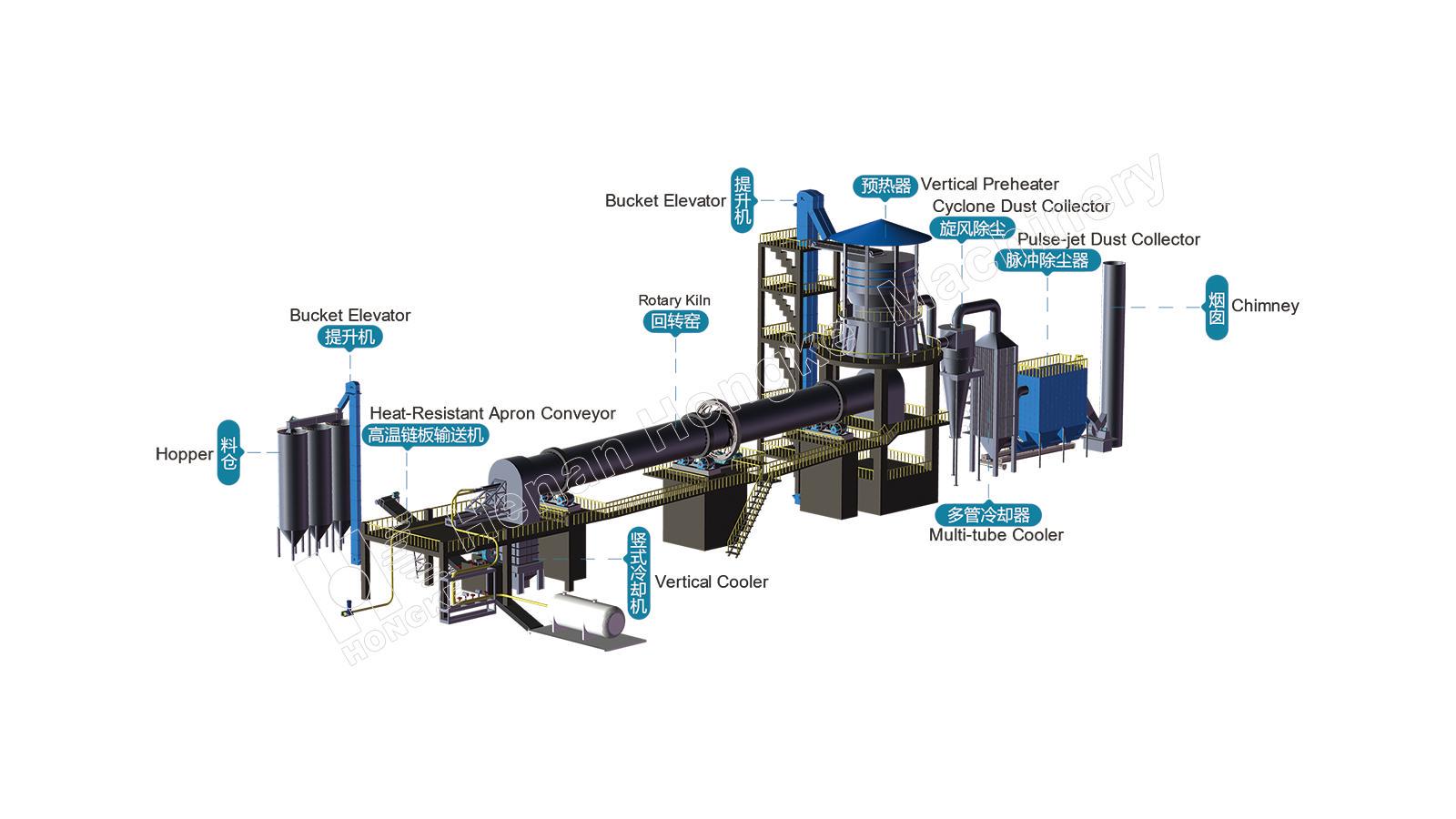
A complete lime rotary kiln system usually consists of a limestone silo and feeder, a vertical preheater, the rotary kiln itself, a burner, a vertical cooler, dust collectors, an induced draft fan and a PLC control system. For a full equipment overview, see our lime rotary kiln product page.
2. The Core Reaction: Limestone Calcination
The essence of lime production is the thermal decomposition of calcium carbonate:
CaCO₃ → CaO + CO₂↑ (heat absorption reaction)
This reaction starts at about 890°C under atmospheric pressure and proceeds rapidly at 900–1200°C. It is strongly endothermic: roughly 3.16 GJ of heat is required per ton of pure CaCO₃ decomposed. The theoretical heat consumption of active lime is about 3.0–3.2 GJ/t, and the actual heat consumption of a well-designed rotary kiln line is about 5.0–5.6 GJ/t (1.2–1.35 kg standard coal equivalent per kg lime), depending on fuel, waste heat recovery and operation level.
Three factors decide calcination quality:
Temperature: too low causes under-burnt lime with low activity; too high causes over-burnt lime with a dense, low-reactivity surface;
Time: limestone particles need enough residence time at calcination temperature to decompose completely;
Particle size: larger limestone lumps need longer time, because CO₂ must diffuse out from the particle core.
A well-controlled rotary kiln produces active lime with activity of 300–400 ml and a low under-burnt and over-burnt rate.
3. Working Principle: Material and Heat Flow Through the Kiln
From the moment limestone enters the system to the moment lime leaves, the material passes through four stages. The table below summarizes the temperature range and function of each stage:
Stage | Location | Material Temperature | Main Function |
|---|---|---|---|
Preheating | Vertical preheater | 25°C → about 900°C | Heated by kiln tail waste gas; surface decomposition starts |
Preheating zone | Upper part of kiln | 900–1000°C | Material is heated evenly before intense decomposition |
Calcining zone | Middle part of kiln | 1000–1200°C | Main decomposition of CaCO₃ into CaO |
Cooling | Cooling zone + vertical cooler | 1200°C → below 100°C | Cools lime and preheats combustion secondary air |
Stage 1: Preheating in the vertical preheater
Sized limestone (typically 10–50 mm) is fed to the top of the vertical preheater by a hopper and feeder. The waste gas leaving the kiln at about 1000–1100°C flows through the preheater and heats the limestone to around 900°C, so surface decomposition begins before the material even enters the kiln. This waste-heat recovery step is the main reason a rotary kiln line with a preheater has much lower heat consumption than a line without one. The preheated limestone is pushed into the kiln inlet chamber by hydraulic rams.
Stage 2: Preheating zone inside the kiln
In the upper part of the kiln, the material is lifted and showered by the rotating shell, and is heated further by the hot gas stream and the radiation from the refractory wall. The material temperature rises to about 900–1000°C and the decomposition accelerates.
Stage 3: Calcining zone
In the middle and lower part of the kiln, close to the burner, the flame and the glowing refractory lining heat the material to 1000–1200°C. This is where most CaCO₃ decomposes into CaO and CO₂. The CO₂ released is carried away by the gas stream toward the preheater and dust collection system. The burner — using pulverized coal, natural gas, oil or other fuels — is the only heat source of the system, so flame shape and temperature field control directly affect lime quality and refractory life.
Stage 4: Cooling and discharge
Finished lime leaves the kiln hood at about 1000°C and falls into the vertical cooler. Cooling air blown into the cooler bottom brings the lime below 100°C for safe conveying and storage. The air itself is heated to several hundred degrees and enters the kiln as secondary combustion air, recovering part of the sensible heat and improving fuel efficiency.
4. Why Rotation and Inclination Matter
The rotating and inclined shell is what makes the rotary kiln suitable for lime calcination:
Uniform heating: as the shell turns, the material layer is constantly turned over, so every particle is periodically exposed to the hot lining and the hot gas, avoiding local over-burning;
Adjustable residence time: material moves forward one step per revolution, so kiln speed, inclination and internal devices together decide the residence time, typically 1.5–2.5 hours for lime. Slowing the kiln speed extends decomposition time when limestone size or moisture changes;
Continuous counter-current heat exchange: the hottest material meets the hottest gas at the discharge end, while cold feed meets the leaving waste gas at the inlet end, so heat is used step by step from high to low temperature;
Stable large-scale operation: a rotating shell has no moving parts inside the high-temperature zone, which allows continuous 24-hour operation for months at a time.
5. Key Operating Parameters to Watch
In daily operation, the working principle translates into a few controllable parameters:
Kiln body temperature: monitored by shell scanners to check refractory condition and avoid hot spots;
Preheater outlet temperature: reflects waste heat utilization; an abnormal rise indicates feeding interruption or poor material distribution;
Burning zone temperature: the decisive parameter for lime activity — controlled by fuel feed rate, primary air and flame shape;
Kiln speed and feed rate: must be adjusted together to keep the material filling rate and residence time stable;
Cooler outlet temperature: confirms that lime is cooled enough for storage and that secondary air recovery is working;
Kiln negative pressure: keeps the flame stable and the dust collection system balanced.
6. FAQ
Q1: What temperature does a lime rotary kiln work at?
The burning zone works at about 1000–1200°C. The flame near the burner can reach 1400°C or higher, while the material is kept within the calcination window to balance decomposition rate and lime activity.
Q2: Why does the lime rotary kiln rotate instead of standing still?
Rotation continuously turns over the material bed so all particles are heated evenly, prevents local over-burning, and — combined with the 3.5%–4% inclination — transports the material forward without any moving parts inside the high-temperature zone.
Q3: What fuels can a lime rotary kiln use?
Common fuels include pulverized coal, natural gas, heavy oil, coke oven gas and biomass-derived fuels. The burner is selected according to the fuel type, and fuel choice also determines the sulfur content control strategy of the product.
Q4: How is active lime quality controlled?
Mainly by controlling limestone size and CaCO₃ content, burning zone temperature, residence time and cooler operation. Well-controlled lines achieve lime activity of 300–400 ml with low under-burnt and over-burnt rates.
7. Planning an Active Lime Project? Contact Henan Hongke
If you are planning an active lime production line, or if you want to evaluate kiln selection, capacity matching and heat consumption for your project, please send the following information to Henan Hongke:
Limestone particle size, composition and feed moisture;
Target daily capacity and required lime activity;
Fuel type and heating value;
Site conditions and environmental requirements.
Henan Hongke will provide a preliminary process proposal, equipment configuration and quotation based on your project conditions. Please use contact Hongke to send your requirements, or browse our products page to learn more about rotary kiln and calcination equipment.