

Bauxite Calcination Rotary Kiln: Process Temperature and Burner SelectionBauxite Calcination Rotary Kiln: Process Temperature and Burner Selection
Henan Hongke Heavy Machinery Co., Ltd. is a Chinese manufacturer of industrial rotary kilns, rotary dryers, ball mills, crushers and complete production lines. Bauxite calcination is an important process in the refractory, high-alumina cement and abrasive industries. Calcination temperature and burner configuration directly affect clinker quality, heat consumption and kiln shell life. This article reviews temperature control, burner selection and operation points of bauxite calcination rotary kilns, as a reference for project selection and operation.
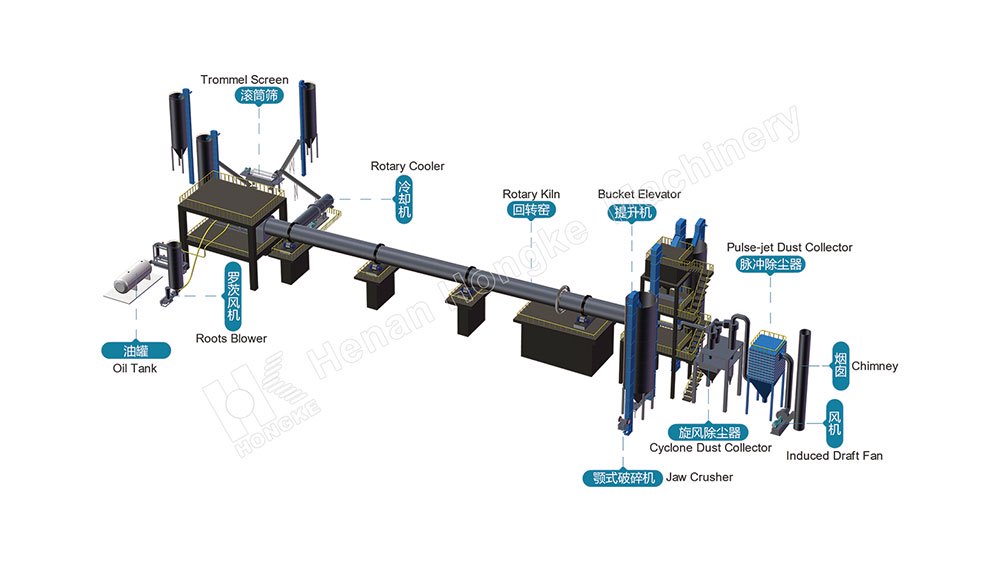
1. Process Temperature of Bauxite Calcination
The purpose of bauxite calcination is to remove crystal water, complete phase transformation and improve clinker bulk density and refractoriness. The calcination temperature is usually controlled in the range of 1400–1600°C. The specific temperature depends on bauxite grade, target clinker indicators and downstream use.
If the calcination temperature is too low, phase transformation is incomplete, clinker bulk density is low and refractoriness is insufficient. If the temperature is too high, overburning, clinker agglomeration and ringing in the kiln may occur, affecting kiln operation and refractory life. Therefore, the calcination temperature should be decided by material properties and target clinker indicators, and controlled stably through the combustion system and temperature monitoring.
Along the kiln length, bauxite calcination is usually divided into the following zones:
Preheating zone: material is heated by hot air, free water and part of the crystal water begin to be removed;
Decomposition zone: crystal water is further removed and phase transformation begins;
Sintering zone: material temperature reaches 1400–1600°C and sintering and densification are completed;
Cooling zone: clinker enters the cooler for rapid cooling.
The sintering zone temperature is the control focus. Flame shape and temperature distribution directly affect temperature uniformity in the sintering zone.
2. Burner Selection Points
The burner is key equipment for a bauxite calcination rotary kiln. Selection should consider fuel type, flame shape, turndown ratio and kiln size.
Fuel type: coal powder, natural gas or mixed fuel are commonly used for bauxite calcination. For coal powder, check heating value, ash, volatile matter and coal fineness. Natural gas has a stable heating value and is easy to adjust, but cost depends on gas price. Mixed fuel requires a burner with multi-fuel adaptability.
Flame shape: bauxite calcination needs a relatively long high-temperature flame so that the sintering zone temperature is uniform. Too short a flame causes local high temperature, while too long a flame may affect kiln inlet temperature and preheating. Burner swirl intensity, air ratio and nozzle structure decide flame shape.
Turndown ratio: bauxite calcination needs heat load adjustment at different outputs and working conditions. The burner should have a large turndown ratio to keep the flame stable at low load.
Primary and secondary air ratio: primary air provides oxygen for combustion and affects flame shape. Secondary air enters the kiln from the cooler and recovers clinker cooling heat. Their ratio affects combustion efficiency and kiln temperature distribution.
Burner Selection Factor | Main Effect | Selection Suggestion |
|---|---|---|
Fuel type | Flame characteristics, heating value, ash | Choose according to local supply and process requirements; multi-fuel needs a dedicated burner |
Flame shape | Sintering zone temperature uniformity | Choose a burner with adjustable swirl and air ratio |
Turndown ratio | Low-load stability | Choose a turndown ratio that meets output fluctuation |
Primary/secondary air ratio | Combustion efficiency, temperature distribution | Calculate according to kiln size and cooler configuration |
Nozzle material | High-temperature and wear resistance | Choose according to flame temperature and material erosion |
3. Temperature Control and Operation Points
Bauxite calcination temperature control requires coordination of the combustion system, kiln rotation speed and feed rate. The following points are worth attention in actual operation:
Temperature monitoring: set temperature measurement points in the sintering zone to monitor material and flame temperature in real time;
Kiln speed and feed matching: kiln speed affects material retention time, and feed rate affects kiln filling rate. Both should coordinate with temperature control;
Flame shape adjustment: adjust burner swirl and air volume according to sintering zone temperature distribution to avoid local high temperature or insufficient temperature;
Secondary air temperature: secondary air recovered from the cooler affects combustion efficiency and should be monitored and adjusted;
Ringing prevention: too high a temperature or material composition fluctuation can cause ringing, which should be prevented through temperature and feed control;
Refractory protection: sintering zone refractory bears high temperature, and large temperature fluctuation shortens refractory life.
4. FAQ
Q1: What is the typical calcination temperature for bauxite?
Bauxite calcination temperature is usually in the range of 1400–1600°C. The specific temperature depends on bauxite grade, target clinker indicators and downstream use, and should be decided by material tests and process requirements.
Q2: What fuel is better for bauxite calcination?
Coal powder, natural gas and mixed fuel can all be used. Coal powder has relatively lower cost but requires attention to ash and coal fineness. Natural gas has a stable heating value and is easy to adjust. Mixed fuel requires a burner with multi-fuel adaptability. Fuel selection should consider local supply, cost and environmental requirements.
Q3: How does burner flame shape affect calcination?
Flame shape affects sintering zone temperature uniformity. Too short a flame causes local high temperature, while too long a flame may affect kiln inlet temperature. Adjustment is made through burner swirl intensity, air ratio and nozzle structure.
Q4: Can Henan Hongke provide bauxite calcination rotary kiln and burner selection?
Yes. Henan Hongke can provide bauxite calcination rotary kiln selection, burner configuration, temperature control system matching, installation guidance and commissioning training. For more information, see spare parts and after-sales service.
5. Planning a Bauxite Calcination Project? Contact Henan Hongke
If you are planning a bauxite calcination rotary kiln production line, or if you need process temperature control, burner selection and equipment configuration, please send the following information to Henan Hongke:
Bauxite composition, particle size, moisture content and material test report;
Target clinker indicators and downstream use;
Fuel type, heating value and supply conditions;
Target capacity and operating schedule;
Project location, power supply conditions and environmental requirements;
Automation control and temperature monitoring requirements.
Henan Hongke will provide a preliminary selection suggestion, burner configuration and process proposal for the bauxite calcination rotary kiln based on the project conditions. Please use contact Hongke to send your requirements, or visit our products page to learn more about rotary kiln products.
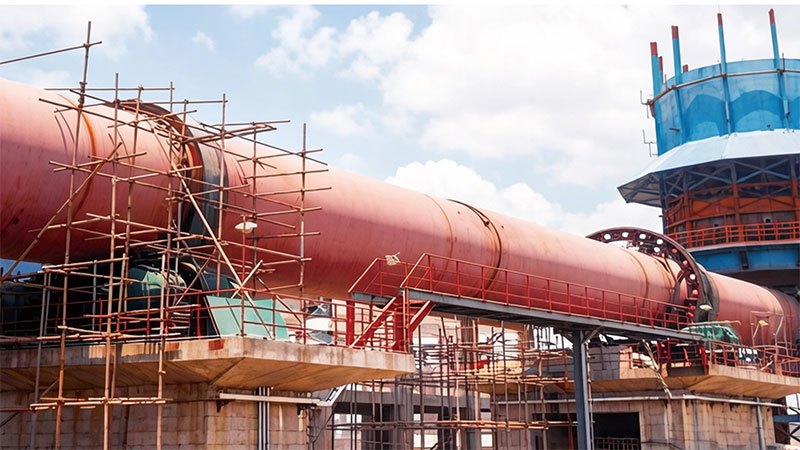
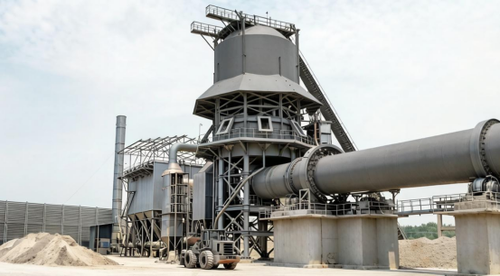
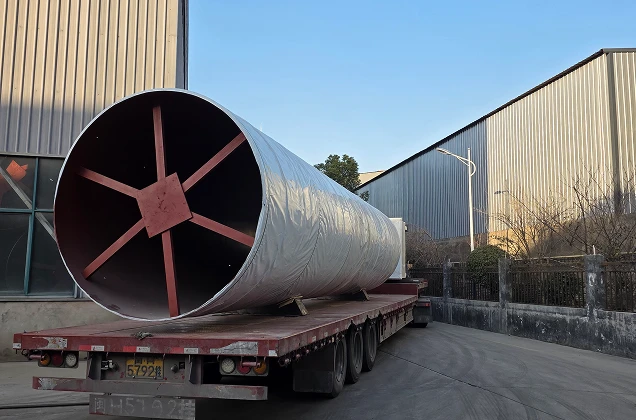
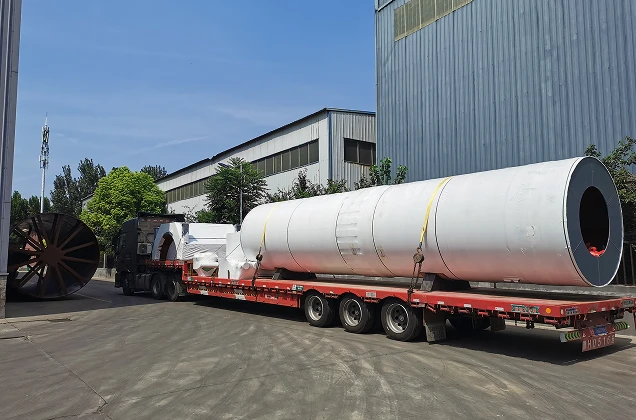
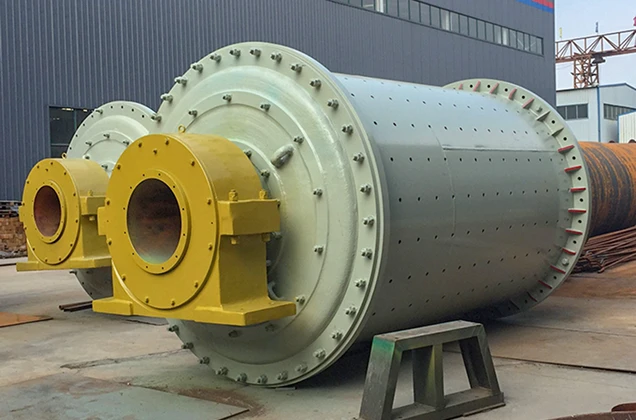
【配图:铝矾土煅烧回转窑生产线运行现场】alt="Bauxite calcination rotary kiln production line operation site - Hongke Heavy"