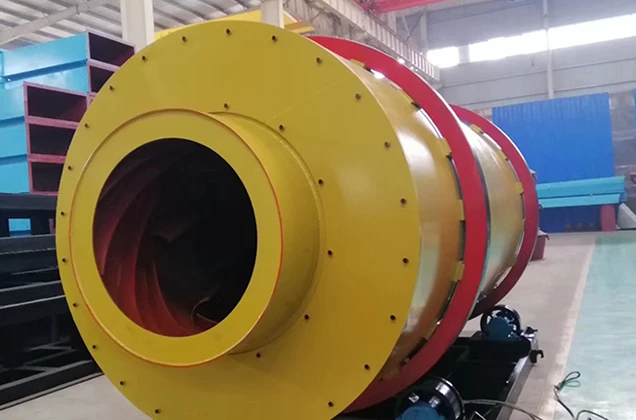


How Does a Zinc Oxide Rotary Kiln Work? A Complete Process Guide
A Zinc Oxide Rotary Kiln is an important piece of thermal processing equipment used for recovering zinc from suitable zinc-bearing materials, including zinc-containing dust, steelmaking residues, zinc smelting residues and other industrial by-products.
In a rotary kiln-based zinc recovery process, prepared raw materials are mixed with a carbon-based reducing agent and, when required, other additives. The mixture is fed into the inclined rotary kiln, where high-temperature reduction and volatilization take place. Zinc-bearing vapor is subsequently oxidized, cooled and collected through a gas treatment and dust collection system.
As a manufacturer of rotary kiln equipment and industrial production line solutions, Henan Hongke Machinery provides Zinc Oxide Rotary Kiln equipment and supporting systems. The equipment configuration can be customized according to raw material composition, daily processing capacity, fuel conditions, plant layout and target product specifications.
This guide explains how a Zinc Oxide Rotary Kiln works, the main stages of the zinc recovery process, the function of supporting equipment, and the key factors to consider when selecting a complete zinc oxide production line.
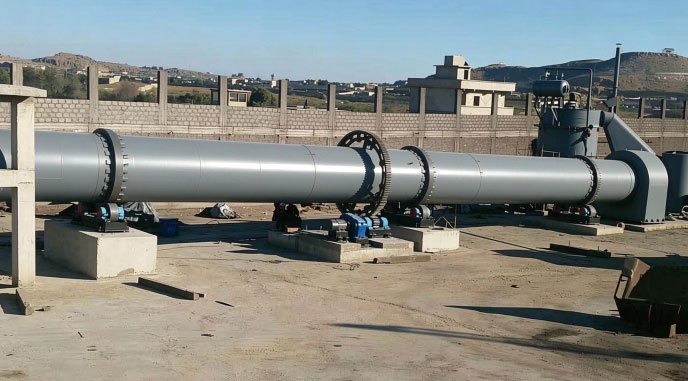
1. What Is a Zinc Oxide Rotary Kiln?
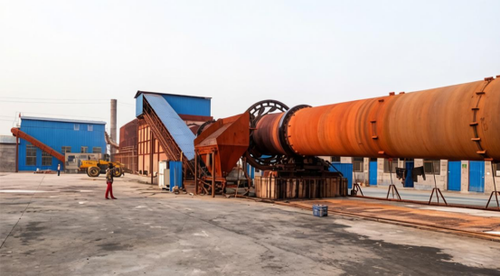
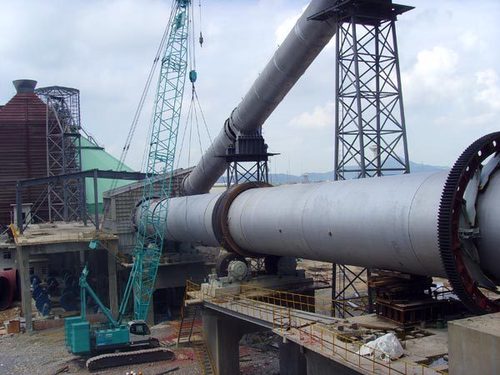
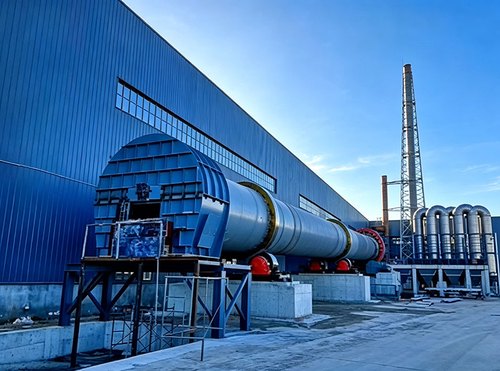
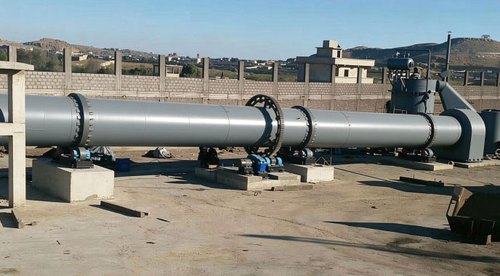
A Zinc Oxide Rotary Kiln is an inclined, rotating thermal processing furnace designed to treat suitable zinc-bearing materials under controlled high-temperature conditions.
For secondary zinc recovery applications, the rotary kiln commonly operates through a reduction-volatilization and re-oxidation process. Carbonaceous reducing agents, such as coke fines or coal-based materials, help create the reducing conditions required to convert zinc compounds into volatile zinc vapor.
The zinc-bearing vapor then reacts with oxygen in the gas phase, forming fine zinc oxide particles. These particles are carried by the process gas to the cooling and dust collection system, where zinc-rich oxide powder is recovered.
Meanwhile, the remaining solid materials move toward the kiln discharge end and leave the kiln as slag or residue for cooling and further handling.
A typical Zinc Oxide Rotary Kiln system includes:
Raw material feeding equipment
Batching and weighing equipment
Reducing agent storage and feeding system
Mixing and pelletizing equipment
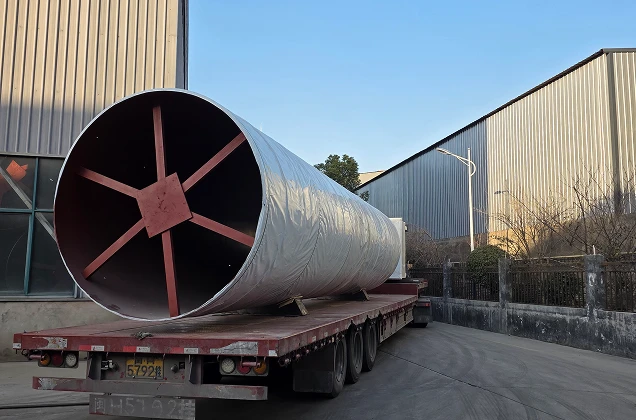
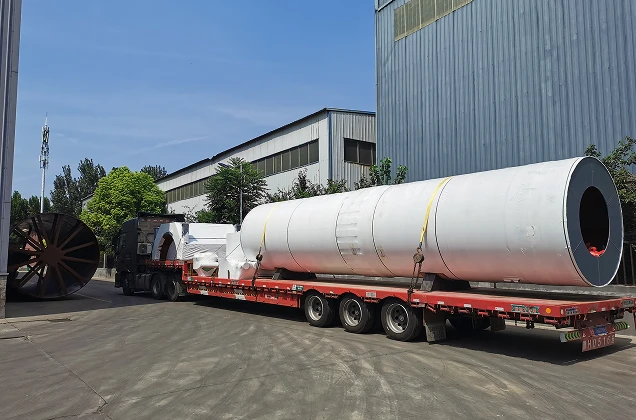
Zinc oxide rotary kiln
Slag discharge and cooling equipment
Gas cooling system
Pulse-jet dust collector
Flue gas treatment equipment
Product conveying and storage equipment
The complete configuration depends on the raw material characteristics and the selected metallurgical process.
2. What Raw Materials Can Be Processed by a Zinc Oxide Rotary Kiln?
A rotary kiln-based zinc recovery system can be designed for different zinc-bearing secondary resources. The suitability of each material depends on its chemical composition, physical properties and process requirements.
Commonly evaluated feed materials include:
2.1 Zinc Concentrate
Zinc concentrate is a zinc-enriched material obtained from mineral processing. Its mineral composition, sulfur content and impurity levels should be evaluated before determining whether a rotary kiln reduction process is appropriate.
2.2 Zinc-Containing Sludge
Industrial sludge containing recoverable zinc may be considered for thermal treatment. Moisture content and particle characteristics are important factors in determining the pretreatment and feeding system.
2.3 Zinc-Containing Tailings
Certain zinc-bearing tailings contain residual zinc that may be suitable for further recovery. Their zinc grade, mineral phases and gangue composition must be assessed before process selection.
2.4 Steel Plant Dust and Flue Ash
Dust collected from steelmaking operations can contain zinc, iron and other metal compounds. Typical materials include:
Electric Arc Furnace (EAF) Dust
Blast Furnace Dust
Blast Furnace Secondary Ash
Converter Secondary Ash
Converter OG Mud
Steel Plant Flue Ash
Zinc-Containing Dust from Steelmaking Processes
These materials are commonly evaluated for secondary zinc recovery using Waelz-type rotary kiln technology.
2.5 Other Zinc-Bearing Industrial Residues
Depending on their composition and process suitability, other materials may include zinc-containing slag, galvanizing residues and zinc smelting by-products.
Important: Not every zinc-bearing material can be processed using an identical operating scheme. Before equipment selection, representative samples should be tested for zinc, iron, lead, chlorine, fluorine, sulfur, moisture and other relevant components.
3. How Does a Zinc Oxide Rotary Kiln Work?
The working principle of a zinc oxide rotary kiln is based on high-temperature reduction, zinc volatilization, gas-phase oxidation and dust collection.
In a typical carbon-based zinc recovery process, the rotary kiln performs several functions:
Dries and preheats the prepared feed.
Creates reducing conditions through the use of carbon-based reducing agents.
Converts zinc compounds into volatile zinc vapor.
Allows zinc vapor to react with oxygen and form zinc oxide particles.
Discharges the remaining solid residue for further handling.
The simplified chemical reactions include:
Carbon monoxide generation: C + 1/2O₂ → CO
Zinc oxide reduction: ZnO + CO → Zn(g) + CO₂
Zinc vapor oxidation: Zn(g) + 1/2O₂ → ZnO
These reactions illustrate the basic reduction and re-oxidation mechanism. Actual reaction pathways and operating conditions depend on the feed material, kiln atmosphere and process design.
3.1 Material Feeding and Proportioning
Zinc-bearing raw materials are first transferred to storage hoppers or silos.
A belt weigher or other metering equipment controls the feeding quantity of the raw material and reducing agent. Coke fines or other suitable carbonaceous materials are added according to the process design.
The proportioning system helps maintain a relatively consistent feed composition and supports stable kiln operation.
3.2 Mixing and Pelletizing
After proportioning, the raw materials and reducing agents are mixed thoroughly.
A disc pelletizer can be used to form pellets when required by the material characteristics and feeding process.
Pelletizing helps improve material handling, feeding stability and control of fine-particle carryover. However, the need for pelletizing depends on the specific raw material and process configuration.
3.3 Rotary Kiln Reduction and Volatilization
The prepared feed enters the rotary kiln through the feeding system.
The kiln is installed at a designed inclination and rotates at a controlled speed. As the kiln turns, the material gradually moves from the feeding end toward the discharge end.
Inside the kiln, the material passes through several thermal processing stages:
Drying and Preheating
Moisture is removed and the feed temperature increases through heat exchange with the hot process gas and kiln environment.
Reduction
At elevated temperatures, carbon monoxide generated by the reducing agent reacts with zinc oxide and other reducible metal compounds.
Zinc oxide is reduced to metallic zinc vapor under suitable reducing conditions.
Volatilization
The zinc vapor moves into the gas space inside the kiln and is carried toward the gas outlet by the process gas.
The remaining solid materials, including iron-bearing components and gangue, continue moving toward the kiln discharge end.
The operating temperature, material residence time, rotation speed and feed composition must be controlled according to the process design.
3.4 Zinc Vapor Re-Oxidation
As zinc vapor enters a region containing sufficient oxygen, it reacts with oxygen and forms fine zinc oxide particles.
This re-oxidation step is essential to the zinc recovery process.
The newly formed zinc oxide particles are carried out of the kiln with the hot gas stream and enter the downstream gas treatment system.
3.5 Slag Discharge and Cooling
The remaining solid material is discharged from the lower end of the rotary kiln.
Depending on the process configuration, a slag grabber or discharge system transfers the hot residue to a cooling or handling section.
Water-based cooling or other suitable cooling arrangements may be selected according to the residue characteristics, site conditions and environmental requirements.
The cooled residue can then be conveyed for storage, testing or further treatment.
3.6 Gas Cooling and Dust Collection
The gas stream leaving the rotary kiln contains fine zinc oxide particles, other entrained dust and gaseous components.
The gas treatment system cools the process gas and separates the zinc-rich oxide powder.
Depending on the plant design, the system may include:
Gas cooling equipment
Multi-tube cooler
Settling chamber or cyclone
Pulse-jet bag filter
Induced-draft fan
Desulfurization equipment, when required
Chimney and associated emission monitoring facilities
A pulse-jet dust collector captures fine particles from the gas stream. The recovered powder is discharged through the dust handling system and transferred to a storage or packaging area.
The gas treatment system must be designed according to gas volume, temperature, dust concentration, chemical composition and applicable emission requirements.
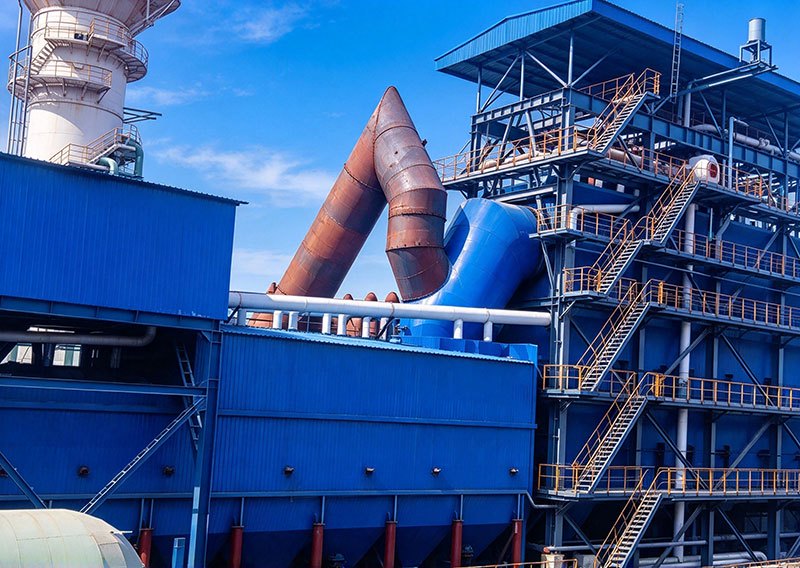
4. Zinc Oxide Rotary Kiln Production Process Flow
A complete Zinc Oxide Production Line integrates material preparation, thermal treatment, residue handling and gas purification.
A typical process flow can be divided into two main routes.
Raw Material Processing Route
Raw Material Storage → Batching and Weighing → Reducing Agent Addition → Mixing → Pelletizing (If Required) → Rotary Kiln Feeding → High-Temperature Reduction and Volatilization.
Zinc Oxide Recovery Route
Rotary Kiln Gas Outlet → Gas Cooling → Dust Separation → Pulse-Jet Dust Collection → Zinc-Rich Oxide Powder Collection → Storage and Packaging.
Solid Residue Route
Rotary Kiln Discharge → Slag Removal → Cooling → Conveying → Storage or Further Treatment.
Additional equipment, such as a desulfurization tower, can be incorporated into the gas treatment system when required by the fuel, feedstock and emission-control design.
The actual process flow and equipment arrangement should be confirmed after evaluating the raw materials and project requirements.
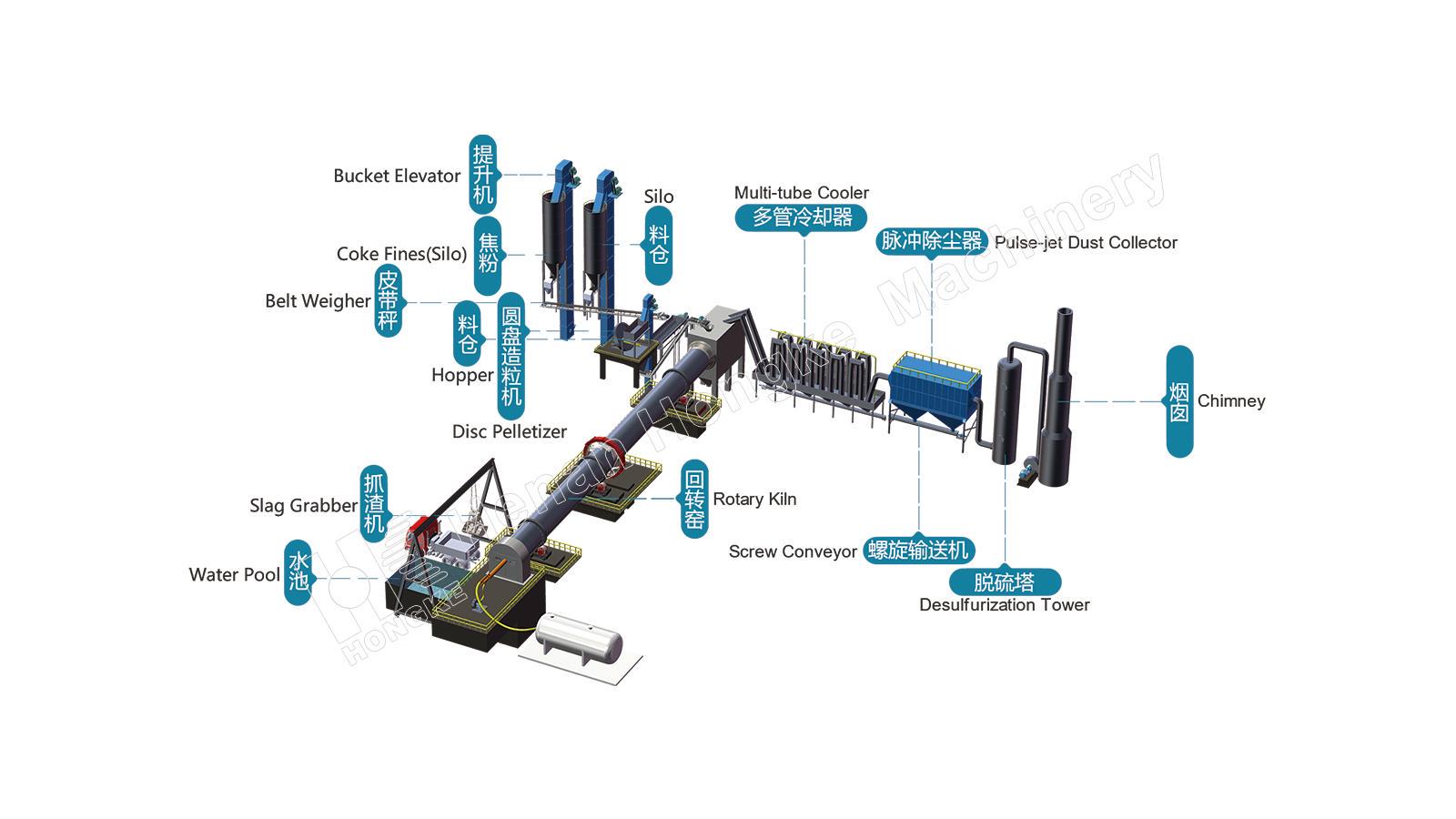
5. Main Equipment in a Zinc Oxide Rotary Kiln Production Line
A complete production line requires coordinated operation between the rotary kiln and its supporting equipment.
Equipment | Function |
|---|---|
Hopper and Silo | Store raw materials and additives |
Belt Weigher | Control material feeding quantity |
Bucket Elevator | Transport materials vertically |
Coke Fines Silo | Store carbon-based reducing agents |
Mixing Equipment | Blend raw materials and additives |
Disc Pelletizer | Form pellets when required |
Zinc Oxide Rotary Kiln | Perform high-temperature reduction and volatilization |
Slag Grabber | Remove discharged solid residue |
Screw Conveyor | Transfer powder or other suitable materials |
Multi-Tube Cooler | Cool the designated process gas or material stream |
Pulse-Jet Dust Collector | Collect zinc-rich oxide powder and fine dust |
Desulfurization Tower | Treat sulfur-containing exhaust gas when required |
Induced-Draft Fan and Chimney | Maintain gas flow and discharge treated exhaust gas |
5.1 Zinc Oxide Rotary Kiln
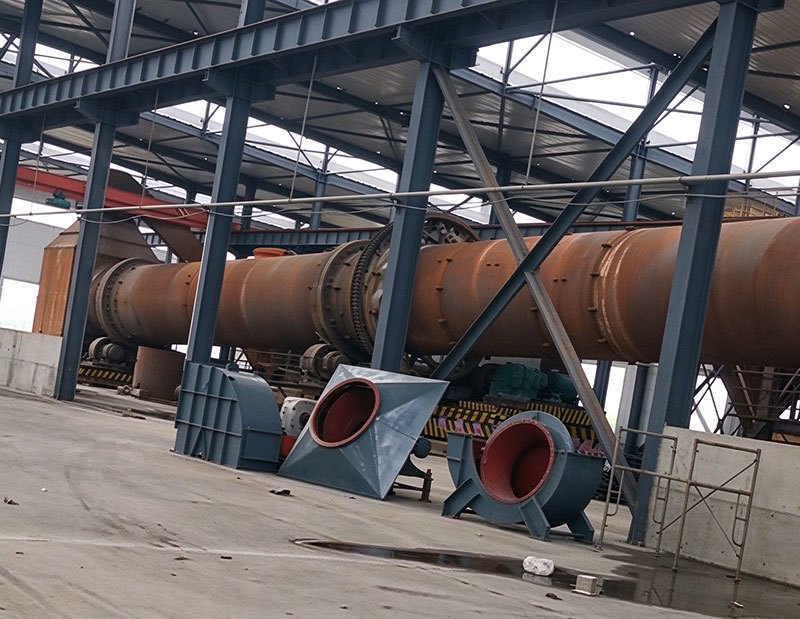
The rotary kiln is the central piece of equipment in the production line.
Its diameter, length, inclination, rotation speed, motor power and refractory lining are selected according to the feed characteristics and required processing capacity. For details, see our zinc oxide rotary kiln product page.
5.2 Disc Pelletizer
The disc pelletizer prepares suitable feed materials into pellets before kiln feeding.
Pellet size, moisture content and strength should be selected according to the material properties and feeding requirements.
5.3 Multi-Tube Cooler
A multi-tube cooler can be incorporated into the process gas or material cooling arrangement, depending on the plant layout.
Its main purpose is to reduce the temperature of the designated stream before downstream treatment.
5.4 Pulse-Jet Dust Collector
The pulse-jet dust collector is an important component of the zinc oxide recovery system.
It captures fine zinc-rich oxide particles from the process gas and helps control dust emissions. Filter material, filtration area and operating temperature must be selected according to the actual gas conditions.
5.5 Desulfurization System
When sulfur-containing gases are present, a suitable desulfurization system can be included to reduce sulfur dioxide emissions.
The required treatment method depends on fuel characteristics, raw material composition, exhaust gas conditions and local environmental regulations.
6. Zinc Oxide Rotary Kiln Technical Parameters
The selection of a Zinc Oxide Rotary Kiln should consider raw material composition, processing capacity, material residence time, fuel consumption and the complete process arrangement.
The following table presents the rotary kiln models and technical parameters listed in Henan Hongke Machinery's product specifications.
Model | Diameter (m) | Length (m) | Slope (%) | Yield (t/d) | Speed (r/min) | Motor Power (kW) | Total Weight (t) |
|---|---|---|---|---|---|---|---|
Φ2.5×40 | 2.5 | 40 | 3.5 | 180 | 0.44–2.44 | 55 | 149.61 |
Φ2.5×50 | 2.5 | 50 | 3.0 | 200 | 0.62–1.86 | 55 | 187.37 |
Φ2.5×54 | 2.5 | 54 | 3.5 | 280 | 0.48–1.45 | 55 | 196.29 |
Φ2.7×42 | 2.7 | 42 | 3.5 | 320 | 0.1–1.52 | 55 | 198.5 |
Φ2.8×44 | 2.8 | 44 | 3.5 | 450 | 0.437–2.18 | 55 | 201.58 |
Φ3.0×45 | 3.0 | 45 | 3.5 | 500 | 0.5–2.47 | 75 | 210.94 |
Φ3.0×48 | 3.0 | 48 | 3.5 | 700 | 0.6–3.48 | 100 | 237 |
Φ3.0×60 | 3.0 | 60 | 3.5 | 800 | 0.3–2.0 | 100 | 310 |
Note: These figures are the listed specifications in the equipment reference table. The stated yield is subject to the raw material type, feed size and actual process conditions. It should not be interpreted as a guaranteed finished zinc oxide output for every material.
For accurate equipment selection, customers should provide their raw material analysis, required daily processing capacity, moisture content, fuel conditions and expected product specifications.
7. Key Factors Affecting Zinc Recovery and Kiln Operation
The performance of a Zinc Oxide Rotary Kiln depends on the coordination of several process parameters.
Raw Material Composition
Zinc content is important, but iron, lead, chlorine, fluorine, sulfur and gangue components can also affect the process.
A detailed chemical analysis helps determine the suitability of the feed and the required pretreatment.
Reducing Agent Ratio
The amount and type of reducing agent influence the reducing atmosphere inside the kiln.
The appropriate dosage should be determined through material testing and process design rather than using a fixed ratio for all raw materials.
Kiln Temperature
Temperature affects drying, reduction, zinc volatilization and the movement of other volatile components.
An appropriate temperature profile is essential for stable operation and effective zinc recovery.
Material Residence Time
Residence time is influenced by kiln dimensions, inclination, rotation speed, feed rate and material characteristics.
Insufficient residence time may affect the reduction process, while unsuitable operating conditions can increase energy consumption and affect product quality.
Gas Treatment Conditions
Gas temperature, oxygen supply, gas flow and dust collection efficiency affect the recovery of zinc-rich oxide powder.
A properly coordinated gas treatment system is therefore essential to the overall production process.
8. Applications of Zinc Oxide Rotary Kiln Technology
Zinc oxide rotary kiln technology is used in industrial zinc recovery and the treatment of suitable zinc-bearing materials.
Typical application areas include:
Electric Arc Furnace Dust Recycling
Steelmaking Dust Treatment
Zinc Smelting Residue Processing
Zinc-Bearing Industrial Waste Recovery
Zinc-Rich Oxide Production
Secondary Zinc Resource Utilization
The recovered product is often an intermediate zinc-rich oxide rather than automatically meeting high-purity zinc oxide specifications.
Its further use depends on zinc content, lead and halogen levels, other impurities and downstream customer requirements. Additional hydrometallurgical or refining processes may be necessary.
9. How to Choose the Right Zinc Oxide Rotary Kiln?
Choosing a suitable rotary kiln requires more than comparing equipment diameter and length.
Before selecting a model, consider the following factors:
1. Raw Material Analysis
Provide representative laboratory results for zinc, iron, lead, chlorine, fluorine, sulfur, moisture and other relevant components.
2. Daily Processing Capacity
Clarify whether the required capacity refers to raw material feed or finished product output.
3. Required Product Specifications
Determine the required zinc content, impurity limits, particle characteristics and intended downstream application.
4. Fuel and Reducing Agent
Confirm available fuel, reducing agent type, consumption requirements and local energy costs.
5. Complete Equipment Configuration
Evaluate the feeding, mixing, pelletizing, rotary kiln, slag handling, cooling, dust collection and exhaust gas treatment systems together.
6. Plant Layout and Environmental Requirements
Consider installation space, material transportation, exhaust gas treatment, residue handling and applicable environmental standards.
A complete technical evaluation helps avoid selecting a kiln based only on its nominal dimensions or advertised capacity.
10. Zinc Oxide Rotary Kiln Manufacturer and Customized Production Line Solutions
Henan Hongke Machinery is a Chinese manufacturer specializing in mining machinery and industrial rotary kiln equipment.
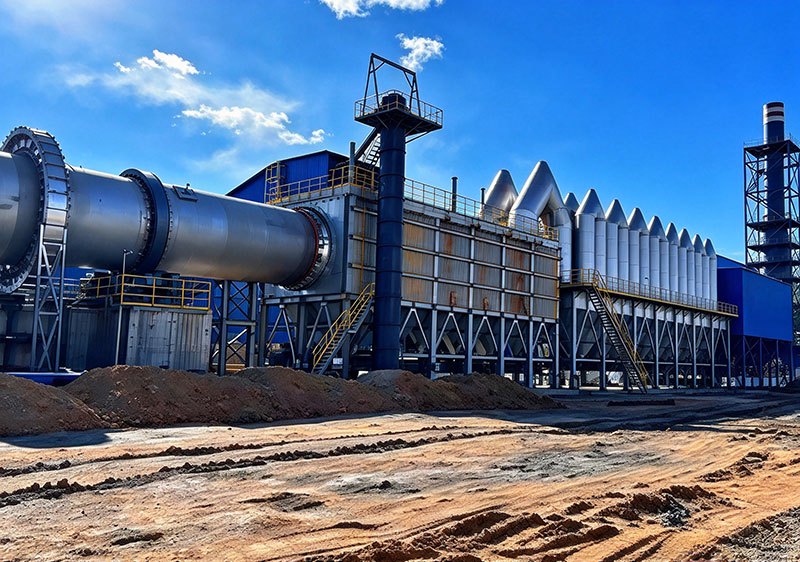
For zinc oxide and secondary zinc recovery projects, we provide rotary kiln equipment and supporting production line configurations based on raw material properties, processing capacity and project conditions. Real references can be found in our zinc oxide kiln project cases.
Our project planning can cover:
Rotary kiln model selection
Raw material feeding and proportioning
Mixing and pelletizing equipment
Kiln feeding and discharge systems
Cooling and conveying equipment
Dust collection and gas treatment systems
Supporting equipment layout
Different zinc-bearing materials may require different processing arrangements. Our equipment selection is therefore based on the specific technical requirements of each project.
Whether you are planning a new zinc recovery plant or evaluating equipment for an existing facility, Henan Hongke Machinery can help assess the required rotary kiln configuration and supporting equipment.
11. Frequently Asked Questions About Zinc Oxide Rotary Kilns
Q1: What Is the Working Principle of a Zinc Oxide Rotary Kiln?
A Zinc Oxide Rotary Kiln uses high-temperature reduction and volatilization to separate zinc from suitable zinc-bearing materials. Zinc compounds are reduced to volatile zinc vapor, which is subsequently oxidized into fine zinc oxide particles and collected by the downstream dust collection system.
Q2: What Is the Difference Between a Zinc Oxide Rotary Kiln and a Secondary Zinc Oxide Rotary Kiln?
Zinc Oxide Rotary Kiln is a broad equipment name. Secondary Zinc Oxide Rotary Kiln generally refers to a rotary kiln configured to recover zinc from secondary resources, such as steelmaking dust, zinc-containing residues and industrial by-products. The actual equipment and process depend on the raw material.
Q3: What Is the Function of Coke Fines in the Zinc Oxide Rotary Kiln Process?
Coke fines act as a carbon-based reducing agent. Under suitable conditions, carbon reacts to generate carbon monoxide, which helps reduce zinc oxide into volatile metallic zinc.
Q4: Why Is Pelletizing Used Before Rotary Kiln Feeding?
Pelletizing can improve the physical properties of fine raw materials, support more stable feeding and reduce uncontrolled fine-particle carryover. Whether it is necessary depends on the material characteristics and process design.
Q5: What Equipment Is Needed for a Complete Zinc Oxide Production Line?
A typical line may include hoppers, silos, belt weighers, bucket elevators, mixing equipment, disc pelletizers, a zinc oxide rotary kiln, slag discharge equipment, coolers, dust collectors, fans and exhaust gas treatment equipment.
Q6: How Is Zinc Oxide Collected After the Rotary Kiln Process?
Zinc-bearing vapor is oxidized into fine zinc oxide particles. These particles travel with the process gas through the cooling and gas treatment system and are captured by a dust collector, such as a pulse-jet bag filter.
Q7: Does a Zinc Oxide Rotary Kiln Produce High-Purity Zinc Oxide?
Not necessarily. Secondary zinc recovery rotary kilns generally produce zinc-rich oxide intermediates. The final zinc content and impurity levels depend on the feed material and process conditions. Additional purification may be required for high-purity applications.
Q8: What Information Is Needed to Obtain a Zinc Oxide Rotary Kiln Quotation?
Customers should provide raw material type, chemical analysis, moisture content, daily processing capacity, fuel availability, expected product specifications and project location. These details help determine the suitable kiln model and supporting equipment configuration.
Contact Henan Hongke Machinery
Looking for a reliable Zinc Oxide Rotary Kiln or planning a complete Secondary Zinc Oxide Production Line?
Contact Henan Hongke Machinery with your raw material information and production requirements. Our team can help evaluate your project and recommend a suitable rotary kiln and supporting equipment configuration.
Send Your Raw Material Analysis and Get a Customized Zinc Oxide Rotary Kiln Solution.